Gathorne, Earl of Cranbrook, was a true friend of and activist for the people, flora, and fauna of the tropical forests of South-East Asia. He was also a dedicated in his service towards the British environment, and the Royal Geographical Society.
After his doctorate in zoology, Gathorne went to Malaysia and studied and championed its forests and their inhabitants – animals, birds, zooarchaeology, and above all, people and he became revered there. He supported, and advocated for, indigenous peoples, and also students of forests from all over the world, for the rest of his long life.
He worked for four years in the Sarawak Museum in Kuching, alongside the legendary Tom Harrison, and in 1965 published the definitive Mammals of Borneo – the first of many books (published under the surname Medway).
In 1977 Gathorne Cranbrook was persuaded to be one of the scientific leaders of the RGS Mulu Expedition, and many of its research successes (including the discovery of a new species of bat) were due to his enthusiasm and experience.
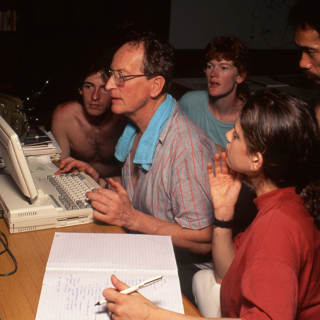
Eleven years later, Gathorne came to the Society with an invitation from the University of Brunei Darussalam to be its partner in another multi-disciplinary research project, in the eastern Temburong forests of that small but wealthy sultanate. The RGS eagerly accepted, and he did all the work to make a great success of the Brunei Rainforest Project of 1990–1991.
He persuaded Shell to pay for a Field Studies Centre at Belalong, designed it and oversaw its construction, and it remains almost the only building in those forests. After 35 years, it is still in constant use, particularly by school, university students and international researchers. This project involved 90 scientists, who reported many research findings in about a hundred books, papers and reports. And it led to the protection of the area as the Batu Apoi National Park.
This and the Mulu expedition can today be recognised as pathfinding examples of co-production of ecological knowledge in respectful collaboration with indigenous people and other in-country partners. The Society honoured Gathorne Cranbrook with its Founders Medal in 1995.
In addition to his lifelong work in South-East Asia, Lord Cranbrook was active as the peer who knew most about tropical forests, during twenty-one years in the House of Lords. When the Nature Conservancy Council was divided in 1991 he became the first Chairman of English Nature, also chairman of the Institute for European Environment Policy, and of his local Suffolk Wildlife Trust, as well as the Duke of Edinburgh’s environmental initiatives.
Everyone will miss Gathorne Cranbrook, with his huge knowledge, his dynamism, inspiration for all environmentally committed people – particularly the young and indigenous – and his delightful sense of humour.
Words by Dr John Hemming, CMG.