Researching the DMZ: Q&A with Maddie Joyce, Area Prize-winner
The 2025 Area Prize for the best paper published in the journal by an early career researcher has been awarded to Madelaine Joyce for her paper 'Sensing the sky's edge: Atmospheric insights into the Korean demilitarised zone’. We talked to Madelaine to find out more about her research.
What drew you to the Korean Demilitarized Zone as a research site?
I became interested in borders during my undergraduate degree through a second-year political geography course. Royal Holloway offered a fieldtrip to Cyprus, and I went back there over the summer for my undergraduate dissertation and worked with the UN forces in Sector 2 in the buffer zone.
I got interested in the idea of buffer zones and no man’s lands, and how areas of supposed territorial vacuity produce certain affects. I wanted to start studying the Korean DMZ when doing my Master’s, but it was during Covid, so I had to do all my research online.
Then, when I was proposing my PhD project, I was lucky enough to get the funding to study the DMZ in person.
Why should Geographers be interested in the DMZ?
In lots of ways. It’s one of the most militarised borders in the world, and it divides what was once one nation into two countries which share a culture, language, and ethnicity, but which are now divided along entrenched ideological lines.
It is also a space of potential reconciliation, and if reunification were to happen, then that space itself becomes incredibly important. It’s also a very ecologically rich space. There is lots of discussion amongst ecologists over whether the space should be preserved as a transboundary frontier zone or through some other mechanism.
So, there are lots of different aspects which would be of interest to geographers, from a political, cultural, and ecological point of view.
For readers coming to the paper for the first time, how would you describe the research or summarise the paper?
This paper came from one very specific aspect of my fieldwork, which is that when I was finally able to get to Korea, I found it very hard to actually access and research the DMZ because there are so many restrictions.
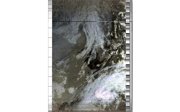
One of the ways I circumvented those difficulties was by thinking about the skies above the DMZ, the flows which are happening above the border, and, more specifically, thinking about atmospheres, which I was approaching both from an affective point of view – how the border is felt by people in an embodied way – and from a meteorological one, in terms of fog and other weather phenomena.
The paper discusses the challenges of carrying out research at the DMZ. What was the hardest part of carrying out this research?
This paper came from a place of frustration, where I felt quite stymied in my research and was trying to figure out how to approach the space. But from that frustration came experimentation and trying to access the space in more creative ways.
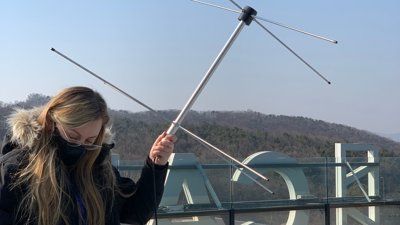
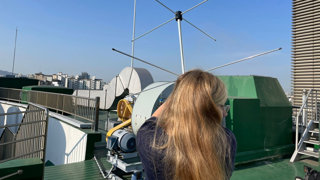
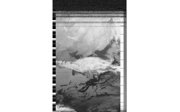
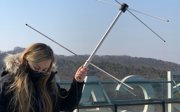
There were a lot of difficulties. Taking a big antenna around can be a little anxiety-inducing for people worrying about what you’re doing. It was hard to find spaces where I had permission to carry out satellite recordings to image the weather systems above, and to reassure the people around that it was research that I had permission to do, and that there was nothing nefarious about it.
Lots of people approached me asking whether the antenna was a drone, as there was a lot of anxiety around drones in the DMZ because around that time both North and South Korea had been flying drones across the border.
Trying to get close to the border was also very difficult, particularly as a tourist.
What was the most surprising aspect of carrying out the research?
I was most surprised by how quickly things changed at the border. Within the few of years between me proposing the PhD in 2019 and starting my fieldwork in 2022, the relationship between North and South Korea had changed from one of potential reconciliation to rapid deterioration.
Later, when I went back to the border in 2024, there had been North Korean ‘trash balloon’ releases, where animal faeces, rubbish and propaganda leaflets were attached to balloons and flown across the border, which caused a lot of anxiety in South Korea.
In response, South Korea restarted loudspeaker broadcasts at the border, which they hadn't done for a few years. North Korea then restarted their loudspeaker broadcasts too, which weren’t just propaganda and weather forecasts like the South Korean ones, but sounds of people screaming, alarms blaring or wolves howling.
The experience of local residents changed significantly, and some people couldn’t sleep at night. Depending on where you were stood on the border, you could sometimes hear the South Korean broadcast and sometimes the North Korean one.
Has writing this paper opened new questions for you that you're planning to pursue in future work?
I'm currently working on a paper around the tunnels beneath the DMZ, which was part of my PhD fieldwork and thinking about that in terms of affective atmospheres again, but also in terms of mobilities and infrastructures. The DMZ is such a rich and interesting space, and there are so many ways you could approach it.
What has been the highlight of your career so far, regardless of how big or small?
In 2023, I organised and chaired two sessions at the RGS on feminist geopolitics, which is my main area of interest, with a fellow PhD student, Jasmine Joanes.
We had 12 speakers talking about the state of research in feminist geopolitics and the direction it’s going in. We had quite a small room, but lots of people attended, and people were sat on the floors to watch it.
That just felt really rewarding to have helped organise, and to bring those different presenters together and see where that sub-discipline is going.
- Research and higher education
Mouldy homes: an issue of justice in a precarious housing market
Mouldy homes are more than an inconvenience, they are dangerous. In this research spotlight, we’re featuring Dr Sarah Klosterkamp’s research, published in Transactions, on justice in the German housing market.
Wednesday 9 Sep 2026 - Research and higher education
Learning to live with water scarcity
This month we’re featuring research published in the Geographical Journal on an issue all of us have been thinking about this summer – water scarcity.
Monday 17 Aug 2026 - RGS news
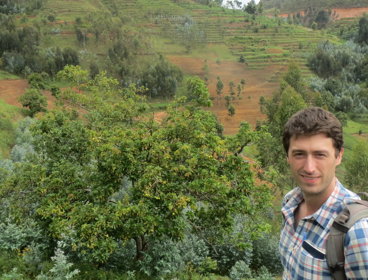
Rwanda’s eucalyptus boom: how trees transform people and place
This month's research spotlight features an article from The Geographical Journal, telling the story behind Rwanda’s eucalyptus boom.
Monday 15 Jun 2026