
Royal Geographical Society honours 27 geographers in 2026 medals and awards
Today, the Royal Geographical Society announces that the marine ecologist, conservationist and explorer Dr Enric Sala, and the pioneering urban geographer, Professor Loretta Lees, have been awarded the Society’s two prestigious Royal Medals. These are part of a series of awards given annually by the Society in recognition of extraordinary achievement in geographical research, fieldwork and expeditions, teaching, policy, professional practice and public engagement.
The Royal Medals, which are of equal standing, have been approved by His Majesty the King, and are among the highest honours of their kind in the world, presented since the 1830s. Past recipients include Sir David Attenborough, Dame Fiona Reynolds and Neil Armstrong.
Dr Enric Sala is awarded the 2026 Founder’s Medal in recognition of his global leadership in ocean conservation, the quality and reach of his research, including over 300 scientific papers and 30 documentaries, and the impact of his work. Dr Sala has held a range of research positions at Scripps Institution of Oceanography in La Jolla, California, one of the world’s leading oceanographic institutions.
Since turning to conservation full time in 2008, Dr Sala founded and continues to lead National Geographic Pristine Seas, a project combining research, media, economics and policy in collaboration with communities that depend on the ocean, as well as national and international policymakers. To date, the project has helped create 30 of the world’s largest marine reserves, encompassing over 6.9 million km2.
Professor Dame Jane Francis, President of the Royal Geographical Society, said:
“Few individuals will leave such a lasting legacy for our oceans as Dr. Sala. He has advanced our understanding of marine ecosystems and the threats they face, and he has formed productive partnerships with governments, international bodies, communities that depend on the ocean, and the wider public to educate people and achieve real solutions to protect the most fragile parts of our oceans.
“Dr Sala’s work embodies the spirit of exploration, scientific inquiry and discovery that the Founder’s Medal champions.”
Dr Enric Sala said:
“To receive the Founder’s Medal, with the gracious approval of His Majesty The King, is a profound honour that carries an equally significant responsibility: to persist in our mission to explore and protect the world’s most vital marine environments.
“While I am humbled to join the distinguished ranks of previous recipients—many of whom I consider personal heroes—I must also acknowledge the indispensable contributions of my Pristine Seas team. For nearly two decades, their dedicated efforts alongside me have been instrumental in our shared pursuit of marine exploration and conservation for the benefit of people and ocean life."
Professor Loretta Lees receives the 2026 Patron’s Medal for her groundbreaking contributions to urban geography and leadership in the study of gentrification, housing and urban inequality. Her writing and publications are among the most comprehensive works on gentrification and displacement in cities throughout the world. She has employed a range of methods to track displacement and housing inequality, from ethnographic biography to tracking consumer and administrative records.
Professor Lees’s work has achieved significant policy and public impact. She has delivered comprehensive reports on housing and displacement for the Greater London Authority, published good practice guides and anti-gentrification handbooks, and chaired the London Housing Panel from 2020-2022. Professor Lees also continues to shape the future of her field with her support of early-career researchers, and through her influence as one of the top five most-cited urban geographers globally.
Dame Jane Francis said:
“Professor Lees has defined an entire sub-field of geography for decades and continues to do so. Her methodologically rich, varied and wide-ranging research has been pivotal to the study of urban geographies, gentrification and displacement.
“She has made an indelible contribution to the future of the field, both through researchers she has mentored and the global body of scholarship that has cited her work. The Patron’s Medal is a richly deserved recognition of all she has accomplished.”
Professor Loretta Lees said:
“Geography is the discipline of the 21st century. It taught me critical thinking and how to address social justice challenges in cities.
“I am deeply honoured to receive this medal. It would not have happened without all the amazing people I’ve worked with over the years; it is for them as much as me.”
This year, the Society’s medals and awards recognise 27 people for their outstanding contributions to geography. Other recipients include:
- Felicity Aston MBE, who receives the Geographical Award for her leadership of expeditions in extreme environments, building a platform for conservation, mentorship of young explorers and achievement in bridging the space between elite exploration, public accessibility and advocacy.
- Steve Backshall MBE, who receives the Ness Award for his role in energising enthusiastic interest in the natural world, its species and environments amongst massive public audiences, blending adventure, scientific accuracy and passionate communication.
- Professor Rachel Pain, who receives the Victoria Medal for her world-leading research on disasters, violence, and recovery; on urban trauma, citizenship, and interpersonal violence; and on participatory action research approaches and methods.
- Professor Danielle Schreve, who receives the Busk Medal for her achievement in mammalian biostratigraphy, revealing the ways that mammals, as well as our environment, have changed over the past two million years.
- Ackroyd & Harvey, who jointly receive the Cherry Kearton Medal and Award for their multi-decadal practice at the boundary between sculpture, photography and other image making, and environmental knowledge production.
Professor Joe Smith, Director of the Royal Geographical Society, said:
“It is our great privilege to recognise such an outstanding group of scholars, researchers, explorers and conservationists for our 2026 medals and awards.
“This year’s recipients are recognised for deepening our understanding of our world, its people, and the processes that shape it. We celebrate their contribution to geographical science and we know that such recognition inspires further achievement and sparks curiosity”.
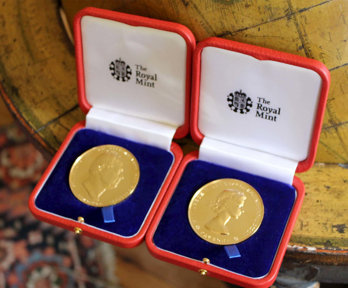
Society medals and awards
Our prestigious medals and awards recognise excellence in geographical research and fieldwork, teaching and public engagement.
Latest news and stories
Stay informed with the latest news, announcements and stories from across geography and our work.
Press and media
Get in touch with us for media enquiries or if you'd like to film at the Society.