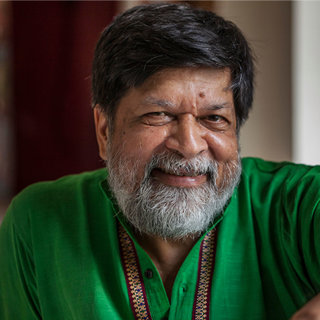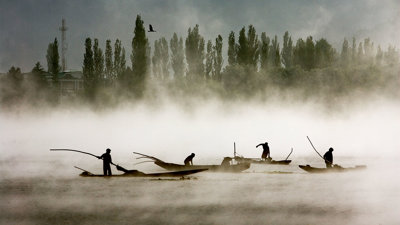
Shahidul Alam is a photographer, writer, film maker, curator, institution builder and human rights defender. He was a Time Magazine Person of the Year 2018. New York Times listed his book The Tide Will Turn in Best Art Books of 2020.
He is a National Geographic Explorer at Large. His numerous awards include Ekushey Padak, the second highest civilian award in Bangladesh which was given for his contributions in education and culture.
In 2024 he represented Bangladesh in the United Nations General Assembly.
He is the founder of the agencies, Drik Picture Library and Majority World, the media school PathshalaSouth Asian Media Institute and the international festival of photography Chobi Mela.
In 2018 Alam was arrested and tortured following his reporting on the Bangladesh government’s brutal suppression of student protests. The case was dropped after a seven-year legal battle.
He is considered a prisoner of conscience by Amnesty International. He is widely published and has exhibited worldwide including at MOMA in New York, Tate Modern in London, Tehran Museum of Contemporary Arts and National Art Gallery in Kuala Lumpur.
He has chaired the international jury of World Press Photo. He is currently exhibiting at Museo Vivo del Muralismo in Mexico City.
Hear Shahidul speak at Summit Photo 2026
Shahidul will speak at Summit Photo 2026 on Friday 17 July at 7.30pm to the title Vocabularies of resistance.
Vocabularies of resistance examines how artists and activists forge new languages of dissent, not only through the images and stories they create, but through the very conditions and spaces in which art is made and encountered.
Drawing on a rich range of practices, the talk traces Shahidul Alam’s career, throughout which photography has been a means of critical engagement, alongside the organisations he founded Drik Picture Library, Pathshala, Chobi Mela, and Majority World. These are not merely institutions, but acts of world and community building, platforms through which dominant narratives are challenged and vital forms of representation are created.
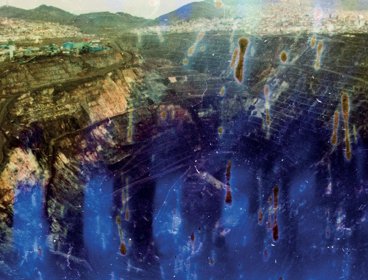
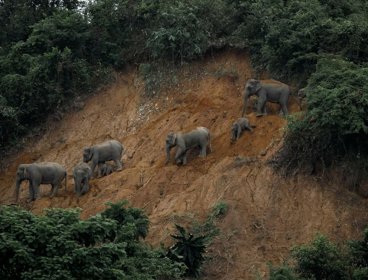
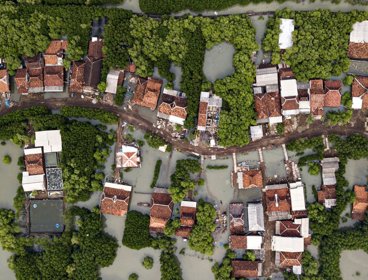
From works including Crossfire and Kalpana’s Warriors, to the powerful presence on the Flotilla, and the performative public showing of Crossfire – a moment where the act of gathering itself became an act of resistance the talk highlights how creative collaboration, actions and practice can intervene in urgent political realities.
Together, these examples illuminate how different approaches to art production, from documentary to performance, from gallery to street, to structural transformation shape the political force of creative work, and ask: what does it mean to speak, show, and be seen when the stakes are highest?
Join us for an evening that challenges us to think differently about the role of art in movements for justice.