Our expert panellists will discuss the geographical and historical threads linking Britain to Islam, the significance of material culture and the arts in telling these stories, and how Islamic heritage is being documented in Britain today.
Reflecting on Islamic collections within the Society and other institutions, built heritage and everyday living heritage, we consider the different ways in which links between Britain and Islam are exposed throughout history and in contemporary times.
About the speakers
Sadiya Ahmed is a Freelance Heritage Consultant. She established Everyday Muslim Heritage and Archive Initiative in 2013 in response to the lack of representation of the Muslim narrative in archives, museums, and education in Britain.
There are three archive collections comprising oral history interviews, personal documents, photographs, and ephemera, held across five archive repositories in London and the South-East. In addition, the Everyday Muslim website hosts a considerable collection of educational materials, videos, and podcasts.
Currently, Sadiya is developing a digital history map of Muslim history in Britain.
Tharik Hussain is an award-winning author, historian, travel writer and Fellow at the Centre of Religion and Heritage at the University of Groningen (Netherlands), specialising in Muslim heritage and culture. His latest book Muslim Europe: A Journey in Search of a Fourteen Hundred Year History was published to critical acclaim in December 2025 and his previous book Minarets in the Mountains (2021) was longlisted for the Baillie Gifford Prize, shortlisted for the Stanford Travel Book of the Year and won the Adele Evans Award.
Tharik's books have been translated into several languages including German, Chinese (Mandarin) and Arabic, and he has also written several guides for Lonely Planet. His next publication, Muslim Britain and Ireland: a Travel Guide to Sites of Islamic Heritage and Culture is the first mainstream guidebook to focus on the Muslim heritage and culture of the British Isles and will be published by Bradt Guides in October 2026.
Luqman Ali is the co-founder and Artistic Director of Khayaal, the first professional theatre company dedicated to exploring classic Muslim literature through contemporary stagecraft to foster intercultural and interfaith engagement. Since 1997, Khayaal has staged award-winning productions at prestigious venues such as The Globe, The British Museum, and internationally across Morocco, Pakistan, Sudan, and beyond. Luqman continues to lead Khayaal's innovative Theatre-without-Walls programme, promoting wisdom tales from multiple faith traditions.
Before founding Khayaal, Luqman specialised in the languages, literature, and cultures of the Middle East and the Indian Sub-continent, and spent a decade as a linguist, writer, and translator. He also served as Programmes Manager for a humanitarian NGO, raising funds for refugee projects in the Middle East with DFID and UNHCR. Luqman is a fellow of the Royal Society of Arts, and an alumnus of the Windsor Senior Strategic Leadership Programme.
Tara Panesar (Chair) is a PhD Candidate in Museum and Heritage Studies at the University of Leicester. She is exploring how objects (like humans) experience migration and displacement, with particular focus on how a collection from Ladakh, Kashmir has experienced physical and ontological transformation through being collected and displayed by the British Museum. She studied a Masters in Heritage Studies at UCL and History of Art at the University of Cambridge, focussing on Mughal, Ottoman and Silk Road art and archaeology respectively. She is also an Honorary Research Associate at the Science Museum, where she is currently co-editing a volume on the role of care in museums with the Smithsonian Institution Scholarly Press.
Tara has previously worked as a Research Fellow at the Science Museum, developing ideas around 'transcultural museologies' and then as an Assistant Curator, working on a flagship gallery exploring the last 250 years of global transformation in science, industry and society. Before this, she worked at the British Museum and English Heritage. Currently, alongside her PhD, she works as Content and Interpretation Manager at Museum Studio, collaborating on content strategy with museums across South, East and West Asia.
Please note: The views of our speakers do not necessarily reflect the opinion of the Royal Geographical Society.
Note on captions
The Society aims to provide automatically-generated captions for all event recordings. The captions appear as text at the bottom of the video which you can toggle on and off.
The accuracy of automatically-generated captions varies depending on the audio quality, any specialist language used and the speaker. They are therefore are unlikely to be 100% accurate and the Society does not edit or correct automatically-generated captions.
- Discussion
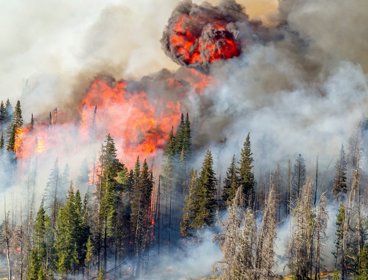
Living with risk: the geography of disasters
This panel explores how societies can better understand and adapt to geographical risk.
London and onlineOpen to allTuesday 27 October 2026 - Discussion

The rise of the global shadow fleet and the geography of flags of convenience
Discover how shadow tankers, flags of convenience and weak regulation create risks for people, the environment and the future of maritime responsibility.
London and onlineOpen to allTuesday 3 November 2026 - Film screening
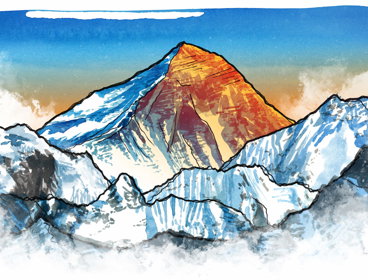
Everyone's Everest - Sally Orange MBE
Having faced the uphill battle of cancer recovery, Sally shares the essential tools and wisdom she used to find strength in the wild.
London and onlineOpen to allWednesday 4 November 2026