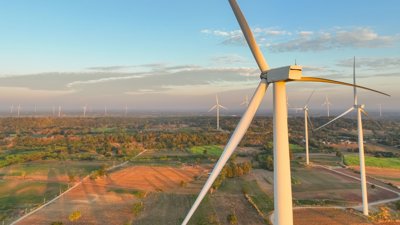
Decarbonisation is essential to tackling climate change, but does the transition to a low-carbon economy risk creating new environmental and social injustices? From the extraction of critical minerals and the use of land and natural resources to the development of renewable energy infrastructure, this panel explores the hidden costs and competing priorities of the energy transition. Against the backdrop of COP31, our speakers will ask how we can balance climate ambition with environmental protection, social justice and global equity.
Meet our speakers
Rosie Day is Professor of Environment, Energy and Society in the School of Geography, Earth and Environmental Sciences at the University of Birmingham. Her research focuses on environmental and energy justice, with more than 20 years' experience working on these issues. She has contributed to numerous UK and international projects addressing energy poverty, energy transitions, water governance and the governance of net zero initiatives.
Jon Lovett is Chair of Global Challenges in the School of Geography at the University of Leeds. His research focuses on natural resource management, spanning areas including the impacts of climate change on biodiversity and the economics of technology transfer. He has attended five UNFCCC Conferences of the Parties (COPs), including the 2009 Copenhagen summit. His recent work includes projects on capacity building and renewable energy technologies across Africa, Indonesia, India and Mexico.
Jeff Amrish Ritoe is Managing Director of Number Three BV. He has almost 20 years' experience in the energy industry, specialising in commercial agreements, acquisitions and divestments. Having held a range of roles at the international energy company ENGIE, his current work focuses on supporting public and private sector organisations in developing their involvement in critical raw materials supply chains. He holds a Master's degree in International and European Law from Leiden University.
Chaired by David Waddell, a senior business journalist and producer at BBC News, specialising in global business and reporting on major developments across energy, transport and international markets and brings extensive experience covering complex global issues and interviewing key industry figures.
Please note: The views of our speakers do not necessarily reflect the opinion of the Royal Geographical Society.
Note on captions
The Society aims to provide automatically-generated captions for all event recordings. The captions appear as text at the bottom of the video which you can toggle on and off.
The accuracy of automatically-generated captions varies depending on the audio quality, any specialist language used and the speaker. They are therefore are unlikely to be 100% accurate and the Society does not edit or correct automatically-generated captions.
- Discussion
COP 31: What Just Happened?
Another year, another COP. But what did the latest round of international climate negotiations actually achieve? As world leaders, policymakers and campaigners return from COP 31, this panel brings together leading voices on climate politics and governance to unpack what happened, what was agreed, and what it all means for the future of global climate action.
OnlineResearchersFriday 27 November 2026