
Per- and polyfluoroalkyl substances (PFAS) are often called 'forever chemicals' because they barely break down once released into the environment. They are now found almost everywhere: in rivers, soils, sediments, wildlife, and even in the human body.
Growing evidence links PFAS to serious risks for ecosystems and human health, raising concerns that they could continue cycling through the environment for centuries.
In this lecture, Professor Patrick Byrne, Liverpool John Moores University, explains why PFAS pose such a long-term challenge and how modern hydrology can help tackle it.
By using new tools to track water movement and chemical transport, hydrological science can reveal hidden PFAS sources, clarify how these chemicals spread, and provide the evidence needed to reduce PFAS pollution at its source, before it becomes a truly forever problem.
About the speaker
Patrick Byrne is a Professor of Water Science at Liverpool John Moores University. His research focusses on understanding sources and transport dynamics of organic and inorganic contaminants in ground waters, surface waters, and coastal environments.
He has worked extensively on mine pollution source apportionment to support remediation strategies across the UK, USA, Canada, South Africa, China, and the Philippines.
More recently, his research has expanded to PFAS contamination, with an emphasis on load-based monitoring, catchment-scale source attribution, and the processes controlling PFAS mobilisation in river systems.
This event has been organised by the North West regional committee with Liverpool John Moores University.
The Society aims to provide automatically-generated captions for all event recordings. The captions appear as text at the bottom of the video which you can toggle on and off. The accuracy of automatically-generated captions varies depending on the audio quality, any specialist language used and the speaker. They are therefore are unlikely to be 100% accurate and the Society does not edit or correct automatically-generated captions.
Three Stripes South - Bex Band
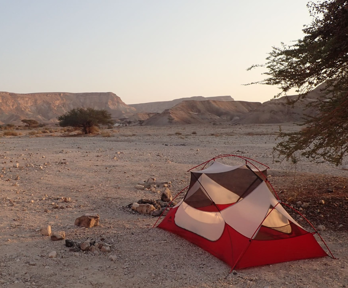
Three Stripes South tells Bex's transformative adventure - battling heat, exhaustion, self-doubt and prejudice - and the new life she built for herself when she got home, founding the Love Her Wild women's adventure community.

Where is everyone? The importance and challenges of mapping human populations
Accurate maps of population distributions are vital for effective governance, but can often be lacking. How can we use new geospatial technologies to address this?

The travel photographer’s way - Nori Jemil
Award-winning photographer Nori Jemil’s discusses her ground-breaking photography book. She focuses on travel imagery, from people and landscape to architecture and adventure.