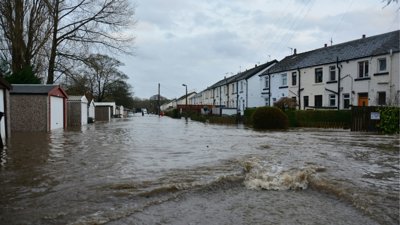
Surface water (or pluvial) flooding happens when heavy or long duration rainfall cannot drain into the ground and accumulates on the surface. It can be sudden, unpredictable, cause substantial damage and potential danger to life and livelihoods.
The Environment Agency projects that 4.6 million properties are at risk from flooding today – an increase of 43% from their previous estimates. With climate change, this is projected to increase to 6.1 million by 2060. But how can we better predict flooding and be prepared for it?
This panel discussion, hosted by the RGS-IBG Climate Change Research Group, will hear from experts in academic, consultancy and government who will describe their greatest challenges in forecasting and preparing communities for surface water flooding in a changing climate.
About the speakers
Linda Speight, Departmental Lecturer in Physical Geography, University of Oxford Linda Speight is a hydrometeorologist who researches early warning systems for surface water flooding. Her work explores both the technical capabilities of forecasting systems and how probabilistic forecast information is communicated, interpreted and used in practice.
Working at the interface between science and operations, she is particularly interested in how to translate advances in forecasting into actionable information to support decision making and improve resilience to extreme weather events.
Harriet Freestone, Chartered Senior Analyst, Flood Resilience, JBA Consulting Harriet Freestone works for JBA Consulting and leads the Exeter Flood Resilience team, focusing on emergency planning and property flood resilience. She leads the design and delivery of multi-agency exercises, strengthening partner readiness to respond effectively to flooding.
Harriet also manages several property flood resilience projects, working with the public to understand their flood risk and resilience options. She also supports East Sussex’s Blue Heart Flood and Coastal Innovation Programme, supporting integrated water management solutions for Eastbourne. As part of this, JBA has developed an integrated catchment model and is working with machine learning tools to improve surface water forecasting.
Annabel Beasley, Devon Resilience Innovation Project Officer, Devon County Council Annabel Beasley works in local government in Devon, a county that is vulnerable to flash flooding due to intense rainfall with no or little warning. She works with communities to improve their resilience to surface water flooding by developing emergency plans and deliver natural flood management interventions to slow the flow of water reaching properties during intense rainfall events.
Annabel is also trialling a new surface water flood forecasting alert system, aiming to provide communities with advance warning of heavy rain that could lead to surface water flooding. This comes with numerous challenges in the accuracy of forecasting surface water flooding, particularly with climate change.
Booking information
- Advance booking for this event is required. In order to book you will need an account on our website. If you already have an account you will be prompted to log in when you click 'book now'. Please create an account if you do not have one yet (you do not need to be a member of the Society to create an account).
- This event will be held on Zoom and joining instructions will be included in your confirmation email.
If you have any questions or require assistance with your booking, please email events@rgs.org
- Workshop

Celebration of teaching and learning in geography higher education
This event organised by the Geography Education Research Group is dedicated to exploring and celebrating teaching and learning in geography (and allied disciplines) in Higher Education.
OnlineResearchersMonday 6 July 2026 - Webinar
Taking part in the Society's Annual International Conference
This webinar is aimed at postgraduate geography students who want to make the most of attending the Society’s Annual International Conference.
OnlinePostgraduatesTuesday 7 July 2026 - Networking

Rural Geography Research Group morning coffee - July
MRes or PhD students researching anything related to rural geographies are invited to join the Rural Geography Research Group for its monthly relaxed, friendly early morning coffee meeting, this July.
OnlinePostgraduatesThursday 23 July 2026