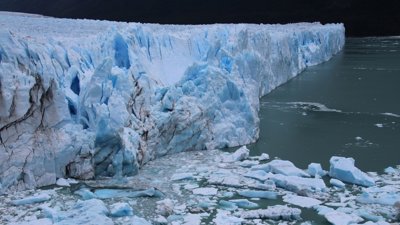
A UK UNESCO initiative reveals the disastrous loss of glaciers and their vital supply of water to mountain communities, and enhanced ice sheet melting that will accelerate coastal flooding world-wide.
About the speakers
Professor David J Drewry. Director, Natural Sciences at the UK Commission for UNESCO (2017-25) and Honorary Fellow at Emmanuel College, Cambridge University. Previously Director of the British Antarctic Survey and Director of the Scott Polar Research Institute, Cambridge.
His research interests are in radio echo sounding and satellite radar altimetry of ice masses and ice-climate interactions. He has a mountain and a glacier named after him in Antarctica.
Dr Caroline Clason. Associate Professor at Durham University. She is a glaciologist specialising in glacier hydrology, with interests in both mountain and polar environments.
Caroline has a background in geography and has conducted research in multiple regions, from the Arctic to the Andes. Her work applies an interdisciplinary approach to assess the impacts of changing glacier meltwater production for water security and environmental quality under shifting patterns of climate and land use.
Professor Robert Bingham. University of Edinburgh. He is a glaciologist whose principal research addresses the causes and pace of polar ice-sheet change, and the contributions of polar ice sheets to global sea levels.
He was awarded the Polar Medal by H.M. the Queen in 2013 for contributions to Arctic and Antarctic science. Over the last decade observations gathered by his group across Antarctica have demonstrated active ice losses around Antarctica’s coast and provided valuable boundary conditions for projections of the ice sheet’s future.
Professor Noel Gourmelen. University of Edinburgh. He is involved in Earth Observation specialising in remote sensing and cryosphere studies. His research focuses on using satellite observations to understand glacier dynamics and ice sheet changes.
With a keen interest in radar altimetry, he has contributed significantly to innovation and applications based on CryoSat-2, and to the development of the upcoming CRISTAL mission. His work plays a crucial role in assessing global sea level rise. An advocate for collaborative science, he participates actively in international initiatives like GlaMBIE to advance the accuracy of glacier monitoring techniques.
Dr Hamish Pritchard. British Antarctic Survey. His focus is on the two great glaciology issues: ice-sheet deglaciation/sea level rise, and the role and future of mountain snow and ice as a water resource.
His work involves i) measuring glacier volumes on river-basin scale using a new airborne radar he developed and deployed in Nepal Himalaya, and ii) developing a better way to measure mountain snowfall over areas larger than hitherto.
Booking information
Monday night lectures are open to Fellows and Members and are included in the cost of membership.
Attending in-person
- All Fellows and Members wanting to attend in person must pre-book a free ticket. You will receive an e-ticket with a QR code that will be scanned on arrival. Your ticket can be shown on a mobile phone or printed. If you do not have a smartphone, we can find your name on the door list instead.
- Doors open at 5.30pm. Please use the Society's entrance on Exhibition Road. The lecture will begin at 6.30pm.
- Monday night lectures are held in person in the Ondaatje Theatre. The bar will be open in the Map Room before and after the lecture. Please be advised all payments are card only.
- The Ondaatje Theatre is fitted with a hearing loop. For the best quality sound we recommend sitting on the outside rows of the front seating section.
- There is step free access to the theatre. Wheelchair spaces can be booked in advance. If you have any questions about the venue, please contact events@rgs.org
Watch online
- You do not need to pre-book to watch the lecture online.
- All Monday night lectures are livestreamed via our website so you can watch them from wherever you are.
If you have any questions or require assistance with your booking, please email events@rgs.org
Venue information
This event will be held in the Ondaatje Lecture Theatre at Royal Geographical Society (with IBG), 1 Kensington Gore, London, SW7 2AR.
Plan your visit to the Society and find more information about our venue, including our address, accessibility and transport links.
About Monday night lectures
Our Monday night lectures are exclusive to Fellows and Members and are included in the cost of membership. Members can book to attend the lectures in-person at the Society, or enjoy them live from the comfort of your own home.
These lectures are also recorded and uploaded to our website solely for members to catch up on whenever they like. If you would like to receive a weekly reminder email about the upcoming Monday night lecture, please sign up to our Updates about our Monday night lectures newsletter.
Accessibility at our events
We want everyone to feel welcome at our events. Key accessibility features of this event include:
- Step-free access to the event
- Accessible toilets
- Assistance dogs are welcome
- Hearing loop
For full details, please visit our accessibility page. If you have any questions or specific access requirements, feel free to get in touch with us on access@rgs.org
- Monday Night Lecture
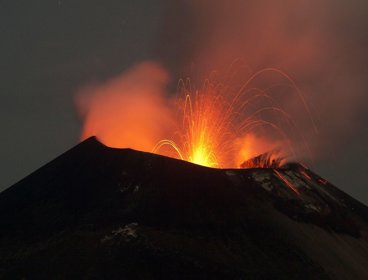
Exploring volcanoes - Professor Sir Steve Sparks
Volcanoes are spectacular evidence that we live on a dynamic planet. There are many ways to explore volcanoes to reveal how they work from sophisticated technology to expeditions to remote places to observe their activity.
London and onlineMembers + one guestMonday 28 September 2026 - Monday Night Lecture
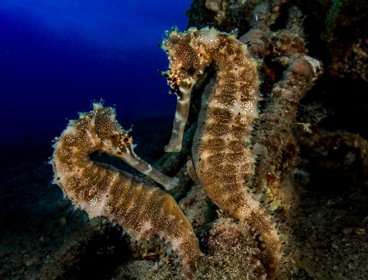
Saving seahorses to help save our seas - Professor Amanda Vincent
Leading conservationist Professor Amanda Vincent tells a compelling story of blending research, management and policy to make change for ocean life, with the magical seahorses guiding our way.
London and onlineMembers + one guestMonday 5 October 2026 - Monday Night Lecture

Putting the news on the map
Leading journalists and media watchers will place the stories of the week within the wider geographical landscape, making connections across environmental, political and social forces.
London and onlineMembers + one guestMonday 12 October 2026