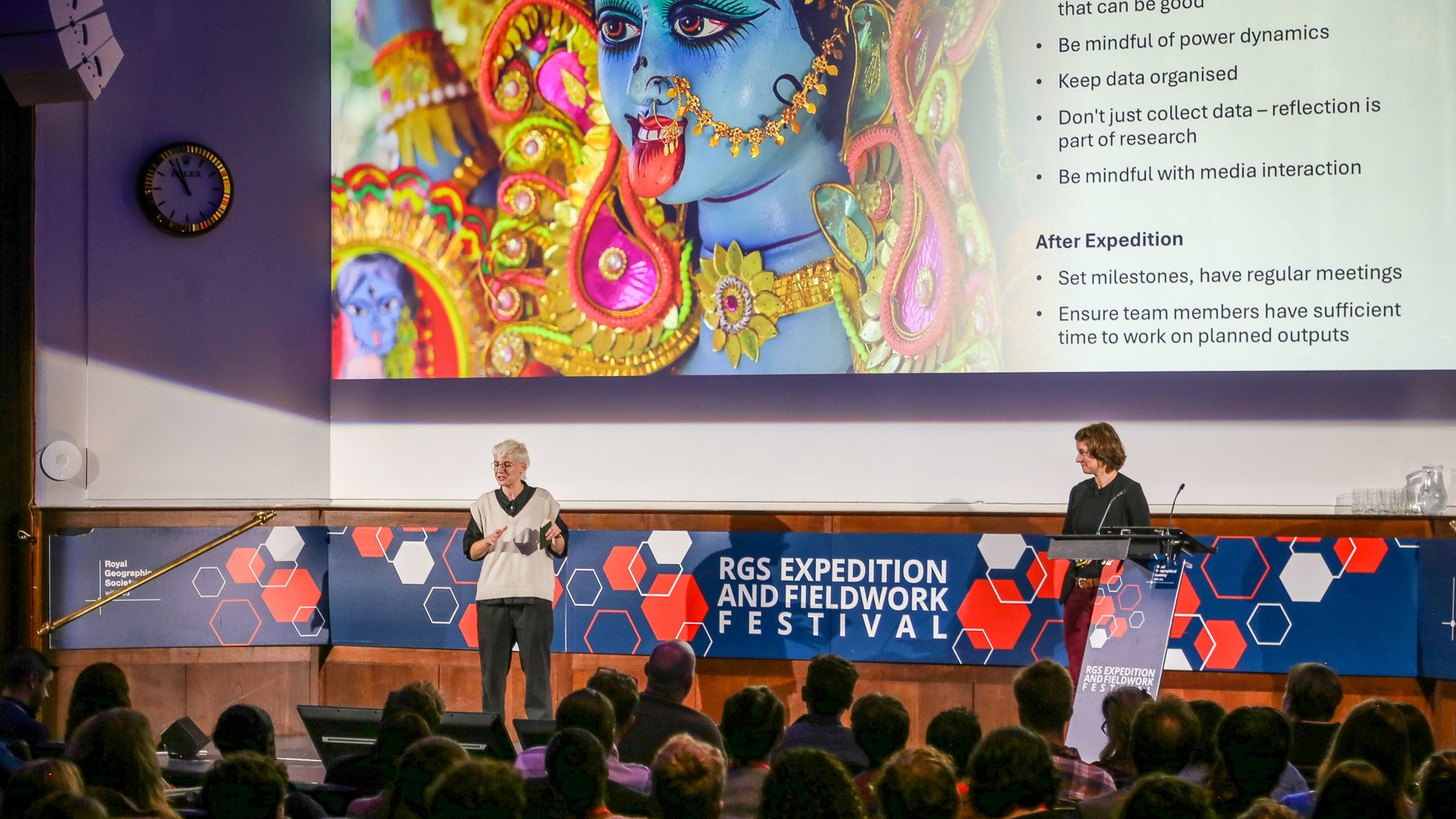
Looking to find the right people to help your expedition take flight?
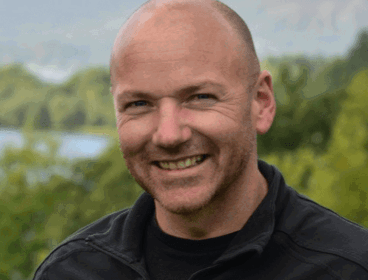
In this talk recorded at the RGS Explore Weekend in November 2022, behavioural coach, speaker, and expedition guide Scotty Johnson shares his take on how to make the most of the event. He focuses on embracing curiosity, forging connections, and – most importantly – pursuing those connections to see where they might lead.
What does this talk cover?
Scotty, founder of Explore What Matters, a wellbeing and leadership group using outdoor journeys for learning, asks the audience key questions such as, "what problem am I trying to solve?".
Scotty leads a discussion on the power of asking insightful questions and engaging in meaningful conversations to embark on journeys that bring great fulfilment. Delivered as an opening address to encourage networking at the RGS Explore Weekend, Scotty paints a compelling picture of how proactive engagement can lead to exciting and unforeseen opportunities – and help turn dreams to reality.
Challenging the audience to immediately get involved, he makes a direct request to those present. “In the spirit of connection,” he says. “I would like you to have a conversation with someone you’ve never met before and ask them, ‘so why are you here this weekend?’”.
Key moments
- 00:15 – RGS Explore Weekend: the place to connect
- 06:00 – The spirit of connection
- 10:20 – Ikigai: a reason for being
- 12:10 – What is the problem I’m trying to solve?
- 14:15 – How to get the most from the Explore Weekend
- 16:13 – Words are cheap, actions require effort
Full transcript
I would like you to have a look around the room. If we could have the lights up briefly, please have a look around the room. See who’s here. Make eye contact with a few people. You might want to smile. You might want to nod. You might want to wink in a slightly inappropriate way.
Okay. This is the most extraordinary opportunity this weekend. It’s already been mentioned: relationships. They offer huge potential to do great things. It’s no surprise that in any research about wellbeing and looking after ourselves, relationships usually score highest as the single biggest factor that contributes to our wellbeing.
This weekend is an amazing opportunity to develop new relationships, rekindle old ones, and potentially make some great things happen.
I can quite confidently say that there is a person in this room here today who is going to have a profound positive effect on your life. It’s certainly happened to me over the years I’ve been here. I’ve had some amazing opportunities, met some great people, and ended up in some great projects.
I met Oliver Beardon here, who runs Sail Britain. I met him here a few years ago. I’ve had some wonderful trips sailing with Oliver. I even had a whirlwind romance once as a result of Explore. That wasn’t with Oliver, just to be clear – although he is a dashingly handsome chap. So yes, I’m sorry, Oliver.
In terms of how you get the most from this weekend, how you step into doing something meaningful and purposeful and make this a wonderful weekend, it’s something we often wrestle with: how to travel with purpose, or step into something meaningful.
I’m going to run through some ideas for you. I’ll put my contact details up here. I’m always really happy to talk to people about how you dive into some of this thinking around finding purpose and meaning and doing great things. So please feel free to get in touch.
Okay, so one concept is ikigai. Hands up who’s seen this before.
Yes, it’s become increasingly more popular. On one Sunday afternoon on a rainy winter’s day, grab yourself a coffee, sit in front of the fire, and spend a couple of hours reflecting on some of these questions. This can be really useful to help you think about what matters to you and what you might pursue.
It’s a really great exercise to go through the Japanese concept of ikigai, best translated as a reason for being. It covers a range of things. There’s a simpler version, which you could probably do whilst you’re sitting here right now, before you even go into the coffee break.
Think about the question: what does the world need? The easy answer is probably quite a lot right now. But think about what it would be really useful to contribute towards or to pursue.
The second question is: what matters to you? Hands up who’s really clear what their values are. A few people. This is a question to reflect on: what’s really important to you? What matters to you?
That’s often a reflection of our values and beliefs, which are shaped by experience, education, and the things we’ve been exposed to. When you combine those two things, you might end up with purpose and some sense of meaning.
In the world of wellbeing and looking after ourselves, many of us are seeking slightly more meaning in our lives.
Another way to think about this is our why. What’s our why? Why do we want to do the things we want to do? If you have a really strong, powerful why, it’s a fire that will never go out. If you’ve got a strong why, you get out of bed in the morning really clear about what you want to do and why you want to do it.
There’s even a book about this, and it’s one of those books where the title is so good you don’t need to buy the book: Start with Why. There’s another book with a similar situation where the title is so good you don’t need to buy it: Feel the Fear and Do It Anyway. I’m clearly not on commission from the publishers.
So have a think about the types of endeavours you might step into.
There are purpose-led endeavours, where you’re really clear what your why is, really clear what your purpose is and what you want to achieve. You then design fieldwork, expeditions and travel based on that purpose. In this scenario, the purpose comes first.
For example, in one of the talks last night there were some young women who did an expedition in the Cairngorms. They wanted to inspire other young women to get out into the outdoors, slow down and enjoy nature.
Your purpose may be that you’re really interested in a specific part of biodiversity or geology, or something you’ve just heard about. Once you’re clear about that, it’s actually really easy to think about the environment in which you can do it.
There are adventure-led endeavours, where you just want to go out and have a really damn good adventure. Absolutely, there’s a place for that. Travel and adventure are often the antidote to ignorance. Travel wonderfully opens our eyes: we learn, we meet people, we have experiences.
Part of adventure could be the concept of firsts, furthest, fastest. Some people love that sort of stuff, and there is an audience for it. Probably no one will be more interested in that than yourselves – or maybe your mum – but there is a place for it.
Then there is pseudo-purpose. This is where it gets slightly edgy, and some of you might feel uncomfortable.
Pseudo-purpose is when one day you wake up and think, 'I’m going to hop from Headingley to Harare with a washing machine on my back, wearing a wetsuit and a brogue on one foot.' Why are you doing that? Oh yes, because the Thames is really dirty.
You bolt on some kind of tenuous moral cause to a crazy adventure. This happens quite a lot, and it can feel slightly awkward. When you go for funding and people ask why you’re doing this, often people talk about the exciting bit of the adventure first and then bolt on some pseudo-purpose at the end. The people who might give you the money can sometimes smell a rat.
There are lots of ways of raising awareness, doing great things and having an impact. It’s probably just easier if you’re clear what you want to do first, and then work out the adventure afterwards.
Then there’s the world of false drama. Some of you will be familiar with a famous story about Shackleton. After 17 days crossing the Southern Ocean in the James Caird, and 36 hours crossing the mountains of South Georgia, they look down over the whaling station of Stromness. Shackleton gets his phone out and says to Crean and Worsley, 'My God, man, we nearly died. We need to Instagram the hell out of this.'
The world of false drama is there. There’s a market for it. If you spend your life pretending you’re going to die unless you squeeze the water out of the elephant dung every two minutes, you can make a career out of that.
It’s something we can all relate to. We all know what it’s like to experience difficulty. There is little learning without difficulty, and sometimes transformation comes through suffering in the outdoors.
So have a think about the type of endeavour you want to do, and why.
We’ve got two days together this weekend. As a predominantly British audience – though not everyone – some of us find it awkward to talk to people. We go through the pleasantries and ritual clichés, talking about the weather.
Time is precious this weekend. We don’t have much time on breaks or at lunchtime, so here are some possible questions you might want to ask each other. Take a photograph of this if you like. They’re designed to get you into good, meaty conversations and help establish connections and relationships that will support what you want to do, and help you understand and support others.
A few top tips to get the most from Explore: speak to people. Someone said to me last night that they were here last year and found it intimidating. There are lots of very experienced people here, and they didn’t know how to approach them.
If you consider yourself quite experienced, choose to go and speak to people you wouldn’t normally speak to. Set yourself the challenge of asking those questions and thinking about how you might help.
Embrace curiosity. Ask really good questions. Offer help and ask for help.
I was saying to someone last night that these are the magic ingredients of making great things happen. When I was in my twenties, before there was the internet, I was thinking about what I wanted to do with my life. I knew I was interested in adventure and the outdoors.
I got some magazines and handwrote six letters to six organisations, telling them what I loved about what they did and how I thought I could help. All six replied, and all six offered me an opportunity.
I now do a lot of work with corporate organisations. The number of times people in HR say to me, 'If only everyone got in touch with us, told us what they love about what we do and how they can help, it would save us recruiting anybody.' It’s really powerful.
Be diligent with your follow-up. Conversations are easy; the hard bit is what happens afterwards. If you meet great people here, initiate your follow-up within the first week.
The last thing I would say is to think about the impact you want to make and the impact you want to achieve, and start with that. If you’re going to have a website, start by thinking about your impact.
As a young Outward Bound instructor, my mentor taught me the rule of thirds: a third of your time and energy to get to the top, a third to come down, and a third just in case. I think that’s the same when you’re planning adventures and fieldwork. Often we put loads of effort in at the start and don’t keep enough in reserve for the meaningful stuff at the end.
I’m aware of the time. It’s definitely time for a coffee break. We’ll be back in here at 11:45. Thank you very much. Have some great conversations and a wonderful Explore.
This transcript has been lightly edited for readability and web publication. The wording has not been substantively changed, and speaker meanings and intents have been preserved.
- Video
The anatomy of an expedition plan with Felicity Aston MBE
Learn the essentials to construct a robust expedition plan, with the first woman to ski alone across Antarctica, Felicity Aston.
- Video
The future of biodiversity: a keynote address with Dr James Borrell
Is biodiversity in an unstoppable freefall? Renowned conservation biologist Dr James Borrell explains how all is not lost – and how you can help.
- Video
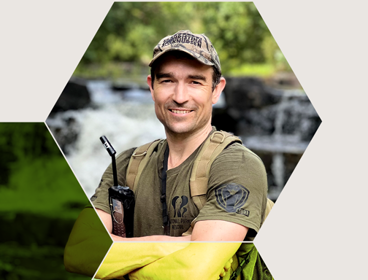
Why fieldwork matters: protecting the planet with Dr Niall McCann
Discover the incredible impact expeditionary fieldwork can have on biodiversity conservation with biologist and explorer Dr Niall McCann.
Stay updated
Be the first to hear when new resources are launched by subscribing to our monthly exploration digest. You may also choose to receive other mailings from the Society.
- You will be asked to create a free RGS.org account if you haven't already done so.
- Once logged in, navigate to My preferences and select Exploration news, events and opportunities.