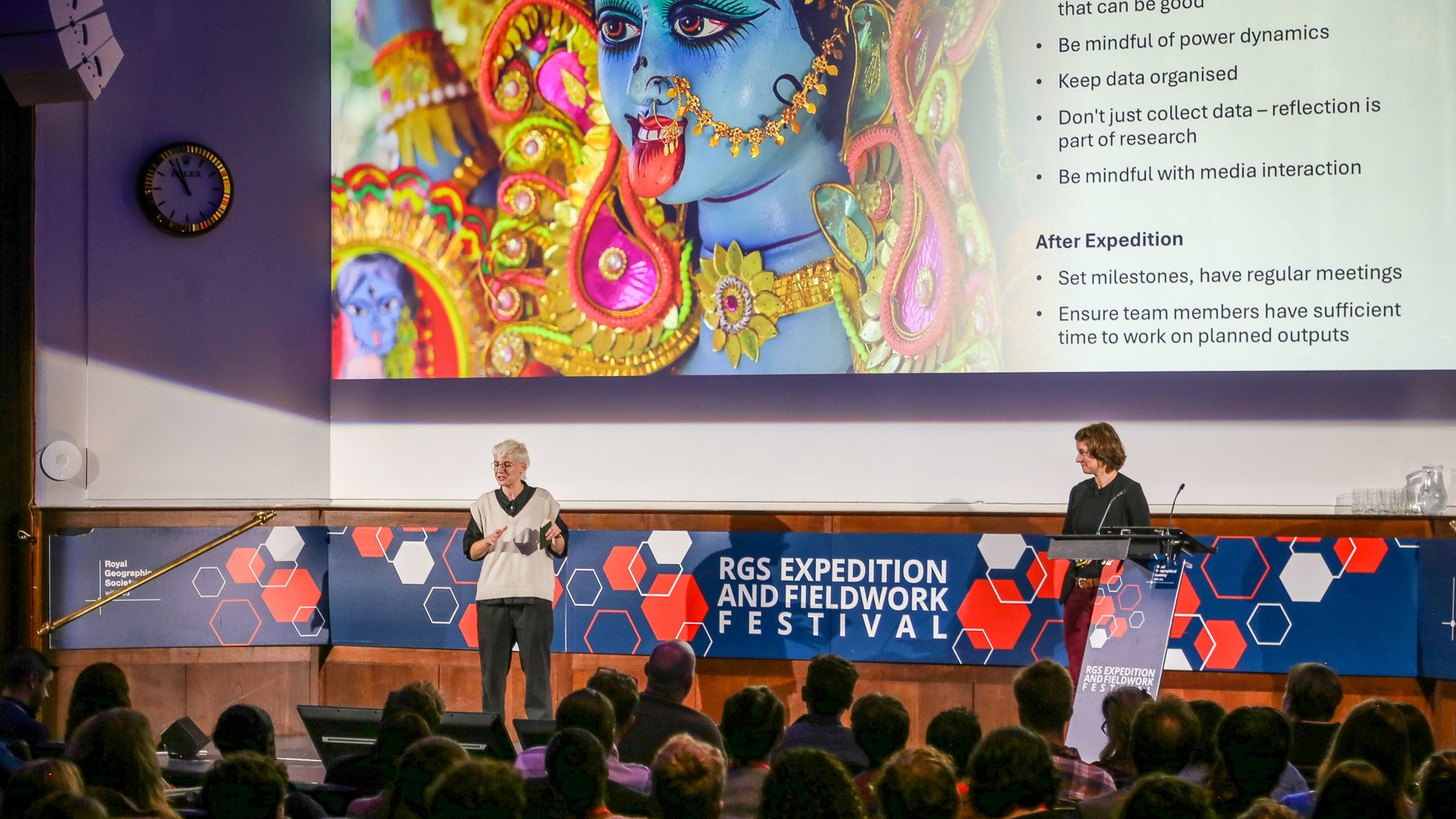
Securing expedition funding can be challenging. So if you’re preparing to ask potential funders to support your expedition proposal, and you’re looking for experienced advice, look no further! Here at the Royal Geographical Society we’ve invited some of our most experienced staff and Fellows to share their top tips to help you secure financial support when pitching your next purposeful journey.
1. Be crystal clear about your purpose
Alastair Humphreys is a seasoned expeditioner who has cycled 46,000 miles around the world, raced a yacht across the Atlantic Ocean, canoed 500 miles down the Yukon River, and pioneered the concept of the ‘microadventure’, which encourages people to seek out adventure and wilderness close to home.
“What is the purpose you’re going to add to this so it’s not just a ‘jolly’?” asks Alastair. “What’s the one thing you would measure as a successful output?”
Asking someone else to pay for your expedition – for example, by applying for a Society grant – demands a defined purpose beyond self-gratification. Simply put, how does your project align with the goals and ethos of the funder? How is your project going to have a positive impact?
“Your pitch needs to show how your project is making a contribution”, agrees Shane Winser, the Society’s Expeditions Advisor. That contribution could be scientific, educational, cultural, or something else altogether, but without it your project will appear to lack value. And without clear value, potential funders will find it hard to see the benefits of supporting you.
2. Explain what’s truly different about your project
“There’s a lot of people going off doing cool trips in cool places,” says Alastair. “What’s unique about you and your skills and your point of view?”
Your expedition must have a ‘unique selling point’ or ‘hook’, and you must take the time to define and articulate it. By describing a project in terms of breaking new ground in a specific discipline, testing new approaches or methods, cultivating new collaborations, or exploring new locations or research questions, you’ll find attention and support comes more easily. Novelty and originality of approach create the potential for discovery and new knowledge.
Clearly differentiating your expedition will also demonstrate that you’ve spent time finessing your aims, rather than imitating those who’ve gone before – a key criterion for many of the Society’s expedition grants – and one of the essential elements that funders, including commercial sponsors, will be looking for.
3. Always be ready to pitch your idea
“Every person you talk to when you pitch – whether it’s an elevator pitch, or to a cousin or an uncle – is potentially someone who might be able to help you,” says Shane. “Don’t forget the ask, because it’s that 30 seconds … that will really make that difference.”
Whether you’re being introduced to a prospective sponsor or talking to a potential future teammate at the RGS Explore Weekend, being ready with some well-versed lines about what you aim to achieve, what support you’ll need – and, crucially, why it matters – will help spark the conversations that’ll get your project off the ground.
Practice makes perfect – so find a critical friend who’ll provide honest input, video yourself and self-critique the recording, or ask the team here at the Society for feedback.
Just remember that pitch readiness isn’t about rehearsing a rigid script from which you’ll later find it hard to deviate. It’s about being able to authentically and persuasively explain your idea in a succinct, compelling, audience-aware way.
4. Match funding to your aims, not the vice versa
Dr Sarah Henton De Angelis is a volcanologist, long-time Fellow and the Society’s Grants Officer. She has extensive experience in field research from the Caribbean to Alaska, and oversees the annual awarding of more than £270,000 in funding to almost 100 expeditions and field projects worldwide.
“Take the time to shop around for funding sources. Funding bodies and corporate benefactors all have their own motives, focus, and requirements. Make sure your project fits with their aims,” she says.
Most grant-giving organisations, including the RGS, publish clear eligibility criteria as well as details of focal areas for specific funds. Resist the temptation to alter an expedition too heavily in order to satisfy someone else’s aims. Being true to your aims, motivations and competencies is essential for success – particularly if you reach the interview stage and there’s nowhere left to hide.
“Don't pin all your hopes on a single funder – try to create a portfolio of funding opportunities to apply for,” says Sarah.
In other words, spend time finding potential funders aligned with your goals, rather than opportunistically reshaping a project to match nearby sources of support.
5. Under-promise and over-deliver
Many expeditions are necessarily ambitious in their aims. But trying to achieve too much in too short a time will put unnecessary pressure on you and your team, jeopardising your ability to succeed, creating poor decision-making conditions and putting the team at risk. When someone else’s money is being spent on an endeavour, the stakes can feel higher still.
“There’s all sorts of good stuff to do, but if you try to do all of them, you risk not doing any of them massively well,” says Alastair.
“Ensure that the scope of your project is realistic within your timing and budgetary parameters,” adds Sarah. “Grant reviewers are eagle-eyed when it comes to unrealistic proposals; they are not interested in the cheapest project but in those that offer value for money and a high chance of success.”
It may be contrary to your nature, but by focusing on fewer objectives and ensuring that achieving them is within your team’s comfort zone, you’ll mitigate the risks that come with over-promising, sound more realistic and convincing when pitching to potential funders, and allow your backers the pleasure of being delighted when you do go above and beyond.
6. Invite your funders to help write the story
Don’t just reel off a list of logistical plans, budget lines and expensive items of equipment. Instead, tell the story of what inspired the expedition, what challenges stand in your way, the value of overcoming them – and how the potential funder could be part of the solution.
“Draw people in,” says Dr Eleanor Drinkwater, an entomologist, expedition leader, and RGS grants reviewer. “Imagine you are a writer who is writing the hook for their best-selling novel. Why do you want people to care?”
A solid budget is certainly useful, but engaging financial support is about building a narrative in which a funder can see themselves playing an instrumental role in the success of your venture. Think of making an invitation to join you on the journey, rather than a disconnected plea for funding, and you’ll be halfway there before you even begin your pitch.
If you want to learn more about delivering a compelling expedition pitch, and much more besides, join us at the annual RGS Explore Weekend each November for in-person workshops, inspiring talks, the opportunity to hear from our past grant recipients, and more.
About this article
This article was drafted by Tom Allen FRGS, the Society’s Expeditions and Fieldwork Manager, and reviewed by Shane Winser FRGS, the Society’s Expeditions Advisor, and Dr Sarah Henton De Angelis, the Society's Grants Officer. The content is based on conversations had during a recent series of RGS Explore More: Pitch your project webinars. The article was last updated in June 2026.
- Video

Expedition and field safety management with Stephen Jones
Discover deep insights into effectively managing safety in the field with RGS Expeditions and Fieldwork Committee chair, Stephen Jones.
- Article
Getting started: field safety principles for expeditioners
Learn essential safety principles for any expedition, covering risk assessments and emergency planning to ensure a safe and successful journey.
- Publication
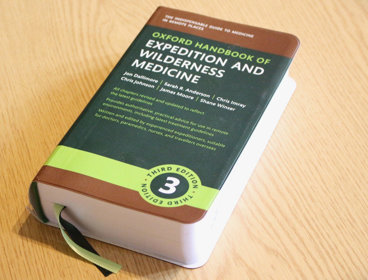
Oxford Handbook of Expedition and Wilderness Medicine
Heading into the wild? Authored by our expert Fellows, this is your essential, pocket-sized guide for remote medical emergencies.
Stay updated
Be the first to hear when new resources are launched by subscribing to our monthly exploration digest. You may also choose to receive other mailings from the Society.
- You will be asked to create a free RGS.org account if you haven't already done so.
- Once logged in, navigate to My preferences and select Exploration news, events and opportunities.