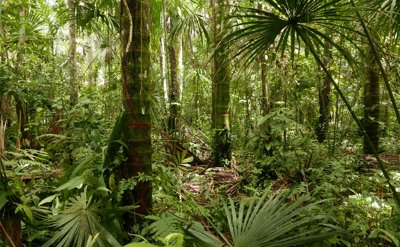
Aguaje and tropical peatlands in Peru
The research described in this resource and podcast is being carried out by a consortium of scientists and social scientists from the Instituto de Investigaciones de la Amazonía Peruana (IIAP) and the universities of St Andrews, Leeds and Edinburgh. Thanks especially to colleagues at IIAP without whom this research would not be possible.
Tropical peatlands are an increasingly well-known habitat between 30° N and S of the equator. Dr Katy Roucoux from the University of St Andrews specialises in long-term ecology and palaeoclimatology and is currently studying Peruvian Amazon peatlands, in the Pastaza-Marañón Basin (PMB). The images below are taken from an online exhibition about the work of Katy’s research group: From steaming swamp to blanket bog: peatlands in action.
The exhibition presents a selection of photographs taken by researchers from the Universities of St Andrews, Edinburgh and Leeds, and the Instituto de Investigaciones de la Amazonía Peruana (the Institute for Research in the Peruvian Amazon) which make up the Tropical Wetlands Consortium. You can also find information there about peatlands in Britain.
Peru has the third largest extent of peatlands in the tropics (after southeast Asia and the Congo basin). In the PMB alone they cover an estimated surface area of 35,000 km². The PMB is an area in lowland Peru where the peatlands have been intensively studied and mapped (peatland formation also occurs in the Peruvian highlands).
Peat in this part of Peru is made of partially decomposed organic matter, including the leaves, stems, roots, and branches of trees that grow on the peatland, such as the aguaje palm. As in UK peatlands, the organic matter in tropical peatlands decomposes very slowly due to waterlogged conditions and, as a result, it builds up over time. This stores considerable amounts of carbon taken up by the plants during photosynthesis and converted into the trees' wood and roots. Land clearance and drainage for commercial agriculture, such as widespread oil palm plantations in Indonesia, damage peatlands. Once cleared these plantations are drained, crucially they dry out, speeding up decomposition and releasing huge amounts of CO₂ into the atmosphere. Although peatlands in the PMB are currently intact, there are threats to them from agriculture. If they are to remain intact, with their carbon stores below the ground and their ability to sequester carbon preserved, then this drainage and clearance must be avoided.
Adaptation
The aguaje palm has many characteristics which make it well suited to growing in the waterlogged conditions of Amazon peatlands. Use the plant adaptations activity within the resource document to illustrate this.
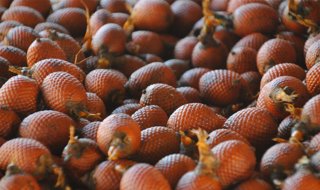
Figure 1 aguaje fruit © Dael Sassoon sold as a snack or made into ice cream, drinks, cakes, or jam
The indigenous group of the Pastaza-Marañón Basin are the Urarina people. Urarina women harvest the young shoots from aguaje palms growing in a peatland palm swamp close to their community. This is a sustainable, practice, done in the driest season. Palm-fibres are spun and woven into textiles.
There's also a lot of carbon locked up in the peatlands of Britain and Ireland. Can we keep it there and even return drained bogs to life, sucking more CO₂ from the air? This question is answered in the BBC Radio 4 programme 39 Ways to Save the Planet, with our accompanying teaching resource Bog-tastic!
Further work
-
BCC Radio 4 teaching resources 39 Ways to Save the Planet
-
Freelance Science Writer Dr Caroline Wood Tropical peatlands
-
A brief review on climate change and tropical peatlands by Leng L, et al.
-
Come on a journey through Peru’s tropical peatlands, From steaming swamp to blanket bog
This resource was first published in 2021.