Nature reserves and national parks
If you are reading this in the UK, you live in one of the most “deforested, biodiversity depopulated landscapes on Earth”, explains Professor Yadvinder Malhi. Some of the landscapes that we see as tradition or cultural in the UK are extremely depleted in much of their nature.
In George Monbiot’s book Feral he also points to how many landscapes around the world are perceived as natural when in fact they are not. In chapter 12 Monbiot describes a trip to Montgomeryshire Wildlife Trust, which is run by devoted and conscientious people but now sustains, at great expense, a barren landscape. The area is artificial in origin, created in 1866 by the lead mining boom in the Llanidloes hills. The critique is that everything in the nature reserve, it seemed to Monbiot, was kept below knee height, “except for the sheep and cattle”.
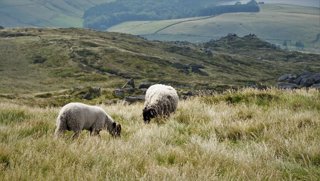
Figure 1 the Peak District. The UK is one of the most nature-depleted countries in Europe
In many British upland areas (such as Montgomeryshire, or in UK national parks) the health of the ecosystem is measured by intervention and management. This stewardship ultimately creates conserved but bleak landscapes that only just meet the nature conservation standards for international recognition.
None of Britain’s national parks are truly wild. For example, more than 90% of the Peak District is in fact farmland. Monbiot explains:
Even by European standards – let alone those of North America and much of the rest of the world – the United Kingdom has a peculiar fear of nature, and its conservationists a peculiar fear of letting go. Germany, France, and Slovakia are permitting part of all of their national parks to rewild. Most countries in Europe now have large areas of self-willed land.
However, with the arrival of COVID-19 and the resulting shift in lifestyles, there has been a substantial increase in interest in improving these landscapes, both locally and nationally. There is a new momentum to improve the state of nature, particularly at the local scale. The difficulty lies in balancing this new public enthusiasm with the leverage of resources (both private and public) while also acknowledging the social and cultural factors around the British rural landscape (for example food production and farming). As Professor Yadvinder Malhi says:
It is a complicated problem, as it is everywhere else in the world. There is no easy solution to this, but there is a momentum and will for things to be different.
Globally the issue is that humans are disproportionally affecting every single biome on the planet, in spite of representing a mere 2.5% of animal biomass and only 0.01% of total biomass. This impact has manifest in both a climate crisis and biodiversity crisis.
Table 1 below shows the breakdown of animal biomass globally. Bear in mind this table only represents 0.4% of total biomass. Column 1 shows the taxonomic organism groups (in both tables).
|
Animal biomass: 2 billion tonnes of carbon (0.4% of total biomass) |
||
|
Organism |
Carbon in bn tonnes |
% of animal biomass |
|
Arthropods |
1 |
42 |
|
Fish |
0.7 |
29 |
|
Annelids |
0.2 |
8 |
|
Molluscs |
0.2 |
8 |
|
Cnidarians |
0.1 |
4 |
|
Livestock |
0.1 |
4 |
|
Humans |
0.06 |
2.5 |
|
Nematodes |
0.02 |
0.8 |
|
Wild mammals |
0.007 |
0.3 |
|
Wild birds |
0.002 |
0.08 |
Table1 data extracted from Our World in Data Biodiversity and Wildlife
The whole of Table 1 – the animal kingdom – is only a fraction of total global biomass. In fact, Table 2 below clearly shows life on Earth is dominated by plants. This underscores how small the impact of humans on planet Earth should be.
|
Global biomass: 546 billion tonnes of carbon |
||
|
Organism |
Carbon in bn tonnes |
% of global biomass |
|
Plants |
450 |
82.4 |
|
Bacteria |
70 |
12.8 |
|
Fungi |
12 |
2.2 |
|
Archaea |
8 |
1.5 |
|
Protists |
4 |
0.7 |
|
Viruses |
0.2 |
0.04 |
|
Animal biomass |
2 |
0.4 |
Table 2 data extracted from Our World in Data Biodiversity and Wildlife
Humans are causing damage to the planet. So much so that a new geological age, called the Anthropocene, has been identified as the current time period. This word is derived from the Greek words anthropo, for man, and cene for new. Learn more by reading: What is the Anthropocene?
Some of the changes to the current climate crisis and biodiversity crisis are irreversible. According to NASA’s Goddard Institute for Space Studies, the average global temperature on Earth has increased by at least 1.1°C since 1880, while the UN has described he decline in biodiversity as “unprecedented in human history”, with the rate of species extinctions accelerating at such a rate that “grave impacts on people around the world now likely”.
There is widespread concern that the planet is approaching a number of “tipping points”. To understand more read: Imminent tipping point threatening Europe’s permafrost peatlands.
Ecosystem restoration
Ecosystems and biodiversity still hold the key to life on this planet. Different species rely on one another to survive. The protection and rebuilding of biodiversity must be a top priority because it underpins all life on Earth. Over the immediate future humans must work to recover lost ecosystems and repair those that are degraded. A current issue is the continued destruction of forests around the world. A key statistic is that planet Earth has roughly half the trees that once existed before human civilisation (around 3 trillion).
How can we make good things happen? How can we bring back nature into a depleted landscape? The task is to stop the damage and to start the repair process. One restoration approach should be the recovery and protection of global forests, because they are such an important carbon sink. Research undertaken in our existing climate suggests that outside of urban and agricultural areas there are 0.9 billion hectares of land where trees would naturally exist (but do not). This is enough space for just over 1 trillion new trees.
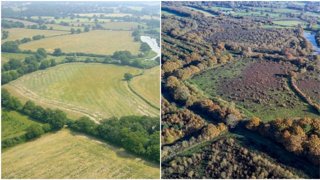
Figure 2 successful ecosystem recovery at Knepp Estate in West Sussex © Knepp Wildland
It is important to note that tree planting, such as the “Great Green Wall” in the Sahel, should only be one of many interventions to limit climate change. There is no single restoration solution to our current crisis and there are multiple threats. Fundamentally, humans must cut emissions and protect ecosystems that still remain (alongside many other initiatives).
Careless restoration is also a very real threat. In particular, the planting of rapid growth monocultures does not restore ecosystems, nor does it revive soil fertility or return biodiversity to an area.
Ultimately trees need to be the symbol for entire ecosystem restoration. The restoration of nature is about restoring something back to its original state. If this can be achieved a healthy ecosystem would help with other global threats such as extreme weather events, droughts, food shortages, and pandemics.
Activity
- Study the data in Table 1 and 2. What elements surprise you in the data sets?
- Practise creating a Treemap chart in Excel. To do this complete the following steps:
-
Open the Excel document titled 44 Taxa data
-
Select tab 1 titled Global biomass
-
The data table and chart has already been completed for you
-
Delete the chart, highlight the dataset, and click Insert, then Recommended Charts
-
Click All Charts and select Treemap
3. Open tab 2 titled Animal biomass and complete a second Treemap from scratch.
Further reading
-
Powys Country Times, Montgomeryshire mining boom and the lead in the Llanidloes hills
-
Geographical The failure of Britain’s national parks
-
George Monbiot Feral
-
Natural History Museum UK has “led the world” in destroying the natural environment
-
The University of Oxford Wytham Woods
-
Carbon Brief Imminent tipping point threatening Europe’s permafrost peatlands
-
The Royal Geographical Society (with IBG) What is the Anthropocene?
-
TED The global movement to restore nature's biodiversity | Thomas Crowther
-
Geographical Africa's most ambitious idea: The Great Green Wall
This resource was first published in 2022.