Field recording for school data collection
Podcast
This resource is linked to the podcast How to record audio when out in the field with Celia Robbins.
Audio recordings are an excellent form of data collection. They could be utilised in a Key Stage 3 end of year project, or for an NEA assignment. A soundscape recording can evocative, data-rich, and incredibly useful in analysing space and place.
Below are some examples of audio documentaries on topics relevant to geography, which use a range of sounds and recording techniques. Pay attention to the way sound is used and think about which sounds would be engaging in relation to whatever work your students might undertake.
-
BBC Sounds, Ghost Ponds in Norfolk (pond ecology)
-
BBC Sounds, Women Who Walk (walking artists)
-
Outside In, The Lithium Gold Rush (mineral extraction)
The last example is from the US, what do you think of the narration style vs the BBC style in the Ghost Ponds piece?
Formats
There are many different types of audio recordings. Students could record a monologue, a storytelling narrative, a comparison piece, conversations, or a simple interview format.
Below are 7 factual audio formats to consider.
-
Magazine style. This describes a combination of news read by the hosts, studio guests, and pre-recorded packages e.g., Inside Science (BBC), Costing the Earth (Radio 4), The Naked Scientists (BBC Cambridge).
-
Studio-based interview and discussion. This is the simplest (and most controlled format) involving an interview between a host and a guest e.g., The Life Scientific (Radio 4), Ask the Geographer (RGS-IBG).
-
Field-based interview. Interviews linked together by a host with the added dimension of ambient location-based sound, e.g., Ramblings (BBC) and Lives in a Landscape (Radio 4).
-
Documentary. The BBC-style long form documentary uses an array sounds including ambient and field recordings, multiple interviews, music, and speech. Some geographers have contributed to this genre, e.g., Against Our Ruin (Radio 4), Women Who Walk (Radio 4 Art of Now).
-
Storytelling. This approach is used by many popular American factual podcasts. In contrast to the documentary, it is narrative-driven and in some cases uses an investigative style. RadioLab has a distinctive, informal style and has been very influential. A popular format in which three separate stories are presented within a show is e.g., This American Life (Chicago Public Radio). The BBC has picked up this three-part format in e.g., the BBC Earth Podcast (BBC Studios).
-
Essay. This is when a host presents a scripted essay. It might include music or other sounds to add sonic interest. e.g., Isn’t That Spatial (Independent US geography podcast), or From Our Own Correspondent (Radio 4). Geographer Rose Ferraby contributed to the Radio 3 Essay strand which follows this approach, in the episode Gypsum & Alabaster.
-
Lectures. Some universities release recorded lectures as a podcast e.g., the University Oxford podcasts.
Suggested equipment
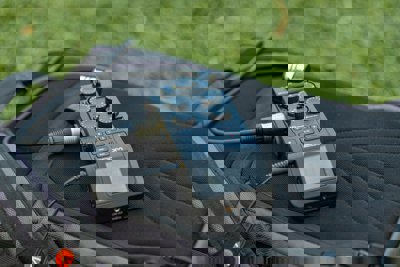
It is important that you find out what equipment you have access to. For example, ask your music department if they have invested in any portable sound recording equipment. Once you have your equipment, experiment with it. When recording out in the field, use headphones to listen to what you are recording. Be aware of wind noise and of handling noise (sound which can come from accidently knocking the recorder and microphone, or by bashing the cables).
A Zoom H5 recorder, a Rycote wind cover, and a Rode reporter mic (primarily for face-to-face interviewing outdoors in the field) are examples of high quality recording equipment. The Rode reporter mic can be used on its own or in conjunction with the built-in mics on the Zoom H5. The latter would give a soundscape of where the interview is taking place alongside the recorded voice.
Your computer is an audio recorder, did you know that? Get familiar with the audio settings and recording options. If you do not have an audio recorder, the Rode NT USB mic will produce good recordings using a computer.
There are cheaper options for departments with smaller budgets. Some ideas are listed below.
-
A Zoom H1n recorder
-
The Samson USB microphone to use with computer (this one is well reviewed, but you can find cheaper)
-
Good quality headphones which are ‘over ear’ rather than in-ear options
-
The Lapel microphone to use for interviews with any device (phone, computer, voice recorder) that has a standard audio jack n.b. most iPhones now have just a lightning port and do not have a standard audio jack, you will need to use a wireless version or an adapter)
Editing software
There are many different editing options for cutting your recorded sounds together, all with varying cost. Audacity is open source and is widely used because it is free. Reaper is popular in the audio world especially among creative producers. Alternatively Audition, which is part of the Adobe suite, is extensively used by freelance producers.
There are other audio resources which you may benefit from. Freesound.org is a creative commons library of field recordings. You can find all sorts of great sounds here, n.b. please check each recording for details of whether the creator asks to be credited. Also Audiogram may be helpful, it creates engaging videos to share with your audio content on social media.
This resource was first published in 2022.