
Beaches in Bali
When you think of Bali, your mind’s eye drifts to picturesque images of volcanoes, lush tropical forests and pristine sandy beaches – a paradise for holidaymakers. In fact, tourism has significantly contributed to Indonesia’s status as the fastest growing economy in Southeast Asia and is classified as a Newly Emerging Economy. As a result, Indonesia managed to significantly reduce poverty rates to under 10% in 2019.
Bali, a very popular holiday island within Indonesia, draws in over three times more than its own population in tourists each year. However, this influx has fuelled a heightened demand for single use plastics including straws, water bottles and cups to cater to the needs of the thriving tourism industry. Underpinned by a struggling waste management system in this developing nation, it is no wonder that Bali’s rivers are some of the most polluted in the world. During the rainy season, plastic is washed from the rivers to the sea creating a paradoxical vision of the tropical beaches which attracts tourists.
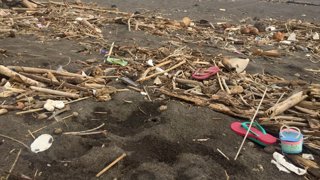
Figure 1: Waste on Pantai Tangtu, Bali, Indonesia. © Sally Earthrowl
1. Watch the following TED Talk on a youth organisation called ‘Bye Bye Plastic Bags’. What methods are being introduced in Bali help reduce the plastic waste on their beaches and in their rivers?
Impacts of plastic in the oceans
Plastic from the coastline and rivers is carried out to sea by currents and converges in the gyres of the ocean known as oceanic garbage patches. One of the most well-known is the Great Pacific Garbage Patch. However, it is sadly not an isolated case; others can be found in almost every other ocean in the world. They are even building in the Mediterranean and North Sea.
Most of this plastic cannot fully break down and consequently, marine life unwittingly incorporates this plastic into the food chain, posing a threat to the delicate balance of the ocean's ecosystem.
In the image below, you can see nurdles, fibres and secondary microplastic fragments collected in the North Pacific Garbage Patch.
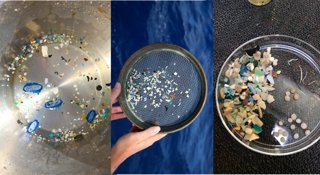
Figure 2: manta trawl* sample from North Pacific Gyre in 2018. © eXXpedition.
*A manta trawl is where a fine mesh net, 60cm wide, is taken across the surface of the ocean for one nautical mile, collecting surface debris.
2. Look at the following website from Surfers Against Sewage which provides some excellent statistics on plastic pollution in the oceans.
Arctic ecosystems
In sharp contrast to Bali’s warm, tropical temperatures lies the Arctic ecosystem characterised by its harsh, freezing temperatures. Despite the formidable conditions, the Arctic tundra serves as a home to a multitude of organisms, plants and wildlife which have adapted to the unique conditions found there.
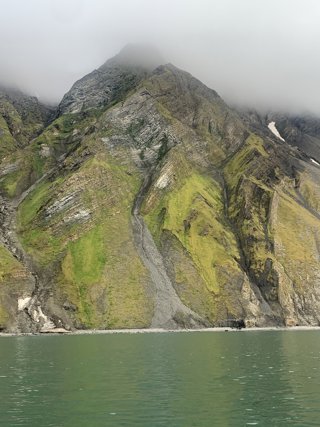
Figure 3: The Arctic landscape in Svalbard © Sally Earthrowl and Barba Boat.
Even though the Arctic is the smallest ocean in the world, its influence reaches far beyond its boundaries as Arctic currents and water masses extend across the globe. Its layering system is fuelled by inputs from the Pacific and Atlantic oceans based on density and salinity sets it apart. Therefore, unlike most oceans, the Arctic’s thermocline is not as distinctive allowing water to mix and influence the thermohaline circulation.
The Arctic is renowned as one of the most biologically productive ecosystems in the world. The Arctic Ocean alone is home to nearly 250 different species of fish species. The wildlife which has adapted to these extreme conditions have created a complex food web showcasing the remarkable resilience of life in the Arctic.
3. Watch the following video on ocean currents. If there were a change in this current, how it could affect global temperatures.
Climate change in the Arctic Ocean
With increasing temperatures caused by global warming, solar radiation is increasing the temperature of the epipelagic (or sunlight) zone in the oceans which are propelled by the thermohaline circulation.
In addition, increasing meltwater from thawing glaciers created by an increase in air temperature adds fresh water into the sea. This water is lighter than its saline counterpart and rises to the surface bringing with it warmer water from the deeper parts of the ocean. This process in turn accelerates the melting of ice where the sea meets it creating an undercut. The increased undercutting will amplify the amount of fresh water entering the ocean changing the salinity of the water.
The precise implications this will have on the future formation of ice in the Arctic is still debated but it is widely acknowledged that low saline water stays at the top of the sea creating sea ice. If warmer water from the depths comes to the surface, it will contribute to the melting of the ice from below.
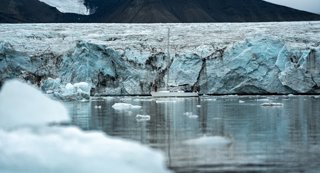
4. Create an annotated diagram to explain how glacial meltwater can affect the melting of the ice from below.
Futures
It is easy to fall into the trap of feeling that climate change is inevitable and that actions are too slow to change the effects. This is a phenomenon recognised as ecoanxiety by psychologists. However, is it important to bear in mind that even small actions can make a difference.
Consider the positive example of whaling populations post the International Whaling Commission's moratorium in 1985-86. Since then, there has been increased numbers of fin, humpback and blue whales. This act, although at an international level started because local and national communities recognised the need for action.
Micro-actions; the small steps everyone can take, play a pivotal role in reducing our environmental footprint. Evaluating our buying habits and making small changes to our daily lives will contribute to an improvement to our environment. It is also important to remember that the climate didn’t change overnight and therefore our actions to rectify the damage won’t yield immediate results either.
5. Look at the SHiFT website to see what micro-actions you could take to reduce plastic pollution.
Further reading
- Barbas Arctic Sense voyage 2023
- eXXpedition Round the World plastic research voyage
- Salt is more important in sea ice formation, Reading University 2022
- Report by Jennifer Lonsdale reflecting on 40 years since the moratorium on commercial whaling was implemented, 2022
- Ocean current and how they affect plastic accumulation
This resource was first published in 2024.