UK tourism and the North Coast 500
The purpose
Tourism is a broad industry encompassing travel, accommodation, food and beverage services, transport, vehicle hire, travel agencies, recreation, conferences, employment, the number of visitors to (and from) the UK and how much visitors spend. During the COVID-19 pandemic 3 successive lockdowns between 2020 and 2021 have strangled the industry which relies completely on the free movement of people. This teaching resource is designed to offer an update on the current state of tourism, both in the UK and vis-à-vis British tourists travelling abroad. Whilst there has been a huge environmental gain from less international travel (with a 10% reduction in aviation emissions globally during the pandemic) there has also been a huge impact on employment within the sector as passenger numbers through UK airports dropped from 296 million in 2019 to only 73 million in 2020 (a 75.2% reduction).
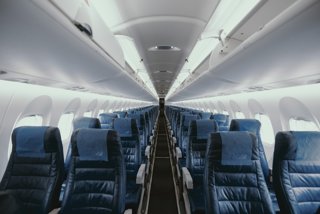
Figure 1 Passenger numbers through UK airports plunged by 75.2% from 2019 to 2020 © JC Gellidon
Specification links
AQA
Ecosystems under stress. 3.1.6.5 Marine ecosystems Human activity and its impact: Major drainage basin schemes, onshore development, desalination, pollution, tourism, fishing.
Edexcel
Area of study 2: Dynamic Places Topic 3: Globalisation 3.6 The emergence of a global culture, based on western ideas, consumption, and attitudes towards the physical environment, is one outcome of globalisation.
OCR
Topic 2.1 – Changing Spaces; Making Places. 1.a. Places are multi-faceted, shaped by shifting flows and connections which change over time.
Eduqas
Coastal Landscapes. Coastal processes are a vital context for human activity. Positive impacts of coastal processes on human activity including the growth of tourism.
Introduction
Since Prime Minister Boris Johnson said on 16 March 2020 that ‘now is the time for everyone to stop non-essential contact and travel’ the UK tourism and travel industry has dramatically altered.
-
To understand the chronology of events from 2019 to 2021 use the statements below to draw out a timeline of events.
|
17 May 2021 Air corridors are replaced by a traffic light system. UK tourists will be able to visit 12 green list countries without having to quarantine on their return
|
3 August 2020 The Treasury’s scheme ‘Eat Out to Help Out’ starts, offering a 50% discount on meals up to £10 per person
|
6 January 2021 Lockdown 3 begins (provisional end date 19 July). England enters its third national lockdown |
|
15 February 2021 Hotel quarantine for visitors travelling to the UK begins (for 33-high risk countries) |
8 March 2021 Schools are reopened |
23 March 2020 Lockdown 1 begins. The PM announces the first lockdown across the entire UK, ordering people to ‘stay at home’
|
|
5 November 2020 Lockdown 2 begins in England, ending 2 December (although a new Tier 4 is applied to London and the SE)
|
14 October 2020 A new 3 level ‘tiering system’ starts in England |
4 July 2020 The first ‘local lockdown’ is trialled and applied to the city of Leicester |
|
10 July 2020 UK ‘air corridors’ are created (the Canary Islands are removed in November, cancelling many winter sun holidays)
|
24 June 2021 27 countries are added to ‘the green list’ for UK tourists. |
13 May 2021 The Champions League final is moved from the Atatürk Stadium in Istanbul to the Estádio do Dragão in Porto, as Turkey is placed on the UK’s ‘red list’ allowing 6,000 fans per team to attend
|
|
July 7 and 11 2021 Wembley hosts both semi-finals and the final of the (delayed) Euro 2020 tournament. Crowd capacity raised to 60,000 fans
|
29 June 2021 Reports of a new fluid-resistant surgical masks (FRSMs) cutting hospital-acquired infections to zero |
1 July 2021 44 million people in the UK (65.48%) have received 1 vaccine dose. Plans are to vaccinate ⅔ of UK adults with a 2nd dose by 19 July
|
Table 1
From 17 May in 2021 a traffic light system was introduced for British holidaymakers allowing people to go on holiday and return home without quarantining. The first green list countries were: Australia, New Zealand, Singapore, Brunei, Iceland, the Faroe Islands, Gibraltar, the Falkland Islands, Israel, and Portugal (including the Azores, a Portuguese archipelago) and Madeira. Additionally, the territories of South Georgia, the South Sandwich Islands, Saint Helena, Ascension and Tristan da Cunha were all also included.
Trends
Since 1986, the general trend for UK tourism has been an upwards trajectory of both international travel by Britons and a rising numbers of short-stay arrivals to the UK.
-
Go to the overseas visits to the UK dataset from the ONS. Change the Frequency to Year. Describe how the pattern of overseas visits to the UK has changed since 1986: include details of dates and numbers.
-
Change the Frequency to month, Time period to Last 5 years, and Show data as to Table. Use the data to draw a line graph to show how overseas visits to the UK have changed over the last 5 years.
-
What this data does not illustrate is the rise of domestic holidays by UK residents, otherwise known as staycations. Now go to the UK visits abroad dataset from the ONS. Change the Frequency to Year. Describe how the pattern of Britons going abroad has changed since 1986: include dates and numbers in your answer.
-
Change the Time period to last 5 years and Show data as to Table. Use the data to draw another line graph — this time with an x axis from 1986 to Q4 2021.
-
Extrapolation involves estimating an unknown value that is outside the data set in question. Extrapolate the data set for UK visits abroad for Q2 Q3 Q4 2020, and Q1 Q2 Q3 and Q4 2021.
-
Between 2008 and 2010, there was a slump in visitor numbers, both for tourists visiting the UK and for Britons traveling abroad. Explain why this might have occurred.
Due to ongoing uncertainty about travel, a lack of universal vaccine recognition, testing and quarantine arrangements — international tourism levels remain very low. Instead, travel companies are saying that UK customers are booking ahead to 2022 in the hope that COVID-19 will be more under control next year. As a result, travel companies such as On The Beach say future booking volumes for key destinations such as Greece, Turkey, the Canary Islands and Spain are significantly ahead of normal trading patterns.
It is widely anticipated that there will be a boom in domestic holidays in the summer of 2021 in the UK as the staycation promises to be a less fraught holiday — requiring shorter travel times, no requirement for quarantine, and no COVID-19 testing.
Ullapool
The word ‘staycation’ describes a domestic holiday in the UK when a family has ‘stayed’ in-country and at or near home. It is a combination of words ‘stay’ and ‘vacation’. It is a phenomenon that will particularly benefit top holiday locations around the UK, namely: Cornwall, Devon, the Yorkshire Dales, the Lake District, and Scotland.
Businesses in the tourism sector have faced extreme hardship throughout 2020 into 2021. However, it is hoped that the general public’s reluctance to travel abroad will benefit remote British holiday destinations, such as Ullapool. The Scottish village of Ullapool is a small fishing village to the northwest of Scotland, located on the shores of Loch Broom.
From 1788, when Thomas Telford was commissioned by the British Fisheries Society to design part of the town and port, the village has been an important hub for herring fleets in The Minch and Atlantic Ocean. The village function has evolved over time and, due to COVID-19 restrictions in 2021, is being touted as a popular tourist destination for staycationers in the future. Once renowned for the departure of a ship called the Hector in 1773 (that took emigrants from the highland clearances to Nova Scotia) it is increasingly now known as a gateway in the opposite direction — into the Northern Highlands.
Ullapool is both a ferry port for Stornoway and is a hub for outdoor pursuits. The surrounding natural features are: Suilven mountain in the Inverpolly National Nature Reserve (with a stunning traverse for rock climbers), the turquoise waters of Achmelvich Beach (for swimming in the summer months), the National Trust for Scotland Corrieshalloch gorge (for sightseeing), and the Wester Ross coastal trail (for hiking and the North Coast 500 cycle).
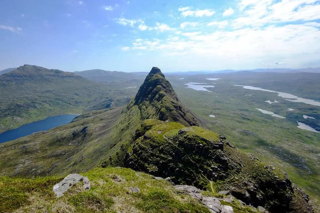
Figure 2 Suilven which lies north of Ullapool and is very close to Loch Inver © Love, from Scotland
Until very recently Ullapool remained a relatively unknown holiday destination. This map 58. Cape Wrath - Great Britain, Sheet 58 from the National Library of Scotland (NLoS) shows Ullapool in 1945 before mass tourism took off in the second half of the twentieth century (due to standardised package products and mass consumption).
-
Open the NLoS Cape Wrath map of Ullapool. Describe the landscape surrounding Ullapool in 1945.
-
What map symbols show the tourist industry in the village, even in 1945?
-
Can you see any other industries present in the town at the time?
-
Go to Google Earth and search for Ullapool. In the left-hand banner change the Map Style to Everything. Since 1945, has the landscape and accessibility of the village changed?
-
Garve is the nearest train station for tourists visiting Ullapool. Use the Measure Distance and Area option in the left-hand banner to calculate the distance from Garve to Ullapool.
With the increased ferry traffic out of Ullapool with more and more tourists visiting the little Scottish village it is the influx of people that are having the biggest impact. The negatives are:
-
The seasonality of ferry timetables. Owing to the fact that ferries are seasonal, and not many people travel outside of summer months, the local economy will develop high and low seasons
-
Traffic is well managed however as ferry traffic builds, and as people park cars for longer period of times to start hiking holidays, the village will become more bottlenecked
-
There is a missed opportunity for shops in Ullapool as some do not open around ferry times. For example, before the morning ferry not many shops/restaurants are open
-
There has been a big push this year to get councils to build 'Aires' for camper vans as you find in France as the number has ballooned and the impact last year on people leaving waste, starting fires was huge.
-
The North Coast 500 has only taken off in the last 5 years but the impact on infrastructure is huge
The North Coast 500
The North Coast 500 is a cycle ride circumnavigating the entirety of the Scottish Highlands. The journey is an 830-kilometre (516 mile) feat of endurance with the route starting and finishing in Inverness. It is a notoriously difficult cycle with very steep inclines and descents.
-
Go to Content and tick the North Coast 500 coordinates data. Click on the first Point in Inverness: where does the North Coast 500 specifically set off from?
-
Click on the measuring tool in the top banner. Taking the A862, how far is the first leg of the cycle from Inverness to Beauly? Make sure you follow the roads as accurately as possible.
-
The Scottish House Prices data for Scotland is split into quintiles. Zoom into Ullapool. What does this data layer tell you about the impact of tourism on the village, from 2019 to 2020?
-
Go around the map and study the Scottish House Prices at each stop around the North Coast 500. Is your answer for question # the same for the other points?
-
The Scottish Index of Multiple Deprivation 2016 is split into deciles. Zoom into Ullapool. What decile of deprivation is the village in?
-
Why might there be a difference between the centre of Ullapool and the outskirts of the village?
-
Has the North Coast 500 had an impact on deprivation levels along all the points of route?
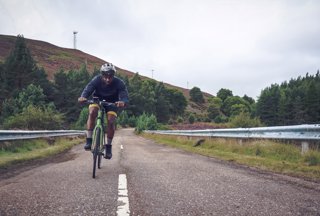
Figure 3 The North Coast 500 is an increasingly popular example of adventure tourism © Bayo Adegunloye
The whole story?
Whilst Scottish tourism will benefit from the predicted influx of tourists in the summer of 2021 there concerns over the externalities of waste, carbon emissions, and anti-social behaviour sometimes associated with mass tourism. In Ullapool, much of this worry is over a lack of facilities such as bins and toilets, a lack of amenities such as WIFI and limited infrastructure such as car parks and narrow roads.
Human waste from wild campers and North Coast 500 cyclists overwhelming toilet facilities has caused problems and angered local highlanders. In response trowel boxes have now been left by roadsides at key walking path junctions and campsites around Ullapool. 90 ‘emergency’ trowels were installed by the Lochbroom Community Council, which also put up Correx maps in lay-bys to show where toilets are in the area.
Further reading
-
Cambridge hospital’s mask upgrade appears to eliminate Covid risk to staff
-
How a Highland village is changing to meet staycation demand
Answers
-
Correct chronologic order.
-
Since 1986, the general trend for visits to the UK has increased from 13,898 in 1986 to 40,814 in 2019. Over this time period there have been 4 short periods of decline from 1990-1991, 2000-2001, 2007-2010, and 2017-2018. The highest level of visitors from overseas was in 2017 when 41,021 people came to the UK.
-
Since1986, there has been a continued growth in UK visits abroad, jumping from only 24,947 to 93,116 in 2019. There is strong positive correlation with slight declines from 1990-1991, 2006-2009, and 2011-2012. Growth was especially rapid between 1996 and 2006.
-
The visitor numbers both arriving and departing from the UK slumped in 2008 from the global financial crisis when Lehman Brothers, one of the world's biggest financial institutions at the time went bankrupt. In the UK more than a million people lost their jobs and hundreds of thousands of businesses closed down. The tourism sector, which relies on individuals’ disposable incomes, struggled, and contracted.
-
The landscape surrounding Ullapool is mountainous and wild.
-
The pier, hotels, a golf course, and a youth hostel.
-
Ullapool had a water mill to the north of the village on the Ullapool River until 1900. It was used to grind corn and barley www.her.highland.gov.uk/monument/MHG14078.
-
Ullapool is a village in Cromartyshire, the Scottish Highlands. The village is surrounded by inland mountains, the largest of which is Beinn Deargs to the SE. Accessibility has not changed over time with transport infrastructure in particular remaining limited (bar an increase CalMac ferries). In Google Earth it is clear that the surrounding terrain is mountainous and the only way into Ullapool is via the A835 from Garve.
-
Garve is approximately 50 kilometres (31.6 miles) away from Ullapool.
-
Inverness Castle.
-
From Inverness Castle to Beauly Priory, it is approximately 20 kilometres.
-
Ullapool is in the 4th quintile for deprivation in Scotland, it is largely surrounded by higher levels of deprivation with 3rd quintile for deprivation throughout much of Highland.
-
The Highland local authority has a 10% local-share percentage of the bottom 20% most deprived data zones in Scotland.
-
Ullapool has increased in deprivation levels since 2016. The choropleth map shows deprivation has risen by more than 2% although this is a relative measure as SIMD measures relative deprivation, so changes in SIMD rank for one area may be due to other areas becoming more or less deprived.
This resource was first published in 2021.