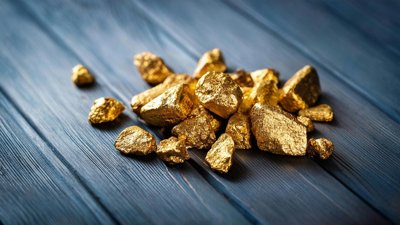
The dangers of mercury use in gold mining – awareness amongst Ghana’s young miners
Ghana is Africa’s largest producer of gold, with 2025 seeing the highest output yet. When you think of gold mining, you may well think of vast, industrial landscapes. Yet a fifth of global gold is extracted through artisanal and small-scale mining (ASM); an informal, unregulated and low-tech mining process. For development geographers, ASM is an important area of research as it provides a crucial source of employment to over 45 million people around the world but carries with it serious risks to people’s health and the environment.
Dr Lydia Osei, University of Ghana, has been exploring people’s experiences of ASM for over ten years. Her recent paper published in The Geographical Journal focuses on a project involving eight mining communities and their use of mercury across the Upper East and Eastern regions of Ghana. We spoke to Lydia to learn more.
What’s the matter with mercury?
Mercury is an element that has been used in mining practices for thousands of years. Despite a 2017 international treaty on reducing its use, the element is still used by between 14 to 19 million miners across the world. Mercury is added to mined ore where it forms a concentrate which is burnt, evaporating the mercury to leave gold behind. Mercury is not only cheap and simple to use, but it also achieves particularly high yields of gold. However, it poses significant dangers to the health of miners, attacking the central nervous system and affecting the brain. It also leaches beyond mining communities and into the wider environment, polluting waterways and infiltrating the food chain.
“Mercury exposure is very harmful to everyone's health but disproportionately affects young people because they are still developing. The neurological damage associated with mercury gravely affects younger cohorts. This is important because there are staggering numbers of young people involved in ASM, with children as young as five engaged in mining activities. So, I thought we have to focus on these young people.” – Lydia
Today, ASM is the largest source of mercury use around the world. Indeed, Lydia found mercury being used across all the mining communities of her research. Despite its dangers, mercury is seen as essential to the work of young miners. As one of her participants said: "The thing is, if you don't use it, what else would you do?".
Perceptions of mercury’s risk among young miners
So, how do young miners perceive the risks of mercury use? Lydia’s research found that young people have very limited knowledge of how mercury may affect their health and that of their wider communities. When discussing these risks with young miners, responses ranged from partial awareness and acceptance of the dangers of mercury, to shock and outright disbelief.
Lydia was particularly concerned to find that young women hadn’t been informed of the risks that mercury posed to any children they might carry. When told about mercury’s risks to the health of unborn babies, one 16-year-old female miner asked “How is that possible? We are not swallowing the mercury so how does it affect my unborn baby?”. Other miners also carried the belief that mercury is safe as long as it isn’t swallowed, happy to hold it in their palms as “some people have done it for a very long time and do not complain or show of any health challenges”.
Young miners’ limited knowledge around the effects of mercury is amplified by the nature of its impacts which take time to materialise, making it hard for people to assign their future poor health to their historic mercury use.
“The clear message of my paper is that young people have extremely limited knowledge on the effects of mercury on their health – a chemical that is used in almost every ASM site. Some of the effects of mercury are delayed. So, miners don't see the impacts immediately and don't think they have been affected by mining activities.” – Lydia
Despite limited knowledge, some young miners did use a range of strategies to try and protect themselves from mercury. These methods, learnt from older miners, ranged from placing wet towels over their nose to keeping away from the smoke released when burning mercury. Unfortunately, these methods are of limited use in protecting miners, as once burnt, mercury leaches into the surrounding environment. Whilst personal protective equipment could help reduce the risks, shockingly only three miners in Ghana’s Upper East Region had access to it. Lydia believes this needs to change.
“The starting point is providing miners with PPE which could come from employers, government agencies or miners themselves. We also need an effective educational programme and the provision of alternative technologies that can help miners extract gold. ASM cannot be banned. People don't have jobs, they are hungry and you're saying they shouldn't mine when the gold is in the land. It is not possible.” – Lydia
For Lydia, banning ASM is not the solution to reducing mercury use in Ghana’s mining communities. Rather her paper argues for three steps: immediately equipping miners with protective equipment, implementing a compelling educational campaign, and, eventually, providing miners with a free alternative to mercury.
Next steps
Lydia continues to work with communities involved in artisanal and small-scale mining. Now, she is focusing on the experiences of women in ASM, looking at issues of agency and environmental protection. To read more about the issues explored in this blog, read Lydia's paper in The Geographical Journal.
This research spotlight article was written by Safia Bailey (Cardiff University)
- RGS news
Student food poverty: The role of universities in free food provision
University students are living through a cost-of-learning crisis with many unable to afford basic necessities. While we know the significant role of schools and nurseries in free food provision, much less is known about universities.
Monday 30 Mar 2026 - RGS news

Society hosts Climate Adapted Pathways for Education (CAPE) event
The Society hosted the launch of new curriculum guides for primary Science, Geography, and Art by Climate Adapted Pathways for Education.
Monday 16 Mar 2026 - RGS news

Geography for All – one year on
Read our thoughts on the ongoing development of Geography for All—our programme dedicated to building a more inclusive, connected, and equitable future in the discipline.
Wednesday 11 Mar 2026