Inspiring young geographers through the Frederick Soddy Schools Awards
With many of our grant recipients now out in the field, we’re spotlighting the Frederick Soddy Schools Awards, and the equally transformative opportunities that it brings. Find out its origins, who can benefit and how you can apply now!
Celebrating fieldwork in schools
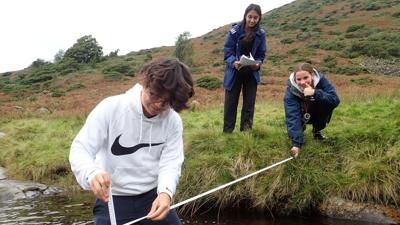
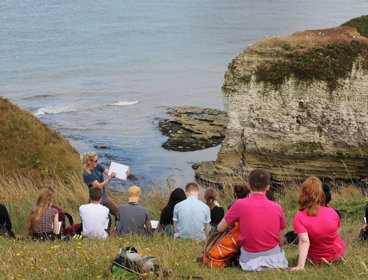
For many people, the road to becoming a geographer begins with a school field trip. The first time standing knee deep in a cold stream to measure its width and velocity; the first time plucking up the courage to survey local residents on the issue of regeneration; the first time counting plants in a quadrat; the first time going away from home and tasting independence.
In 2026, 280 schoolchildren from across the UK will embark on geography fieldwork supported by the Frederick Soddy Schools Awards. For some it will be the start of a lifelong love of fieldwork, or perhaps a first step on the road to a career in geography. For all, it will be a valuable experience.
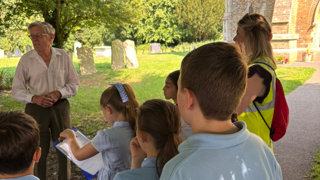
While less well-known than some of the Society’s high-profile research and expeditionary awards, the Frederick Soddy Schools Awards quietly achieve what few others do: they support hundreds of young people each year to take part in transformative geographical fieldwork experiences at a pivotal point in their development. It is also a reminder that some of the most important journeys in geography begin close to home – with a class, a teacher, a question, and a place to investigate.
History of the award
The award owes its existence to the legacy of a forward-thinking scientist of the early 20th century. In 1913, the British chemist Frederick Soddy discovered the isotope. A contemporary and colleague of Ernest Rutherford (also known as the father of nuclear physics), Soddy was later awarded the 1921 Nobel Prize in Chemistry for contributions to our knowledge of the chemistry of radioactive substances and his investigations into the origin and nature of isotopes.
Later in life, Soddy was one of the first to warn against the dangers of nuclear technology. Unlike Rutherford, Soddy has not become a household name. However, at the Society, his legacy lives on through his broader interests in scientific ethics and social reform.
Inspired by participation in Le Play Society expeditions, Soddy was a proponent of studies into, as written in his will, “the whole life of a particular area, with major emphasis on the human community” – this was an unusual approach in the mid-20th century.
Following his death in 1956, the Frederick Soddy Trust was established under the terms set out in his will, with the stated aim of supporting studies of the whole life of a region. In 2018, the Frederick Soddy Trust officially became a linked charity of the Society, creating the Frederick Soddy Award Fund.
The award today
First run through the Society in 2019, the Frederick Soddy Schools Awards provide grants of up to £600 to schools to facilitate fieldwork experiences for the next generation of geographers. Since 2019, 56 schools have been supported, sharing a total of £30,010.
With application numbers steadily rising since 2019, 2026 saw a record number of 27 applications. In the face of strong demand and clear need, the Advisory Panel, chaired by Dr Rory Padfield, University of Leeds, with expert input from Fiona Sherriff and Helen Martin, chose to award grants to 12 schools.
These grants will support more than 280 students, many of whom face socioeconomic barriers to participation. Among those to benefit from awards this year are:
- 24 pupils from Sunnyside Primary School, Glasgow, who will explore sustainable fishing practices alongside marine biologists and local stakeholders on the Island of Arran.
- 50 Year 2 students from Lift Four Dwellings Primary School, Birmingham, will investigate urban development and the tourism industry in Weston-Super-Mare.
- GCSE and A Level fieldwork will take place at the Olympic Park in London, on Exmoor, and in Barcelona.
- Students from New College Pontefract have already returned from the field, bringing home new insights into urban change in Sheffield.
Geography comes alive when children are engaged in the fun and memorable experiences of high quality fieldwork. These experiences come with a sense of team building, collaboration and most importantly, fun; and these are the parts of learning that become embedded in the hearts and minds of our future geographers, who are keen to work hard for their planet and for their place within it.Helen Martin (Chair of Early Years and Primary Phase Committee, Geographical Association; Frederick Soddy Schools Award Advisory Board member; and past recipient of a Frederick Soddy Award)
The value of the grants for schools will increase to £700 in 2027, with strong commitment from the Advisory Board to channel a greater proportion of the Frederick Soddy Award Fund towards schools.
Get involved!
Why should schools apply? Fiona Sheriff (Head of Geography at Kingsthorpe College, Vice-President of the Geographical Association, and Frederick Soddy Schools Award Advisory Board member) highlights the hands-on experience of fieldwork and its role in boosting student engagement and understanding, along with “the development of important skills such as research, data analysis, teamwork, and critical thinking”.
Beyond the benefits to the students, the awards also provide a means for upskilling teachers and, as Fiona points out, raising “the profile of geography within a school – being associated with a respected organisation like the RGS adds credibility and recognition”. Ultimately, says Fiona, “applying for the grant is not just about securing funding – it’s about enhancing the quality of geography education, improving outcomes, and giving students meaningful experiences connected to real-world issues like sustainability and global change.”
The Frederick Soddy Schools Award is not simply preserving a legacy. It is helping young people step into the field, encounter geography directly, and begin to see themselves as part of the discipline’s (not to mention the world’s) future.
The deadline for applications is 30 November 2026. Find out more and apply now.
- RGS news
Four leading conservationists and explorers to chair RGS Explore Weekend
The 2026 RGS Explore Weekend will be chaired by four leading conservationists and explorers. Read on to find out who...
Tuesday 6 Oct 2026 - RGS news
Apply now for our 2027 grants
We are now accepting applications for the 2027 grants cycle, with deadlines in November and January. Whether you’re a student, teacher or researcher, discover what’s on offer.
Monday 5 Oct 2026 - RGS news
Society response to DfE consultation on new GCSE in natural history
Our response to the Department for Education's consultation on the proposed subject content for a new GCSE in natural history.
Tuesday 15 Sep 2026