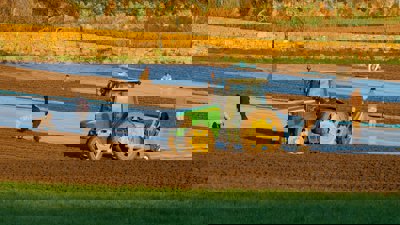
Study finds soil health largely absent from UK media reporting on climate change
Today, we are sharing new research from The Geographical Journal which finds that although soil health was identified as one of the UK's eight priority risk areas in the 2022 Climate Change Risk Assessment, new analysis of coverage across more than 100 UK media outlets between 2022 and 2024 found that the issue is rarely discussed in press reporting on climate change.
This, the authors say, could have negative consequences for the UK public’s understanding of the risks posed by climate change.
Soil health is vital to food security, natural carbon storage, and biodiversity, as well as to agriculture and the wider economy, but if you’re reading major British newspapers, you’re unlikely to know that it has come under serious threat as the climate changes...it’s critical that media outlets offer a more holistic and long-term view of the effects of climate change so the public in the UK, and internationally, can better understand what’s at stake.Dr Jill Hopke
The research undertaken by Dr Antal Wozniak and Dr Jill Hopke, and published this week in the Society’s Geographical Journal, found just 42 articles on climate change, flooding or drought in the UK that mentioned soil health over the two-year period following the publication of the third Climate Change Risk Assessment in 2022.
Many of the UK’s most-read newspapers, including The Sun, the Daily Mirror, the Daily Mail, and the Evening Standard, did not cover the issue at all.
Where soil health and climate change were covered in tandem, 40% of articles focused on impacts to biodiversity, while 45% mentioned associated risks to agriculture and food security
However, the authors say that even this coverage provided an incomplete picture of the impact the changing climate, including extreme weather, flooding and drought, has had on soil health in the UK. The subsequent consequences of soil degradation, including increased risk of flooding and the loss of natural carbon sinks, were also largely absent.
Analysis of the 42 articles that did cover soil health and climate change in the UK revealed a distinctly apolitical framing of the issue, despite the well-documented effects of land use, energy, and environmental policy on soil health.
Commentary was largely drawn from scientists, businesses and trade associations, and local residents in affected areas, a one-sided framing which the authors say could obscure potential policy solutions.
Additionally, these articles largely focused on isolated, specific instances of soil degradation, zooming in on threats to local landscapes, ecosystems and economies rather than discussing larger risks to soil health nationwide.
The authors warn that failing to report on the implications of soil degradation in coverage of climate-related stories, such as extreme weather events, could negatively affect the wider public’s climate risk awareness and weaken their political agency to address the root causes of climate change.
The absence of detailed context for climate risks was illustrated by coverage during the damaging winter storms in 2023-2024, when flooding and winds led to severe crop and livestock losses and soil erosion in the UK and Ireland.
The authors found that no articles about these storms in the sampled newspapers mentioned any of the study’s seven keywords related to soil health, degradation, or erosion, despite the major risks to soil health posed by such events and the downstream environmental effects of extreme weather-induced soil degradation.
Of the study, Dr Antal Wozniak said: “When news outlets fail to provide a full picture of how climate change is impacting their audience’s environment, the public’s ability to organise and confront these effects, both in their personal practices and at the ballot box, is negatively impacted.”
- RGS news
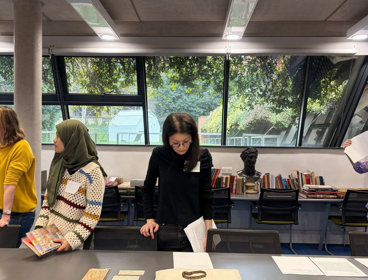
Society collaborates with Culture& on provenance workshop
Last week, the Society welcomed researchers and museum professionals for a ‘hands-on’ workshop with ‘untethered objects’ in our Collections, organised in partnership with Culture&.
Thursday 5 Mar 2026 - RGS news
Research Groups supporting colleagues through peer-mentoring
As part of their diverse programme of activities, the Society continues to support through peer-mentoring.
Monday 2 Mar 2026 - RGS news

Society awards 14 grants to Research Groups
The Society has awarded grants to 14 of our Research Groups to support a variety of projects and activities.
Friday 27 Feb 2026