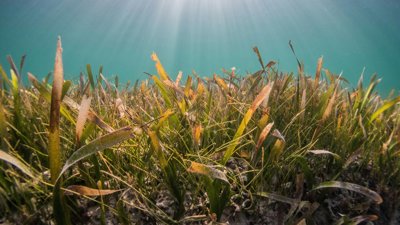
Using GIS to restore seagrass meadows
The Ocean Conservation Trust is replanting and restoring seagrass across the UK’s coasts, using a targeted, data driven approach.
Issue
Seagrass is one of the most valuable and biodiverse habitats on the planet, offering benefits such as sequestering carbon, supporting fisheries for food production and acting as a natural coastline defence.
However, seagrass meadows are declining, largely due to human activities such as unsustainable fishing practices and agricultural runoff. When seagrass meadows are damaged or degraded, they capture less carbon and release significant amounts of greenhouse gases that might have been stored for thousands of years otherwise.
Approach
Scientists at the Ocean Conservation Trust aim to restore seagrass by through replanting.
By collecting detailed data on existing seagrass habitats, such as the water chemistry, scientists can use this information to better understand the conditions in which seagrass grows best, allowing them to identify optimal environments for successful restoration. This helps ensure that seagrass is introduced in places where it is most likely to thrive and support biodiversity.
Once ideal sites are selected, scientists carefully collect seeds from healthy seagrass plants. These seeds are then used to grow and plant new seagrass beds, helping to expand and restore these important underwater ecosystems.
Impact
Since the project, 11 hectares of seagrass have been resorted across the UK.
The approach allows the Ocean Conservation Trust to meet their aim to protect 10% of all UK seagrass meadows by 2035 and restore 50 hectares of seagrass annually.
The project allows scientists to better engage with communities and stakeholders, to collaboratively develop process to restore seagrass at scale within the UK.
Organisation: Ocean Conservation Trust, ESRI
Explore the Ocean Conservation Trust’s presentation at the 2026 ESRI Conference