
In this webinar
- The webinar discussed The Digital Exclusion Risk Atlas (DERA), an online tool designed to help health planning teams understand and identify patterns of digital exclusion across England.
- The Core20Plus5 programme was introduced as a key approach underpinning the work, which aims to reduce healthcare inequalities by focusing on the most deprived 20% of the population, alongside additional groups, across five key clinical priority areas.
- Speakers outlined the scale of health inequalities across England in both life expectancy and years in good health, with a large gap seen between the most and least deprived areas across England.
- The speakers highlighted that digital access to health services is increasing with 57% of adults across England using online health services, this growing proportion negatively impacts those who are excluded and who may struggle to access online services.
- To understand where digital exclusion is impacting on health outcomes the Digital Exclusion Risk Atlas (DERA) was introduced.
- DERA brings data together to show where digital exclusion may be higher and what could be driving the variations across England at an LSOA level.
- The tool brings together 12 indicators across four domains (digital access and capability, affordability and economic pressure, ability and skills and agency, motivation and trust) to provide a detailed view of digital exclusion and its key drivers.
- The session emphasised that digital exclusion varies significantly across places and communities, with different regions experiencing different combinations of barriers which affect access to digital tools and knowledge.
About the speakers
Karol Leszek Kuczera is the Senior Healthcare Policy Manager for the National Healthcare Inequalities Improvement programme at NHS England, where he is responsible for development and implementation of policies aimed at reducing healthcare inequalities, with a particular focus on digital, AI, and inclusion health groups.
With over 15 years of experience in the NHS, Karol has led strategic policy development, service transformation, and the integration of clinical insight into system-wide health initiatives.
Will Jones is a Principal Geospatial Analyst with NHS South, Central and West Geospatial Services. He works with local and national NHS teams to use location data to answer practical questions about how health services are planned and delivered.
His work spans estate and service reconfiguration, redesigning how GP catchment data is captured at a national level, and developing a pharmacy tool to help address key challenges faced by users. Will enjoys leading large collaborative projects across the NHS and has a particular interest in applying geospatial data in practical and innovative ways to reduce health inequalities and support better healthcare planning.
Please note: The views of our speakers do not necessarily reflect the opinion of the Royal Geographical Society.
Note on captions
The Society aims to provide automatically-generated captions for all event recordings. The captions appear as text at the bottom of the video which you can toggle on and off.
The accuracy of automatically-generated captions varies depending on the audio quality, any specialist language used and the speaker. They are therefore are unlikely to be 100% accurate and the Society does not edit or correct automatically-generated captions.
- Webinar

Understanding and communicating risk through geospatial applications
Hear from the Royal National Lifeboat Institution (RNLI) geospatial team on the range of tools developed to support risk assessment and decision-making across the organisation.
OnlineProfessionalsWednesday 9 September 2026 - Webinar
Chartered Geographer introductory webinar - September
Join this webinar on 16 September to learn more about the benefits of becoming a Chartered Geographer.
OnlineProfessionalsWednesday 16 September 2026 - Webinar
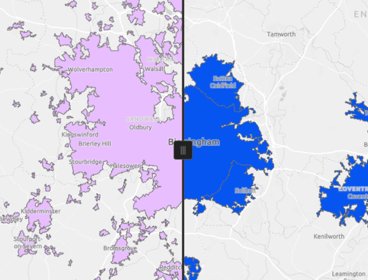
Geography in practice: The open geography portal
Join this webinar to get an early look at the brand new Open Geography Portal being developed by the ONS Geography team. You’ll learn about the datasets available, see demonstrations of key features, and discover how the portal can support your work or research.
OnlineProfessionalsWednesday 16 September 2026