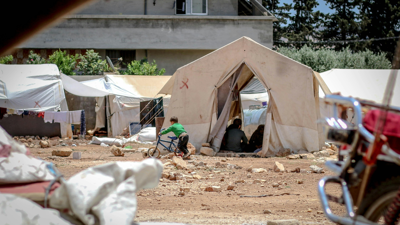
Often in the role of disaster response NGOs and international actors swarm to a disaster-affected region with the intention of providing help and assistance. Often help is requested by the affected country’s government and provided by international actors working alongside local actors. In some cases international NGOs may inadvertently hinder the disaster response through bureaucracy, poor communication or not understanding the picture on the ground.
The best responders, arguably, would be those in the affected country who know the situation, local context, policies and procedures. Likewise in disaster risk reduction and emergency preparedness sessions there has been a tendency for the Global North to dictate to the Global South the role they should play in designing programmes. With funding and money comes power, which might be at the expense of local DRR organisations and those in disaster prone communities.
In this seminar, we will ask: How can international funding bodies and NGOs encourage locally-led disaster response? Do existing international disaster risk structures and policies prevent or enable locally-lead programs to flourish? What does success look like? Providing examples of locally-led programmes with co-lead technical inputs.
This event will be chaired by Chris Ewing.
Speakers:
-
Marina Kobzeva - Director of Programmes and Partnerships, MapAction - www.mapaction.org
-
Pradip Khatiwada - Founder and Executive Director, Youth Innovation Lab Nepal https://youthinnovationlab.org/team/pradip-khatiwada
-
Gloria Soma - Executive Director of the Titi Foundation, https://titifoundation.org/
- Nino Khokhobaia - CCD Localisation Advisor, CCD Network, https://www.collaborativecash.org/
This is a joint event with RGS Disaster Risk Management Professional Practice Group.
- Webinar

Chartered Geographer application accelerator - October
A four-week accelerator for those eligible for Chartered Geographer to focus your efforts in preparing your application portfolio.
OnlineProfessionals1 Oct 2026 - 22 Oct 2026 - Webinar

Geography in practice: The London Heat Map
Hear about the role of heat networks in the decarbonisation of heat and how the London Heat Map is supporting their strategic planning and delivery.
OnlineProfessionalsWednesday 7 October 2026 - Webinar
Disaster risk management: communicating and understanding risk
Join us for a webinar series covering the launch of a new book 'Geographical Perspectives on Disaster Risk Management'.
onlineProfessionalsFriday 9 October 2026