Journey in Audio
Journey in Audio offers professional training and access to high-quality equipment to document travel, fieldwork or a research expedition through audio recorded in the field.
Are you planning a geographical journey, fieldwork or a research expedition with a story you want to tell using audio recorded in the field?
Apply for the Journey in Audio workshop for hands-on, small-group training.
Participants will receive:
- A one-day, in-person workshop led by a professional audio producer at the Royal Geographical Society in London, scheduled for 10 March 2026, before you go into the field.
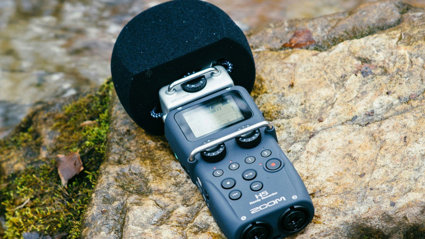
- The loan of professional-standard handheld audio recording equipment for use in the field.
- A non-commercial license for REAPER digital audio production software.
- A financial contribution for travel and accommodation (if required) to attend the workshop.
- Group and one-to-one feedback sessions online on the first cut of your audio work upon your return.
- The opportunity to share your audio work through the Society’s channels (subject to review for quality and content).
The workshop day at the Society will provide an introduction to soundscapes, how sound is used in storytelling, and how to build a narrative. Participants will receive practical training on using audio recording equipment, including capturing sounds in the field and how to approach interviews. There will be hands-on practice to apply these skills.
The workshop will also provide an overview of REAPER audio production software to help you create your work. Participants will be required to complete some basic, self-taught training with the software in advance of the workshop.
Eligibility
- This workshop is open to geographical journeys, a period of fieldwork or research expedition being undertaken by individuals or small teams between mid-April and the end of September 2026.
- Applicants will be expected to have a clear plan for their travel, fieldwork or research expedition and the financial and practical means to undertake it.
- Eligible projects may focus on any geography-related topic.
- All applications are welcome; however, attendees must be able to join the in-person workshop day at the Royal Geographical Society in London (10 March 2026), as well as participate in online feedback sessions in September to December 2026.
- Applicants with all levels of experience can apply.
- To get the most out of the workshop and opportunity, applicants must be prepared to undertake self-led learning of audio production software REAPER using online tutorials. An introduction session and links to online learning will be provided, but the bulk of the tuition and use of the software will be self-led.
How to apply
To give the best training and feedback experience, places on the workshop are limited.
To apply, please submit a 60 second audio pitch by email to grants@rgs.org and complete the online form below before 31 January 2026.
Your audio pitch should tell us about your project, the story you want to tell, why you want to tell it, why you want to use audio and why an audience will find it interesting. You can record this any way you like (using a phone is fine).
Previous recipients
2025: Mark Heinersdorff – Carbon Dynamics of the Pantanal
Mark used audio to document a research expedition to The Pantanal, Brazil, where scientists aimed to make new estimates of carbon storage in soils and vegetation across key ecosystems and management regimes, quantify the potential scale of greenhouse gas dynamics, and identify controls over emissions.
The Pantanal is the world’s largest wetland ecosystem and a significant carbon sink, and has been proposed as a key potential nature-based solution to climate change. Evidence suggests that greenhouse gas emissions from tropical wetlands are increasing, driven by a combination of agricultural expansion and intensification, and climate change impacts.
There is therefore a critical need to understand drivers of carbon sequestration and greenhouse gas dynamics, across land use and management regimes, and quantify the future resilience of stored carbon.
2025: Dan Paling – Calling back: bird ringing as audible migration
Dan used audio to explore concurrent pre-dawn communities in Sheffield: late-night revellers enjoying the city's party scene, and bird ringers from Sorby Breck ringing group as they attempt to catch and tag migrating pipits moving across the Yorkshire moors.
The project documented diverse communities of people – young and old – who trouble the discourse of modern dislocation from ‘nature’.
2025: James Garry – Project ARC
James embarked on a modular expedition centred around audio recordings of folk music and stories in combination with natural history recordings, with the aim of engaging people in the topics surrounding both cultural heritage preservation and conservation, particularly habitat loss.
Sound is often overlooked but is noticeable by its absence. Project ARCs mission was to record and preserve both culturally important oral traditions alongside the local environment for future generations.
2025: Lisa Randisi – “I Am Mongolian”: Heritage Landscapes, 21st Century Lives
In people’s imagination, the Mongolian steppe is quiet, peaceful, sparse. A land of tradition. In reality, Mongolia’s population is young and entrepreneurial. Yet the 1 million people that call the steppe home, and the 64 million heads of livestock and 691 wildlife species in its ecosystem, are at risk of disappearing from that landscape, threatened by climate change, urbanisation and extractive industries.
In Mongolian mainstream media, it is the voices and sounds of the city that are loud. To redress this balance, Lisa recorded young voices from the countryside during her summer fieldwork as an archaeologist.
2025: Georgie Holt – Where have you gone?
Georgie collected sounds and recordings from people in Leeds, leading people on a trail of memories and thoughts that follow narratives from Leeds to new places and old.
The only link between pieces was their connection in content or narrator to Leeds, even when not explicitly mentioned. This audio collage connects Leeds to the wider world, in an area with limited funding and outreach programmes for artists and makers.