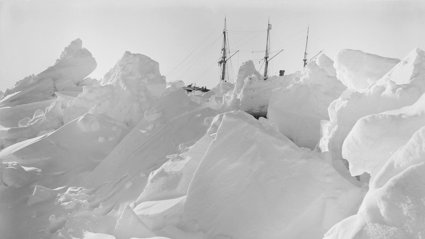
Limited edition platinum prints
Select prints of the Endurance and Everest expeditions are now available for purchase via the Royal Geographical Society.
The Society has worked for over 10 years with master print-maker Georges Charlier and his team from Salto-Ulbeek in Belgium to create a range of limited-edition platinum prints. These prints are created from fragile original glass and celluloid negatives and Kodachrome transparencies held in the Society’s photographic collection.
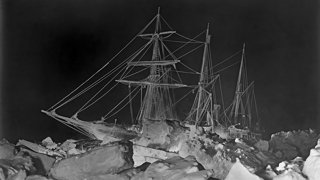
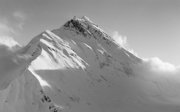
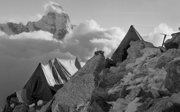
We have selected some of the earliest and most iconic images relating to Antarctic and Everest exploration: photographs taken by Frank Hurley to record Sir Ernest Shackleton’s Imperial Trans-Antarctic Endurance Expedition of 1914–1917, photographs taken on the first ever 1921 Everest Reconnaissance Expedition, including the then highest altitude images and photographs by George Mallory, and a set of the most sought after prints from the 1953 Mount Everest expedition – the first confirmed successful summit of Mount Everest.
Each negative has been scanned by hand using the latest equipment and techniques to create the highest resolution digital negatives from which to prepare the prints. The prints are the first to be made using the original negatives in this way and the first using the rare platinum process, which painterly quality helps to draw out every detail.
As a legacy, the digitisation of these unique and rare negatives protects them for future generations. The prints themselves are museum-grade reproductions.
The prints are available to purchase directly from the Society in a selection of sizes and each print comes with a certificate identifying the print number in each strictly limited edition.
The sale of these prints financially supports the wider work of the Society.


The platinum printing process explained
One of the great masters of photography, Alfred Stieglitz (1864–1946), called the platinum printing process “the prince of all media”. It is one of the oldest, rarest, most refined and stable of all black and white photographic printing processes.
The platinum technique consists of coating specially made drawing paper with a light-sensitive emulsion containing platinum salts using a special brush. The paper is then carefully dried and exposed to UV light through one or more full size contact negatives. This is a costly and complicated procedure, each print taking almost eight hours to complete.
When compared to conventional black and white silver prints, platinum prints exhibit an expanded tonal range, three-dimensionality, and a uniquely luminous, painterly quality. Unlike silver prints, where the image is floating in a gelatin layer on top of the paper, a platinum image is part of the fine paper on which it is printed.
As well as their aesthetic quality, platinum prints are among the most permanent objects produced by humans. The platinum metals are more stable than gold, and a platinum image, properly preserved, can last thousands of years.
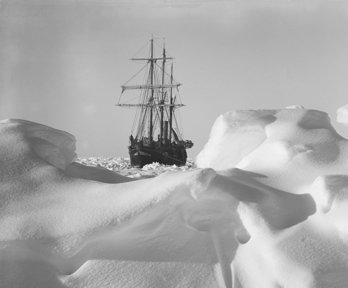
Endurance expedition prints
Own a limited edition print of one of the iconic photographs taken by the Endurance expedition’s official photographer, Frank Hurley.
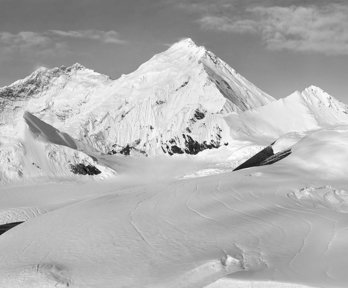
Everest 1921 prints
Buy a limited edition platinum print of the 1921 Mount Everest Reconnaissance Expedition.
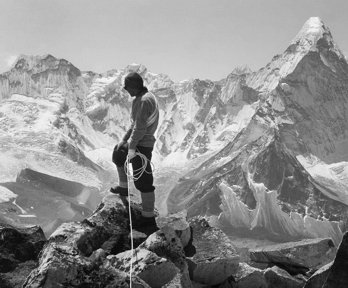
Everest 1953 prints
Buy a limited edition platinum print of the 1953 Mount Everest Expedition.
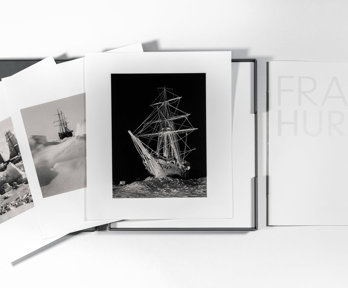
Platinum print folios
Two folios of platinum-palladium prints drawn from the Society’s extraordinary photographic collections.