Precision in place names: the problem of orthography at the Royal Geographical Society
This online exhibition tells the story of orthography at the Royal Geographical Society and reveals how the Society approached the problem of orthography as an imperial institution in the 19th century.
Orthography is the practice of correct spelling according to established usage. It is a set of conventions for writing a language. A central question for the Society was whether or not it should, as a geographical authority, set those conventions for the spelling of place names in respect to its publications, or whether authors should be allowed to spell names as they pleased.
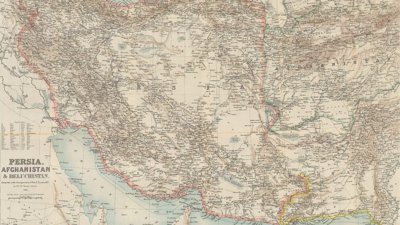
This research has drawn on material from the Society's Collections, including committee and council minute books, correspondence, fellowship certificates, the journal manuscript collection, the map collection, as well as digitised records from the Wiley Digital Archive.
View the exhibition
Tip: For the best experience, we recommend viewing the content below in full screen mode - press F11 on Windows (press F11 to exit) or Ctr+Cmd+F on OS X (Apple) to enter full screen mode.
Having trouble viewing this online exhibition?
About the researcher
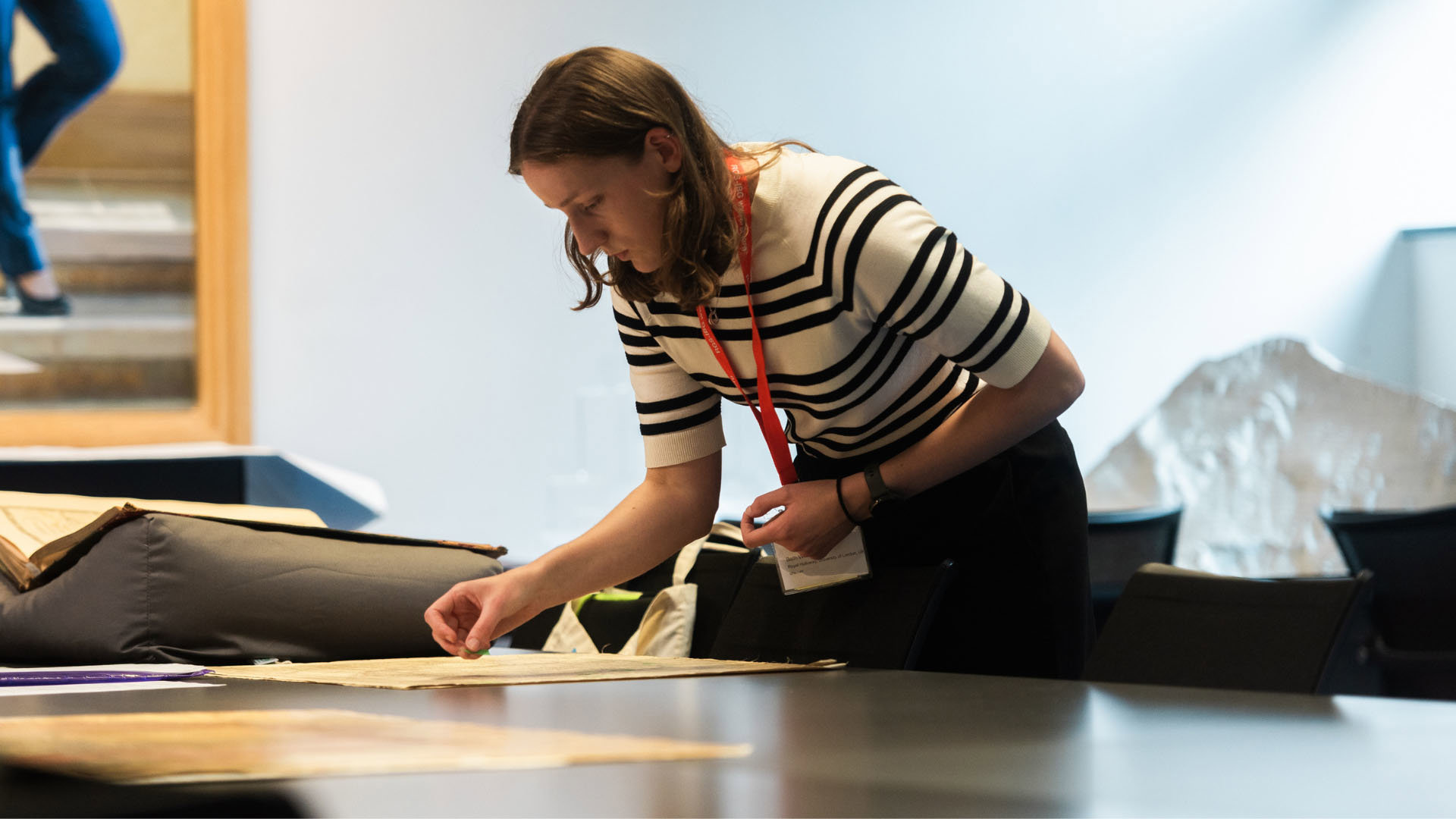
Beth Williamson is a PhD student at Royal Holloway, University of London. Her research explores how, in the period 1830–1919, the RGS approached the problem of accurately and authoritatively recording the world’s place names when faced with variety in global spelling, alphabet, and pronunciation.
Beth’s research offers a new perspective on how imperial organisations engaged with the politics of naming and Indigenous orthographies, demonstrating that questions of orthography are fundamental to disciplinary debates in geography in the 19th century and beyond.
Beth completed her thesis in March 2026 titled Translating Place: Orthography and the Problem of Place Names at the Royal Geographical Society, 1830–1919.
Note about the captions
Within the Society's Collection there are some historical images (and image titles or captions) which are recognised as containing unacceptable forms of language, or present image content that is considered inappropriate. In such cases, as part of its Collections policy, the Society maintains access to those images and descriptors as a source of context and information for researchers, recognising that the historical language used or image subjects in themselves do not reflect the Society's contemporary position as an organisation wholly committed to principles of equality and diversity.
Collaborative Doctoral Research
Over the last twenty years, we have hosted 22 students at the Society, undertaking theoretically rigorous, novel and empirically rich doctoral research on the historic materials we hold so that they are protected for future generations.
Read more about the work of our Collaborative Doctoral Research students.