How to organise a panel session
This format usually involve up to five panellists discussing a specific topic or challenge.
They are usually open and interactive, making them ideal for problem-oriented discussions where panellists explore different perspectives and solutions.
Session structure
This session format is usually organised by one or two organisers. One of them will act as panel moderator or chair, and will need to create a balance between the panel’s views and the audience’s questions, and keep panellists on topic and on time.
The chair or moderator should have experience facilitating discussion, knowing when and how to cut some people off, and when to encourage more from others.
For a session length of 100 minutes (1 hour 40 minutes), session organisers might consider the following for two formats: panel discussion and author meets critic.
Panel discussion
- A panel of two to five people with a moderator/chair.
- An ideal number is three or four as it encourages the most interaction and engagement between panellists and the audience.
Authors meets critics
- An opportunity for two or three panellists to discuss a written work of one or more authors on a particular topic.
- A single monograph or two to three published papers might be discussed by the panel.
How to structure a panel session
Consider how the panel session will run on the day as this should be decided in advance to allow panellists to prepare.
Some options are:
- A brief presentation (not more than five minutes) from each panellist on the main question/topic, followed by questions from the chair and then from the audience.
- A introduction piece from the chair or someone not on the panel, ideally thought-provoking or inspiring followed by a response from each panellist, followed by questions.
- Launching straight into panel discussion, by having the chair ask a few key questions around the topic, then opening it up to the audience for more questions.
Preparing the session
Panellists are usually invited directly by session organisers, so calls for papers or panellists are rarely made public. Inviting panellists directly allows organisers to control the panel’s composition and the expertise and views included.
It is important to include panellists with a wide range of views and approaches. Consider:
- Inviting panellists for whom the topic is not their specialism, but whose background might offer a new view.
- Inviting panellists with a range of backgrounds (academia, policy, practice, end-user, etc.). This provides a strong platform for different viewpoints.
To align the session with audience interests, organisers could invite conference delegates to submit panel questions in advance. This helps the panel prepare, and ensures the session meets the audience's interest.
Organisers should provide a brief title and abstract for the session. This helps panellists understand the format and goals, allowing them to prepare effectively.
Additionally:
- Panellists might be asked to provide a short summary of their thoughts on the session’s topic or challenge.
- A short pre-conference call can allow panellists to meet, chat, and clarify the main goals of the session.
Running the session on conference day
Some hints and tips for running the session and moderating the panel discussion are:
- Briefly explain the panel format to the audience, especially how they can take part in the discussion.
- Don’t spend too much time introducing panellists or the topic – the session abstract and panellists’ biographical information can be included in the conference programme.
- Make sure everyone can be heard – this might mean having a microphone for each speaker and the audience.
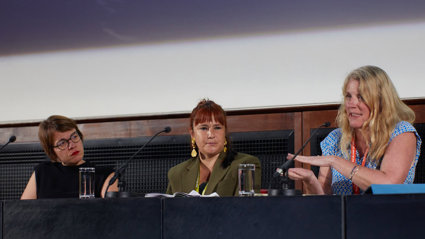
- Seat the panellists in such a way that they can see the audience AND each other – eye contact makes for good discussion.
- Don’t forget to allow panellists to ask questions of each other and of the audience.