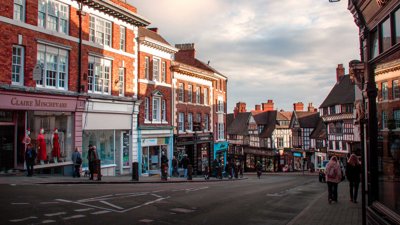
Britain’s shopping geography
Introduction and curriculum links
This resource accompanies Ordnance Survey's Retail Areas: Britain’s shopping geography article, which is useful for introducing pupils to the idea that geographical data can reveal patterns that are not immediately obvious.
This resource could be used as an introduction to a local fieldwork enquiry looking at the success of a local retail area or as a standalone piece.
It links to the Key Stage 3 geography curriculum as follows:
Human and physical geography
Understand, using detailed place-based exemplars at a variety of scales.
Key processes in human geography relating to: population and urbanisation; economic activity in the primary, secondary, tertiary and quaternary sectors.
Geographical skills and fieldwork
Build on their knowledge of maps and atlases and apply and develop this knowledge routinely in the classroom and in the field.
Use fieldwork in contrasting locations to collect, analyse and draw conclusions from geographical data, using multiple sources of increasingly complex information.
Key terminology
- Accessibility: how easy a place is to reach.
- Catchment area: the area from which a place attracts its customers.
- Distribution: the way something is spread across an area.
- High street: a traditional main shopping street in a town or city.
- Land use: the way land is used by people.
- Mixed-use: an area containing different types of land use, such as shops and housing.
- Retail: the selling of goods and services to consumers.
- Retail geography: the study of where retail activities are located and why.
- Retail park: a concentration of larger shops, often outside a town centre.
- Shopping centre: a purpose-built area containing several shops.
File nameFiles
File type
Size
Download
This resource was first published in August 2026.