Cambridge Science Park redevelopment
Introduction
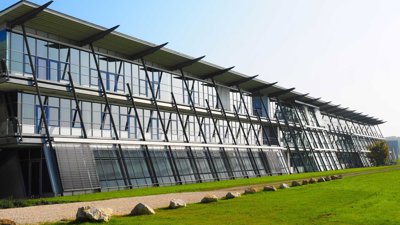
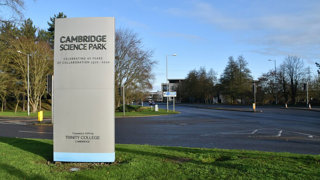
Cambridge Science Park was established in 1970 as part of a vision to make Cambridge a leading player in technology and research. It is the oldest science park in the UK and covers 152 acres to the north of the city. Find more location information and a layout map.
Today, it is home to a range of organisations and businesses, including companies involved in technology, IT, finance, research and science. It has also been an important centre for innovation, where major scientific and technological breakthroughs have taken place such as microchips for mobile phones, cancer drugs and Bluetooth technology.
However, the site is not being used to its full capacity, and, due to its age, is not meeting the requirements for a fully sustainable future. Therefore, on May 15, 2026, plans were submitted to Greater Cambridge Shared Planning Service to redevelop the site over the next 30 years.
Importance of Cambridge Science Park
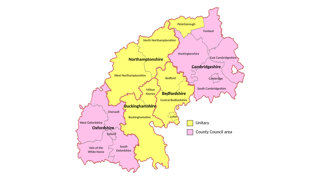
Cambridge Science Park is often linked to the wider Cambridge-Oxford growth corridor (Oxford – Cambridge Arc) which is sometimes described as Europe’s Silicon Valley.
The science park directly employs around 7,000 people and is a major centre for life sciences, technology and clean energy. It is thought that it currently produces around £1 billion of economic output per year.
Why is redevelopment needed?
Redevelopment is needed in the science park to help the UK remain competitive with other major technology hubs, particularly in North America and Asia. The UK Government is investing in the wider Cambridge-Oxford corridor to support this, putting aside £500 million, of which £400 million is for the development of the Cambridge Science Park.
Additionally, Trinity College – part of The University of Cambridge, which originally established the Science Park – is planning to invest £1billion towards the redevelopment along with another £1billion coming from private investment by existing organisations in the park.
The redevelopment also aims to improve the environment in and around the park by increasing greenspaces and biodiversity as well as creating modern workspaces and facilities for the workforce. These changes aim to attract further investment from both international and national organisations.
With increased investment, there is an opportunity to create more jobs and boost economic growth both for Cambridge and the UK, making it an important part of the economic future for the country.
What is being developed?
Development over the next 30 years will focus on improving buildings, infrastructure and the overall environment with the aim of tripling the capacity of the site by the end of that period.
Planners have broken down the development into three phases, the key points of which have been summarised below. View a map showing the final updates.
Phase 1
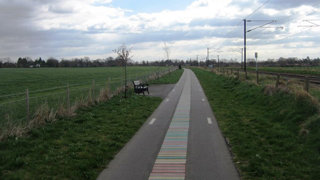
Upgrading cycle paths, signage and shared spaces to create a more attractive environment for existing residents. Increasing green routes to encourage cycling and walking.
Phase 2
Development of the ‘Park of Science’ - an open-air museum focussing on STEM (Science, Technology, Engineering, and Mathematics) themes. This will provide a biodiverse learning, recreational and meeting space for both employees and residents.
Phase 3
This will involve replacement of six older buildings with four larger modern ones, conforming to a strict design code to meet net-zero requirements. The new buildings will increase the built space from 2.8 million square foot (22 thousand square metres) to 8 million square foot (74 thousand square metres).
Within this build phase, new facilities will also be added such as a community hub, consultation rooms for health checks and a wellbeing and yoga space.
In addition, transport links will also be improved in this phase utilising and building upon the current bus services and train network from Cambridge North Station. Surface-level car parks will be moved underground to help make the area more attractive and limiting the number of cars accessing the area.
Impacts
There are a number of impacts this development could potentially bring, some of which are summarised in the table below:
| Social | Economic | Environmental |
|
|
|
Sources and further reading
Cambridge Science Park launches £3bn expansion plan. Financial Times, May 18, 2026.
Europe's oldest science park could be redeveloped. BBC, May 19, 2026.
The Future of Cambridge Science Park public consultation site
Cambridge Science Park submits masterplan to triple economic output to over £3 billion annually. Park News, Cambridge Science Park, May 18, 2026
Redevelopment at Cambridge Science Park approved - but sewage capacity concerns must be resolved first. Cambridge Independent, October 22, 2025.
Brockton Everlast Inc. Public consultation website.
File nameFiles
File type
Size
Download
This resource was first published in July 2026.