
Creating disaster: the Türkiye-Syria earthquakes Q&A activity sheet
The specification
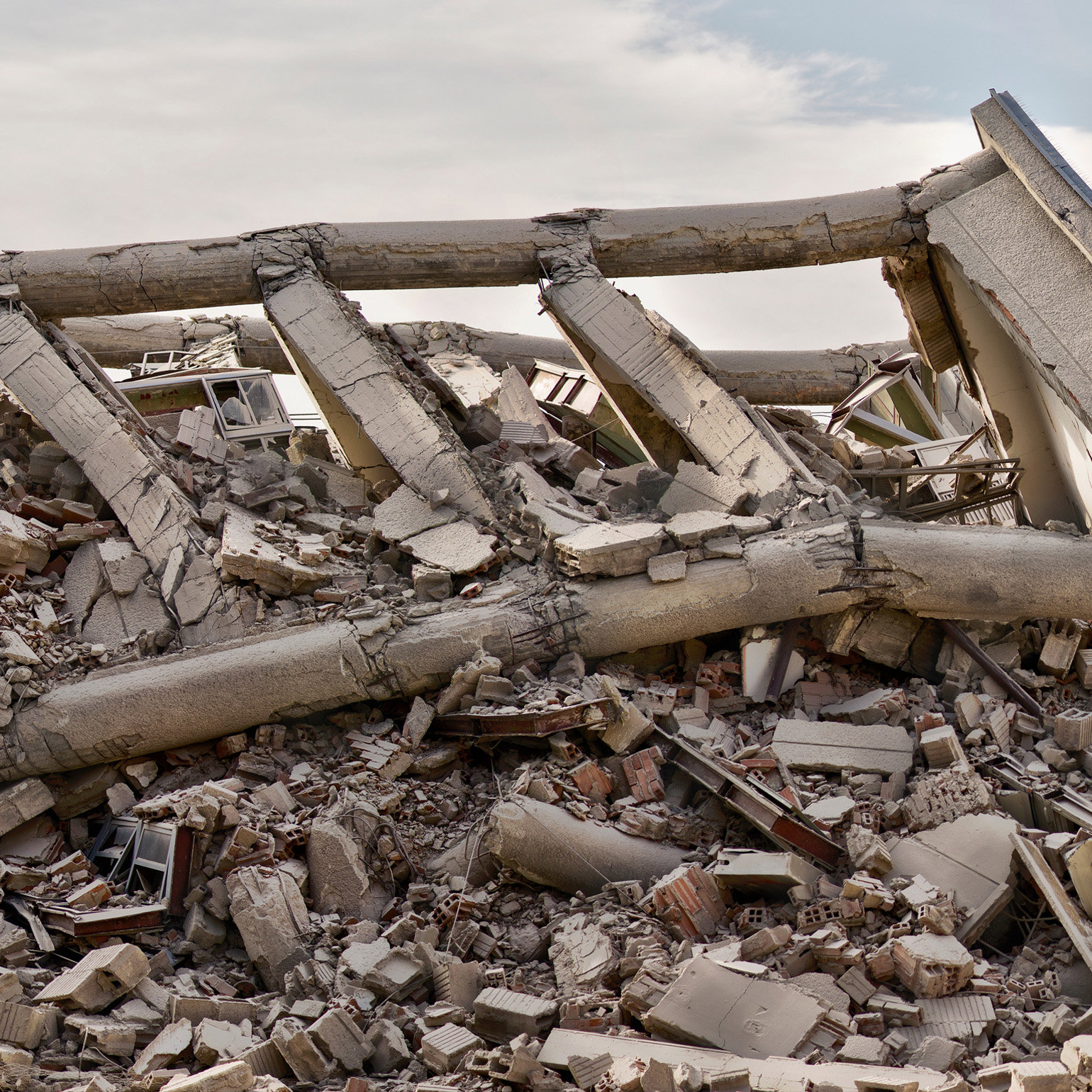
AQA A Level 3.1.5.4 Seismic hazards.
Edexcel A Level Topic 1: Tectonic Processes and Hazards.
OCR A Level Topic 3.5 – Hazardous Earth.
WJEC A Level Section B: Tectonic Hazards.
The following questions are linked to The Royal Geographical Society (with IBG) Monday Night Lecture Creating disaster: analysing the Türkiye-Syria earthquakes - Professor Ilan Kelman
Questions
1. What does Dr Ilan Kelman say in this opening address about disasters? 01:05
2. What do ‘we know’ about Turkey? 2:30
3. What does Dr Kelman say we should not call this event? 06:30
4. Explain the assertion that disasters are also not ‘events’. 11:00
5. What is said about prevention? 20:45
6. What example is given for the answer to question 5? 21:30
7. In which ‘realm’ has the Türkiye-Syria earthquake inspired us? 22:25
8. What happen on 17 August 1999? 23:40
9. Which countries gave aid to Syria? 29:30
10. Some reports have suggested climate change caused the Syrian war. Why does Dr Kelman say this is not a climate conflict? 30:40
11. Is diplomacy simply about ‘civil servants talking between sovereign states’?
12. In 2004, how many died in Indonesia ‘within minutes’ from the Indian Ocean tsunami? 37:20
13. Why did 35,000 people die in Sri Lanka? 37:40
14. Both Indonesia and Sri Lanka both had violent long-standing conflicts. Why was there a difference in impact between the two countries post-2004? 38:10
15. No one died from infrastructure collapse in Seattle in September 2001. Why was this? 42:20
Further reading
-
The Royal Geographical Society (with IBG) Monday Night Lecture Creating disaster: analysing the Türkiye-Syria earthquakes - Professor Ilan Kelman
-
BBC News Turkey earthquake: Where did it hit and why was it so deadly?
-
BBC News Turkey earthquake: Before and after pictures show extent of destruction
Answers
1. They are about people, they affect people, and people can overcome them and deal with the challenges. The problem (and perhaps the solution) is always the same story. Although we don’t know when an earthquake might happen, we absolutely know where they might happen, and what the consequences might be – yet disasters still occur.
2. It is a seismically active country. There are issues of inequality, of poor governance, and of resource distribution. We also know that even in 1939 a very similar earthquake struck in the same region, with the same results. In Syria we know about the dictatorship, oppression against certain groups, and corruption. We also know some buildings withstood the shaking and remain upright. The disaster was created by long-term processes ‘of simply not wanting to stop the disaster’. We know all this.
3. There is simply no point in calling it ‘a natural disaster’. Disasters are not natural.
4. Disasters happen slowly – they take a long time for societal problems to embed. An earthquake is therefore not an event because the outcome is influenced by several long-term factors. They are slow onset. They are ingrained. They are forced on the majority by the minority i.e., by a lack of democracy, marginalisation, harassment, or discrimination. They are societal processes which create the chronic conditions which manifest when a perfectly normal environmental occurrence occurs. The disaster is not a hazard, it is about vulnerability, and some people are made to be vulnerable without choice. Some people live with this vulnerability every day.
5. Prevention is better than cure – it is also cheaper than cure.
6. There was insufficient preparation for a pandemic pre-2019. COVID-19 cost was substantial. Networks were shattered. In June 2022 the National Audit Office put the cumulative cost of the government's pandemic-related measures at £321 billion. It would have been far cheaper to have invested, over time, on effective pandemic preventative.
7. It inspired many in the field of ‘disaster diplomacy’. How disasters do and do not influence peace and conflict.
8. In 1999 an earthquake rumbled through NW Turkey, killing 17,000 people. Despite decades of enmity Athens and Ankara were immediately in high-level dialogue. Turkey requested assistance and Greece offered anything it could. This solidarity was returned 3-weeks later when, on 7 September, Athens was rocked on a separate earthquake. Over 140 people died.
The Balkans War did not spill over due to this growing disaster diplomacy. Since 1996, both countries have been moving beyond hostilities. For example, in supporting one another’s application to join the EU. Equally, Greece was among one of the first countries to offer aid for the Türkiye-Syria earthquake in February 2023.
9. Greece, Israel, China, Russia, Iran, and Iraq (despite border and Kurdistan differences).
10. Climate change did not cause rural-to-urban migration due to drought. Rather, it is because of totalitarian dictators in the region mismanaging water supply and agricultural production. Syrian population has quadrupled since the 1970s. Fundamentally, this breaks the link between hazard and disaster (as vulnerability links them), and between hazard to conflict and disaster diplomacy it is very hard to show causation. Disasters don’t cause rapprochement but do act as a catalyst.
11. No, it’s also about informal processes. For effective diplomacy it is more important for people in border zones to talk to one another, at the grassroots level, between countries. Like the Greek and Turkish foreign ministers being friends.
12. Over 130,000 people died.
13. Despite the tsunami striking Sri Lanka several hours later, there was no warning.
14. Pre-existing conditions, ingrained over centuries within centuries. For Sri Lanka, the disaster (and even the humanitarian aid) exacerbated the situation, and a military solution was found in 2009. However, the peace deal in the Indonesian province of Aceh started 48 hours before the tsunami, with months of prior secret diplomacy. In Sri Lanka conflict resolution was attempted post-disaster, and without unity. The tsunami created conditions for peace in Indonesia but continued the conflict in Sri Lanka.
15. Long-term ‘everydayism’ and the passing down through-the-generations of earthquake information prevented disaster when the Nisqually earthquake struck Seattle. Since 1949 a long-term project of retrofitting started, for example, strengthening bridges and infrastructure against earthquakes – which they knew was going to strike again. It is about an attitude of thinking ahead. People were prepared with city-wide first aid understanding, via informal processes. Disasters are about people.
This resource was first published in 2023.