Disaster in the Philippines: Typhoon Haiyan
January 2014
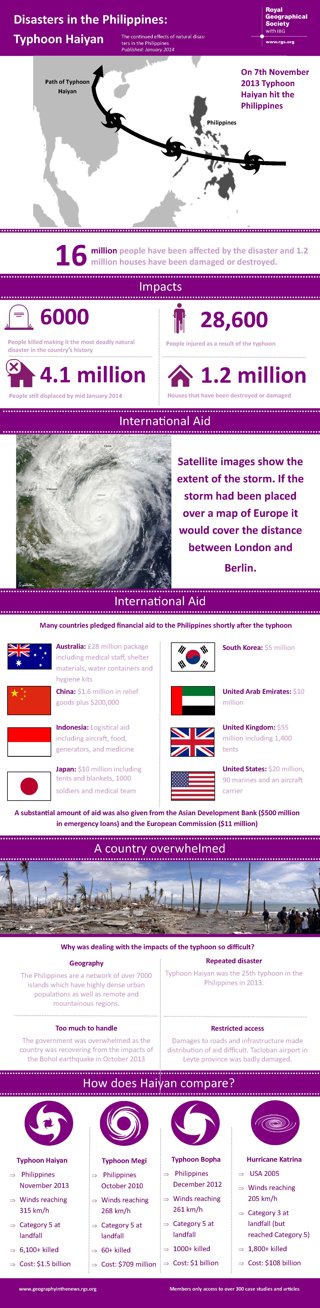
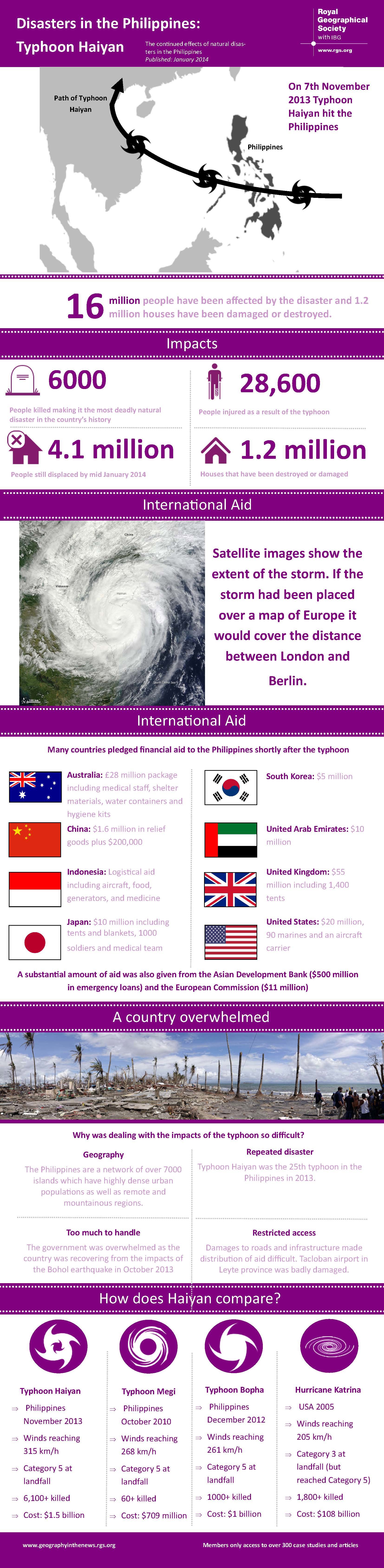
It has become the most deadly natural disaster in country’s history. Typhoon Haiyan is known in the Philippines as Yolanda, and was the 25th typhoon to hit the country in 2013.
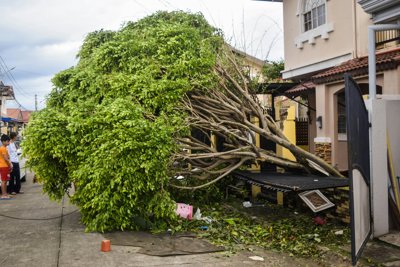
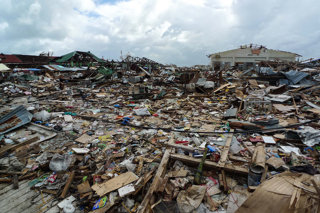
When the typhoon made landfall at Samar on 7 November, 315km/h winds caused what was described by local people as ‘a wall of wind and rain’. The winds near Tacloban city in Leyte province, which was one of the worst affected areas, blew water ashore over 7.5m high. As much of the city is less than 5m above sea level meaning that most of the city was completely engulfed by water.
The government issued a major typhoon warning and evacuated thousands of people to shelters prior to the typhoon making landfall but Haiyan was unique in both scale and impact and it went beyond the capacity of preparations. In some areas the risks from the typhoon were not fully understood. Even some of the shelters that were considered safe were totally destroyed.
References
‘DEC Philippines typhoon appeal’
‘Footage of house being washed away – Plan International’
Haiyan Southwest Pacific Ocean NASA
‘Haiyan death toll rises over 5,000’ BBC News 22 November 2013
‘Mapping the Destruction of Typhoon Haiyan’ New York Times 11 November 2013
‘Here have a measly 100,000 in aid’ Time 19 November 2013
‘Online volunteers map Typhoon after Haiyan’ Guardian 15 November 2013
‘Mapping Typhoon Haiyan’ BBC News 12 November 2013
‘Supertyphoon Haiyan, Satellite images, BBC News 08 November 2013
Super Typhoon Haiyan, Yolanda in Tacloban City, Philippines
‘The Philippines is devastated as much by unfair debt as typhoon Haiyan’ Guardian 23 December
‘Typhoon Haiyan Aid in Numbers’ BBC News 14 November 2013
‘Typhoon Haiyan: China gives less aid to the Philippines thank Ikea’ Guardian 14 November 2013
‘Typhoon Haiyan: Tour a Street devastated by the storm’ BBC News 19 December 2013
‘Typhoon Haiyan cuts a path of destruction across the Philippines’ Time 09 November 2013
File nameFiles
File type
Size
Download

This resource was first published in 2014.