Introduction
Minerals are not necessarily the first thought that comes to mind when studying Geography. However, the vast range of minerals which exist on (and indeed beyond) our planet is certainly something we should acknowledge, as life on this planet would not be the same without them.
With limited access to geology and mineralogy in UK schools, many budding researchers in this field quite often start within the realms of geography where they can understand physical processes and human impact, with scope to deepen their knowledge of specialised fields of study in later phases of education.
TV stone
The mineral ulexite is an unusual mineral as it holds a wonderful optical property. It is a hydrated sodium calcium borate which forms fibres which can transmit light thus forming a natural fibre optic. Therefore, if images or text is placed underneath, the mineral appears to project it onto its surface, just like a television; hence the nickname ‘TV stone’. The boron content within ulexite is important for many industries and is used in several products including fibreglass, soaps, fertiliser and eye drops.
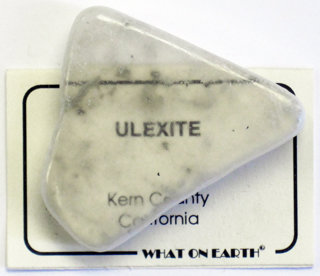
Figure 1: Sample of ulexite showing its projection quality © James St John, Flickr
Jack Hills: a time capsule to early Earth
In mid-west Western Australia lies the Jack Hills - home to the oldest known terrestrial mineral on the planet. The rocks in the hills contain a mineral called zircon which formed approximately 4.4 billion years ago, making them the oldest known material of any kind formed on Earth.
Their remarkable age has been determined through uranium-lead dating, a method that leverages the radioactive decay of uranium to lead within the crystal structure.
These crystals helped scientists exploring early crust formation of the planet. Specifically, the formation of the early continental crust and the presence of liquid water during the Hadean Eon. They have also helped scientists explore atmospheric conditions of early Earth, making them an essential part of geological and mineralogical study.
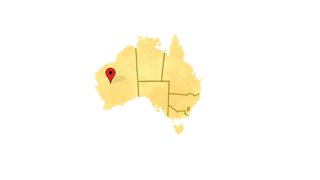
Figure 2: Location of Jack Hills ©RGS
Quartz
Quartz is one of the most common but versatile minerals on Earth. Unlike some other minerals, quartz has a simple chemical composition, silicon dioxide (SiO2). Crystals typically form in a hexagonal structure and can come in a range of colours depending upon impurities.
Quartz is a hard mineral which makes it resistant to scratching and is suitable for a number of industrial uses including glass manufacturing, paint, ceramics, kitchen worktops, electronics and even toothpaste.
This mineral is also used in watches because it vibrates at a precise frequency (32.768Hz) when an electrical current is passed through it. These vibrations are counted by the watch’s circuit which generates a regular electrical pulse that moves the hands or powers an LCD display, keeping accurate time without the need to wind a watch mechanism.
File nameFiles
File type
Size
Download
This resource was first published in 2024.