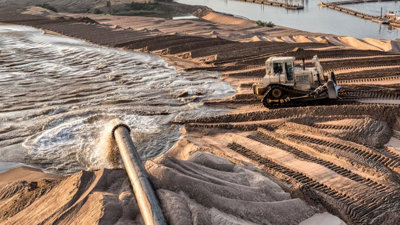
Dredging: an impact of development in Lagos
Introduction
Lagos, Nigeria’s largest city, is growing rapidly due to several factors. For instance, the average wage in the city is roughly 76% higher than the national average, producing a pull factor and driving internal migration. In addition, there is a high level of natural increase (average 3.2%) creating a large population.
To support the growing population, major changes in housing and infrastructure are needed. These changes are assisted by plans such as the National Integrated Infrastructure Master Plan (NIIMP) and the Lagos Strategic Master Plan (STMP).
These plans aim to build 14,000 homes by the end of 2026, improve road and bus transport routes and develop infrastructure with the goal to make Lagos a globally connected city while improving the quality of life for its 17.8 million (2026) residents.
As this densely populated (6,871 people per km2) megacity grows, the demand for land and resources also increases. In addition, a chance to build prime real estate along the water’s edge provides developers with opportunities to turn swampland into luxury homes, as well as creating new land through reclamation.
One key resource for construction is sand - it is widely used in building and is one of the cheapest materials available. The most common way to get sand in Lagos is through dredging and mining in nearby lagoons.
As a result of the significant local supply, many companies are officially registered to dredge sand. However, there are also a lot of unregulated dredging; this is not properly monitored and it can have serious impacts on both people and the environment.
Impacts on fish stocks
Dredging creates deeper channels which changes the shape of the channel and makes the water cloudy by increasing the suspended load. The noise from the machinery also scares fish, making them flee. This affects fish breeding grounds and ultimately numbers.
As a result, local fishers have reported a decline in fish stock. Wild Africa - a conservation organisation - has also reported that 230 species of inland fish are showing decline, which they believe is linked to dredging. As a result, fishers have had to go out further and for longer periods of time to harvest the stock they need. In addition, fishing nets get caught on the uneven floor of the newly dredged channels.
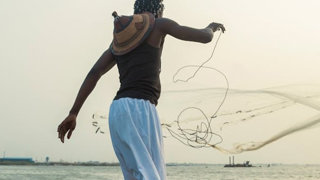
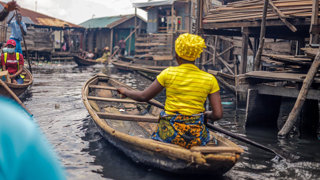
People in Makoko, a fishing community in Lagos that relies on this industry, are struggling to make ends meet because of the low fish stock. They are having to spend more money on fuel for longer fishing trips meaning that they have limited income to support their families.
In addition, as fish numbers fall due to habitat disruption, fishmongers have less to sell. This has led to a drop in income in this industry of up to 50% over five years.
Impact on ecosystems
It is not just the fish that are being affected by these changes. The relatively shallow waters of the lagoons around Lagos are highly productive and support a variety of wildlife including turtles and migrating birds.
However, because of dredging, as well as increased pollution from sewage and industrial waste, the marine ecosystem is under increased threat of collapse.
Other impacts
Unregulated mining and dredging have resulted in the seabed being eroded by nearly 6 metres in the 5km area of channel between the Third Mainland Bridge and an area of reclaimed land known as Banana Island. As it is unregulated, authorities are struggling to ensure that sediment removal in this area meets sufficient levels that still support the environment.
Lagos is a low-lying coastal city, which already makes it vulnerable to rising sea levels. When too much sediment is removed from the waterways, it reduces natural protection against flooding. As a result, the risk of coastal flooding increases further.
Many coastal settlements including Makoko, Oto-Awori and Epe are at great risk of erosion, especially during the rainy season. Heavy rainfall washes away more sediment, and when dredging has already removed large amounts from the lagoon, even more land can be lost. For example, Era Town in Oto-Awori is losing land, impacting communities and infrastructure.
Sources and further reading
‘The water is no longer our friend’: how dredging is pushing Lagos Lagoon towards ecosystem collapse – photo essay. Valentine Benjamin, The Guardian, 8 April 2026.
Dredging reshapes Lagos, putting people and environment at risk. Associated Press, February 2026.
An investigation into the impacts of dredging on aquatic and terrestrial lives in Oto-Awori local council development area, Lagos state, Nigeria. Azeez Oga Omoyemi, Global Journal of Ecology, June 2024.
"Epe". Encyclopedia Britannica, 5 Jan. 2024. Accessed 16 April 2026.
A review of the potential effects of suspended sediment on fishes: potential dredging-related physiological, behavioural, and transgenerational implications. Kjelland, M.E., Woodley, C.M., Swannack, T.M. et al. A review of the potential effects of suspended sediment on fishes: potential dredging-related physiological, behavioural, and transgenerational implications. Environ Syst Decis 35, pp. 334–350 (2015).
File nameFiles
File type
Size
Download
This resource was first published in May 2026.