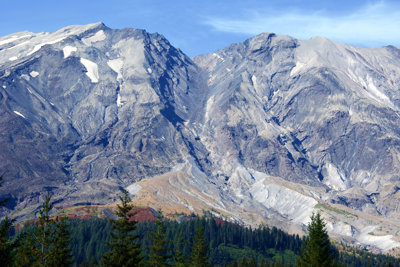
Volcanoes and earthquakes
The dynamic nature of tectonic activity means that new examples frequently emerge offering fresh learning opportunities to study up-to-date case studies. This page contains information identifying the causes, effects and responses to tectonic hazards, all of which have happened since 2023.
They cover three significant earthquake events and one volcanic eruption, spanning across countries that are at various stages of development, providing a diverse range of contexts and impacts for in-depth analysis.
The examples have been written to support the following GCSE specifications:
AQA
3.1.1.2b The effects of, and responses to, a tectonic hazard vary between areas of contrasting levels of wealth.
Edexcel B
1.9 Tectonic hazards affect people, and are managed, differently at contrasting locations.
Eduqas A / WJEC
3.2.1 What are the impacts of tectonic processes?
OCR B
1.2b. How can tectonic movement be hazardous?

Morocco earthquake 8th September 2023
The earthquake claimed 2,946 lives and injured over 5,500 people.
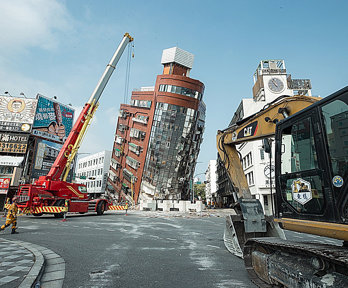
Taiwan earthquake 3 April 2024
Reported as Taiwan’s strongest earthquake in 25 years.
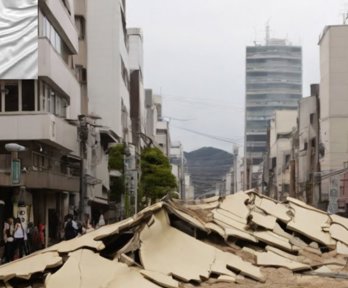
Japan earthquake 1 January 2024
For the 3 years before the earthquake, this area had experienced tens of thousands of smaller earthquakes known as an earthquake swarm.
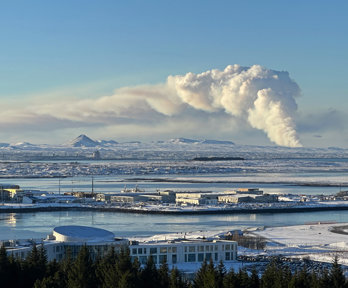
Iceland volcano 19 December 2023
The volcanic eruptions started in December 2023 and has been intermittently erupting since.
Seven suggested learning activities to accompany the case studies
1. To develop communication skills, pupils could create a news report covering the event (either written or verbal).
2. To work on geospatial skills, map the tectonic event using GIS, identifying location, impact zones and historic events.
3. Pupils could conduct a comparative analysis (i.e. table, Venn Diagram etc) exercise focussing on two or more of the tectonic events.
4. Pupils could create a whole or part of a fact sheet on their given tectonic event and ‘speed date’ their understanding with their peers.
5. To increase recall or for revision, pupils could generate a quiz using an online quiz platform covering their case study to share with the class or use it for revision.
6. Pupils could generate a mind map highlighting the key points in the case study to help develop summarisation skills.
7. Pupils could retell the information in the case study in a different format. i.e. a story, poem, poster etc.
Key Terms
Focus – the point underground where rocks start to fracture to cause an earthquake.
Epicentre – the point on the Earth’s surface vertically above the precise location of where an earthquake starts.
Ground deformation – the change in shape of the surface of the Earth resulting either from tectonic movements of the Earth’s solid surface or movements of magma beneath it.
Convergent subduction - At converging oceanic and continental plate boundaries, the denser oceanic plate is pulled beneath the continental plate, in a process called subduction.
Convergent collision - colliding plates are of similar density and so, when such plates meet, neither subducts. Instead, these plates crumple, pushing the Earth’s crust upwards creating fold mountains.
Seismic swarm – applied to a pattern of relatively many earthquakes in a relatively small area. These tremors do not fit with the ‘mainshock-aftershock’ sequence which is common in most earthquake events.
Lava fountain – a jet of lava sprayed into the air typically ranging from 10-100m in height.
Reverse fault – a fracture in the Earth's crust formed by compression or tension, leading to the relative displacement of rocks on either side of the break.
Thrust fault – reverse faults that dip less than 45o.
High-income economy (world bank) – countries/places/regions with a GNI (gross national income) per capita of $12,376 or more.
Upper middle-income economy - countries/places/regions with a GNI per capita between $3,996 and $12,375.
Lower middle-income economy (world bank) - countries/places/regions with a GNI per capita between $1,026 and $3,995.
Primary industry – produce or extracting raw materials e.g. agriculture.
Secondary industry – makes and manufactures goods.
Tertiary industry – a sector which provides a service i.e. estate agents, restaurants and shopkeepers.
This resource was first published in 2024.