Introduction
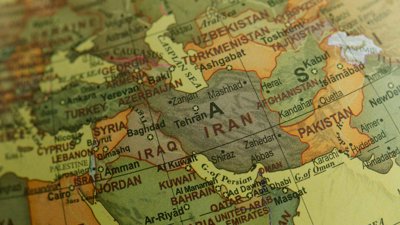
Iran is among several countries that, for many reasons, are thinking of moving their capital city. Tehran, the current capital, is located in the north of the country near the Caspian Sea and is home to just over 10% of the total population (2023). Although this has slowed in recent years, the city has seen rapid urbanisation and is projected to become a megacity by 2028.
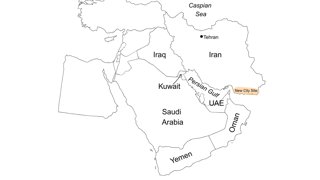
Like many cities which have seen rapid population growth, Tehran faces many issues which has led the president, Masoud Pezeshkian, to look to move the capital to the largely underdeveloped Makran Region in the south of the country.
Causes
Like many rapidly growing urban areas, Tehran faces issues around increased traffic, pollution and the lack of suitable housing. However, it is the severe water stress the city is facing that is the biggest cause for its potential relocation.
The region has struggled with issues over water for many years. However, with increasing temperatures, over extraction of existing water supply and declining precipitation in the region, the city is under threat of running out of water.
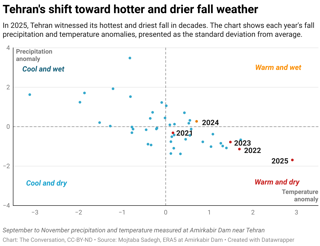
In this drying climate, the soil the city is built on is under increasing threat of subsidence, putting the infrastructure under immense strain. In addition, the location is vulnerable to seismic activity having on average nine 4+ magnitude earthquakes (within 300km of Tehran) a year, adding to the instability of the infrastructure in the city.
Opportunities and challenges
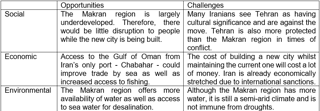
As a result of the factors above, moving the city to the largely underdeveloped south could bring many opportunities but also challenges, some of which are highlighted in the table below.
Futures
Even if the decision is made to move the city, building the infrastructure needed to move will take many years. The issues around the current city’s location and the country’s water stress will still need to be addressed.
Due to several factors including economic sanctions and concerns over corruption in the management of funds, Iran is not that globalised. As a result, it has seen a 78.4% decline in exports between 2022 and 2023. Therefore, Iran attempts to be as self-sufficient as possible. Growing water-intensive crops such as rice is still a commonplace and therefore, a shift from these crops to more drought resistant grain would help reduce the pressure on water for agriculture.
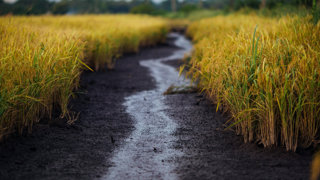
Being more open to global trade could pave the way to increasing Iran’s economic growth, as well as potentially importing more water-intensive crops rather than growing them could also reduce water stress.
Additionally, investing in water recycling so that wastewater can be re-used for drinking or other purposes and education on sustainable uses of water will also alleviate the stress in many areas.
Overall, while there are reasons why moving the capital in Iran offers a solution to the issues faced by rapid urbanisation, moving such an important city does not come without its drawbacks - as seen in Indonesia, Nigeria and Brazil, for example.
Further reading
Satellite Imagery Shows Tehran’s Accelerating Water Crisis. D. Mitchel et al, CSIS, November 25, 2025.
Iran’s president calls for moving its drought-stricken capital amid a worsening water crisis – how Tehran got into water bankruptcy. The Conversation, December 1, 2025.
Why Iran Wants to Move its Capital. TLDR News Global via YouTube.
Iran must move its capital from Tehran, says president as water crisis worsens. The Guardian, October 2, 2025.
File nameFiles
File type
Size
Download