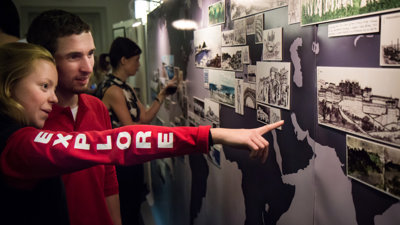
Explore at 50 and the future of exploration
Fifty years ago this week, in 1976, the Society’s inaugural gathering for planning expeditions and field research, RGS Explore – then known as the Planning a Small Expedition Seminar – took place.
Across 50 autumn weekends, 13,000 like-minded individuals have come together to plan their next adventure, meet new team members, and exchange expedition tips over coffee.
For those embarking on expeditions, field research projects and other purposeful journeys, Explore is considered a rite of passage, and it remains the UK’s only dedicated event of its kind.
In the years since Explore’s inception, the community’s efforts have become more urgent than ever as the challenges facing the world’s environments have accelerated. Explore has worked to expand the concept of exploration, focusing on inspiring and empowering people to make and share discoveries: not just of new places, but of new perspectives, new solutions, and new ways of understanding the world and our place within it.
As we mark this significant anniversary, hear from Director of the Society, Professor Joe Smith, and Expeditions and Fieldwork Manager, Tom Allen, who have been reflecting on the evolving purpose of the event, and the future of exploration at the Society and beyond.
“The core of Explore has long been to empower the next generation of explorers to contribute to geographical knowledge, with a traditional emphasis on earth and environmental field science.
Against the backdrop of the multiple global crises we now face, including climate change, biodiversity loss on land and at sea, pollution in its many forms, and growing cultural divisiveness, the role of expeditions that enable field research across disciplines remains critical. This is simply because hands-on exploration remains one of the most powerful ways of developing first-hand understanding of these challenges, of investigating potential solutions to them, and of translating those understandings into wider long-term impact. The RGS can help to set the agenda for what the priorities should be, both in how the event is portrayed and how it is delivered, but the active exploration community will continue to shape those priorities too. The event is interactive in both the development of the design and the experience of it. It really is a case of ‘you get out of it what you put in’.
The future of Explore is also about championing a broader and more inclusive vision of exploration. The question of "what does an explorer look like?" needs answering over and over again, in different ways, in order for today's tropes to become tomorrow's history. This goes well beyond representation alone - it is about reinforcing geographical exploration not as an elite pursuit, but as a lens through which a range of insights, experiences and practices are put on the map. The Explore event and the wider - and growing - series of events and publications within which it sits exist to nourish a deep and intentional way of interacting with the world. The insights and experiences gained can then be put into practice regardless of who you are, and whether you are out for a ramble close to home or leading an expedition on the other side of the planet.
A major part of Explore's evolution is therefore about creating more meaningful opportunities for inclusion and connection. It is no longer enough simply to tell people to be more confident and make the most of networking opportunities. We are increasingly bringing together a multigenerational community from a wide range of backgrounds, and part of our role is to make that space welcoming, accessible, and empowering for everyone who walks through the door. There is a clear need to encourage more people, and a greater diversity of people, into expeditions, fieldwork and other forms of geographical exploration, bringing a wider range of perspectives and experiences to the practice.
We are also working to integrate Explore more fully into a year-round programme of support, funding, training and engagement. The knowledge, lived experience and practical expertise shared at the weekend are too valuable to remain confined to a single event. This has already begun through the wider sharing of recordings, articles, podcasts, resources and other digital outputs. We will continue to seek ways for more people to benefit from what is shared at Explore, especially those who cannot be in the room themselves. We can think of no other event that brings together such a depth and breadth of knowledge on expeditions and fieldwork, and a key part of our responsibility is ensuring that knowledge reaches all those who could make use of it.
While the scope and purpose of exploration, and who is involved, becomes broader, the focus on creating pathways for people to be part of the solutions to global challenges must remain at the core of our work.”
In pictures: Explore at 50
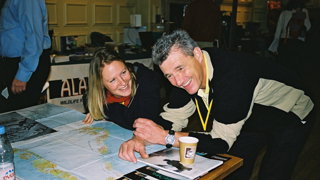

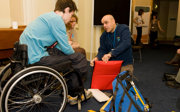





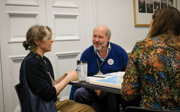

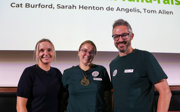

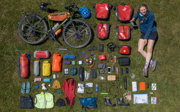
The 50th Explore Weekend takes place this week, 6-8 November, and there is still time to join us!
- RGS news
Four leading conservationists and explorers to chair RGS Explore Weekend
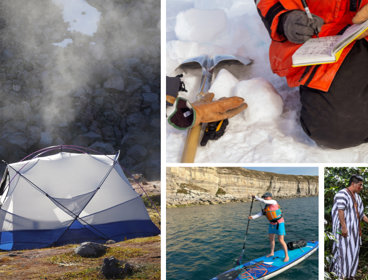
The 2026 RGS Explore Weekend will be chaired by four leading conservationists and explorers. Read on to find out who...
Tuesday 6 Oct 2026 - RGS news
Apply now for our 2027 grants
We are now accepting applications for the 2027 grants cycle, with deadlines in November and January. Whether you’re a student, teacher or researcher, discover what’s on offer.
Monday 5 Oct 2026 - RGS news
Discover something new this autumn
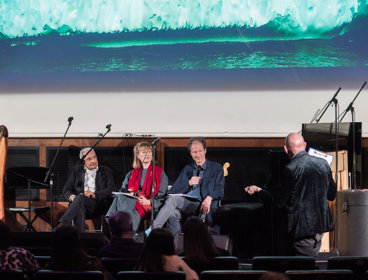
Our autumn programme is jam-packed with insights from geographical experts as well story-telling, film, music and art. There is something for everyone, no matter where you are based.
Monday 14 Sep 2026