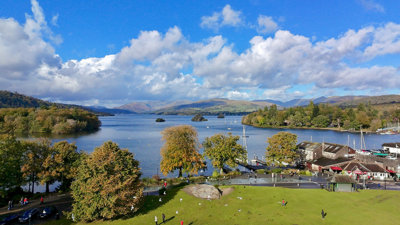
Identifying negative impacts of human activity on Lake Windermere’s water quality
Map Impact carried out work which highlights the impacts that human activity is having on England’s largest freshwater body, Lake Windermere in Cumbria.
Issue
Lake Windermere is suffering from increasing environmental degradation with excessive levels of nutrients, impacting water quality, human health, biodiversity, tourism and leisure.
However, a lack of understanding on the exact factors behind the Lake’s worsening water quality has prevented targeted interventions.
Approach
Map Impact’s analysis integrated knowledge from community groups, historic data and geospatial data sets including population levels. This was integrated with an analysis of satellite imagery which provided evidence of chlorophyll levels and algal blooms. Together this allowed a detailed catchment analysis of Lake Windermere.
The project looked at the impact of human activity, investigating the link between changes to the catchment’s population during peak tourism periods on algal bloom. The relationship between temperature and land use changes on algal blooms was also investigated.
Impact
The work demonstrated a clear link between anthropogenic factors in influencing lake ecology. The growing levels of pollution from commercial and human activities and as well as farming had the strongest impacts on Lake Windermere’s water quality.
The research delivered crucial evidence to demonstrate the mismanagement of natural resources in the Windermere catchment.
This has informed and supported mitigation strategies against pollution and has led to clearer accountability for the causes of Lake Windermere’s degradation.
More information
- Organisation: Map Impact
- Read the case study