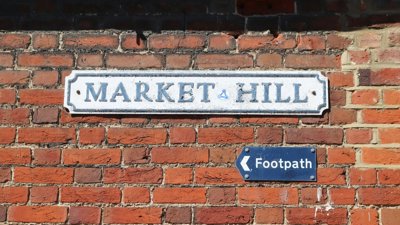
Preserving place name heritage in modern developments
GeoPlace and the Institute for Name-Studies collaborated to undertake historical research into modern street-naming policies, ensuring that traditional names are considered in development projects and honours local history.
Issue
As more areas undergo land and housing developments, modern street naming practices can ignore the local and cultural history of places and their associated historical placenames - this can erase important context which shapes and defines a region's landscape.
Approach
The Institute of Name Studies and GeoPlace worked closely with four local authorities in England, Derbyshire Dales, Mid Sussex, Plymouth, and Cheshire East. These areas were specifically selected as they offered a blend of urban and rural settings, planning timelines, and policy needs.
Sourcing data from English Place-Name Society Surveys, historical maps and dialect research, detailed reports were produced which summarised the historical and etymological significance of existing place names in each area.
These reports presented each region’s naming patterns, locally distinctive terms and offered guidance on how to honour that history in future street names.
Impact
Following the project’s results, two of the four local authorities are now rewriting their street naming policies, embedding the importance of historical context into formal processes.
Other local authorities have added the resource to their public websites and are already using it in discussions with developers.
The findings have led to the development of a toolkit available online, which offers best practice, historical research tips, policy alignment guidance, and naming examples designed for local authorities, parish councils, developers, and the public.
The project also empowered more collaborative work between local communities and Street Naming and Numbering Officers (SNN) officers. With access to the findings, SNN officers, feel more confident when discussing naming proposals with developers and the community.
Explore more
- Organisation: GeoPlace
- Read the case study: www.geoplace.co.uk/case-studies/preserving-place-name-heritage-in-modern-developments