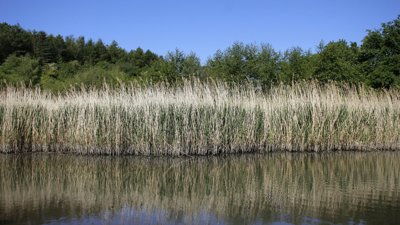
Wetlands protecting England’s coasts
Research from the Cambridge Coastal Research Unit (CCRU) demonstrated the critical role that coastal wetlands play as natural buffers against storm impacts.
Issue
With rising sea levels projected to impact approximately 20% of England’s coastal defences by 2100, relying solely on hard engineering strategies (e.g. sea walls, groynes) is becoming increasingly unsustainable.
Soft engineering strategies such as natural flood management (NFM) utilise nature-based solutions such as rivers, floodplains, catchments, and wetlands to reduce flooding and coastal erosion and offer a sustainable approach.
Approach
Through field campaigns and experimental research, the CCRU quantified the extent of which wave energy is mitigated by coastal wetlands.
The CCRU conducted studies in Essex estuaries and Morecambe Bay, comparing water depth and wave height with vegetation and sediment characteristics, to investigate the how salt marshes reduce wave impacts.
The CCRU also conducted controlled experiments in a wave flume to investigate how waves are dissipated by coastal salt marshes during storms.
Impact
The CCRU’s research provided compelling evidence that coastal wetlands, such as salt marshes, significantly dissipated wave energy during storms, helping to protect coastal communities and infrastructure.
The findings from CCRU helped to shift the narrative on coastal management. The UK Climate Change Risk Assessment (CCRA2) highlighted flooding and coastal change as the highest climate risk for the UK, and identified an urgent need for effective, sustainable solutions.
The CCRU’s work was pivotal in advocating for the policy of ‘managed realignment.’ This strategy promotes restoring natural habitats by allowing the coastline to adjust in a way that benefits both the environment and human communities
The CCRU have also developed models and visualisation tools to help coastal managers understand and implement natural coastal protection strategies. These tools empower decision-makers to incorporate wetlands into coastal defence plans.
Read more
- Organisation: Environment Agency, Cambridge Coastal Research Unit, Trinity College Dublin
- www.gov.uk/government/case-studies/wetlands-and-coastal-protection