GCSE Specification Link
AQA
3.1.1.3a. Global atmospheric circulation helps to determine patterns of weather and climate.
Edexcel B
1.1a. The global atmospheric circulation and how circulation cells and ocean currents transfer and redistribute heat energy around the Earth.
1.1b. How global atmospheric circulation determines the location of arid (high pressure) and high rainfall (low pressure) areas.
Eduqas B
2.3.2. An overview of the global circulation of the atmosphere to include the operation of cells in the troposphere.
2.3.2 How does the global circulation of the atmosphere create distinctive climate zones?
3.4.1. What are the physical processes operating in hot semi-arid regions that make them vulnerable to desertification?
OCR B
1.1b. Outline of the global circulation system including the effects of high- and low-pressure belts in creating climatic zones. How the global circulation of the atmosphere causes extremes in weather conditions in different parts of the world.
WJEC/Eduqas A
5.2.1. An overview of global circulation of the atmosphere. How global circulation creates areas of low and high pressure. How these different pressure systems each lead to weather hazards.
Introduction
Learning about the Global Atmospheric Circulation Model (GAC) is one of the more challenging concepts at GCSE for pupils as it involves thinking in three dimensions, a knowledge of atmospheric pressure and the location of certain biomes to visualise the impacts circulation has on the planet’s weather systems.
If you have not covered biomes or air pressure yet, it might be worth using some of the following resources to help your class have a basic understanding. You can always return to them in a later lesson to go over them in more detail.
These lesson ideas have been designed to work with content on the GAC, some ideas of where to find it have been provided in this document but of course you can use any source which suits your class’s needs.
All of these lessons have been created to take approximately an hour of teaching time.



GCSE style questions
1. Which of the following cells is located between the Equator and 30° latitude in the Global Atmospheric Circulation Model?
a) Ferrel Cell
b) Polar Cell
c) Hadley Cell
d) Coriolis Cell
2. What is the main reason for the formation of the Hadley Cell?
a) High pressure at the Poles
b) Rising warm air at the Tropics
c) Sinking cold air at 60° latitude
d) Earth's rotation
3. At what latitudes are the Earth's deserts typically found, according to the Global Atmospheric Circulation Model?
a) 0° (Equator)
b) 30° North and South
c) 60° North and South
d) 90° North and South (Poles)
4. Which atmospheric circulation cell is found between 30° and 60° latitude?
a) Hadley Cell
b) Polar Cell
c) Ferrel Cell
d) Jet Stream
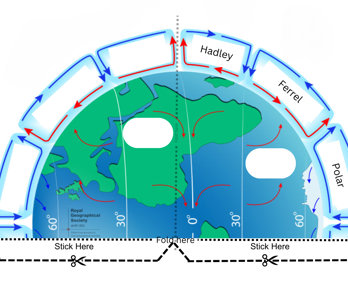
5. With the use of a diagram, describe the main features of the Global Atmospheric Circulation Model.
6. Explain the process that leads to the formation of trade winds.
7. Explain the impact of trade winds on global weather systems.
8. Explain the role of the Ferrel Cell in transferring heat from the Tropics to the Poles.
9. Explain the relationship between the Global Atmospheric Circulation Model and the distribution of deserts and rainforests around the world.
This resource was first published in 2024.