Introduction
Extreme heat is a period of high temperatures (and humidity) which is much higher than normal for the time of year. These periods of unusually hot weather are called heatwaves.
In the UK, the Met Office defines heatwaves as ‘when a location records a period of at least three consecutive days with daily maximum temperatures meeting or exceeding the heatwave temperature threshold’.
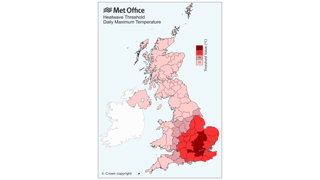
The map below shows how these heatwave temperature thresholds vary across the UK. Different parts of the country have different thresholds because they normally experience different summer temperatures. The thresholds are based on average maximum temperatures recorded around the middle of summer (15 July) between 1991 and 2020.
The UK experienced heatwaves in three consecutive months: May, June and July 2026 which are considered as examples of extreme heat in the UK.
May 2026
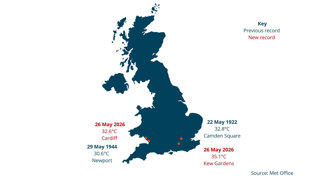
Between 22 and 31 May 2026, parts of England and Wales recorded the hottest May since 1922, with temperatures exceeding their last recorded maximum temperature in many locations.
The verified air temperatures recorded by the Met Office in May were as follows:
May is part of the meteorological spring, when temperatures are usually lower than in summer. However, the temperatures during this heatwave were much higher than normal, breaking previous records and making it one of the UK’s most extreme heat events since records began.
In addition to the highest temperatures recorded in England and Wales, this period of extreme heat broke 163 weather station’s previous maximum May temperatures.
Minimum nighttime temperatures were also unusually high. For example, overnight temperatures in Camborne, Cornwall did not fall below 21.4°C during this time. This is known as a ‘tropical night’, when temperatures stay above 20°C throughout the night.
This heatwave came quickly after a cooler first half of the month. This meant that people, plants and animals had little time to adjust to the sudden change in temperature. As a result, the heatwave felt more intense and young crops in the early stages of the growing season were damaged, slowing their growth.
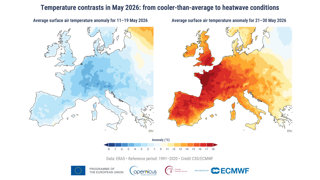
The heatwave was caused by a heat dome which sat over most of the UK. A heat dome is a large, slow moving area of high pressure. High pressure causes air to sink towards the ground. As the air sinks, it warms up, and clear skies allow the Sun to heat the land even more. This led to very high temperatures across the UK.
At the same time, a marine heatwave affected seas around the UK including the Bay of Biscay and the western Mediterranean which helped to keep coastal regions and nighttime temperatures high.
Many people tried to cool down by swimming in rivers, lakes, and the sea. Sadly, at least 15 people lost their lives in water-related incidents during the heatwave.
The extreme heat also disrupted important services. Around 800 properties in southeast England experienced water supply problems, and some train companies, including South Western Railway, introduced speed restrictions because high temperatures can cause railway tracks to expand and become unsafe.
June 2026
During the second half of June, an intense heatwave hit many parts of central and western Europe. Globally, it was the second hottest June ever recorded, with an average temperature of 20.74°C. This was 3.05°C warmer than the average June temperature between 1991 and 2020. The heatwave brought temperatures well above normal across Europe.
As well as making June much hotter than average, many countries recorded their highest ever daily temperatures for the month, breaking previous records.
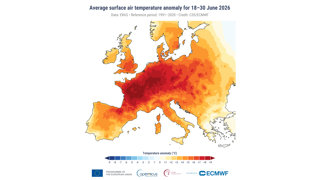
This heatwave was also caused by a heat dome, but this time it was centred over France. The weather system pulled hot, humid air northwards into the UK. High humidity makes the heat feel even more uncomfortable because it reduces the body's ability to cool itself by sweating.
On 24 and 25 June, the Met Office issued its first ever red extreme heat warning for most of the south and east of England, London and south Wales. A red warning means there is a high risk to people’s health and there could be disruptions to transport, power supplies and other services.
Due to a drier than usual spring in some parts of the country, farmers had to rely on getting water from reservoirs earlier than usual to irrigate crops.
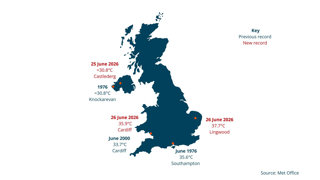
England and Wales recorded new highest temperatures for June and an equal to the previous record in Northern Ireland.
The extreme heat put a lot of pressure on public services. Several hospitals declared critical incidents because emergency departments became much busier than usual, some electrical equipment stopped working in the heat, and hospital wards became too hot for patients.
The heatwave also disrupted transport. As in the May, many train services were reduced and speed restrictions were introduced because high temperatures can cause railway tracks to expand and become unsafe. On 24 and 25 June, National Rail advised people to travel only if absolutely necessary.
July 2026
At the beginning of July, the UK experienced its third heatwave of the summer. Although temperatures were not as high as those recorded in May and June, the heatwave lasted longer. Temperatures of 30°C or above were recorded for more than seven consecutive days, breaking the previous record set in 1976 and 2020.
The long period of hot, dry weather led to hosepipe bans being introduced by at least five water companies. These restrictions affected more than one million customers across eastern and southern England and were designed to reduce water use during the dry conditions.
The Met Office issued amber and yellow heat warnings for parts of England because temperatures remained well above average. The combination of hot, dry weather and very little rainfall also increased the risk of wildfires, particularly across southern England.
After a brief spell of cooler weather around 20 July, the Met Office warned that another heatwave could develop in some parts of the UK later in the month.
The Future
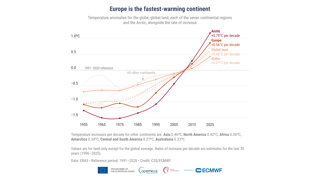
Europe, including the UK, is the fastest warming continent in the world. It is warming more than twice as fast as the global average - by around 2.5°C since the pre-industrial period (before large-scale burning of fossil fuels).
There are several reasons why Europe is heating up so quickly. It is close to the Arctic, which is the fastest warming region on Earth. In northern and mountainous areas, there is now less snow and ice. This reduces the albedo effect, meaning that less sunlight is reflected back into space and more heat is absorbed by the Earth's surface. Changes in atmospheric circulation are also increasing the likelihood of extreme weather events, including more frequent and intense heatwaves.
As a continent, Europe is taking action to mitigate (reduce the causes of) climate change in several ways. This includes increasing the use of renewable energy, introducing policies to reduce greenhouse gas emissions, and investing in clean technologies.
Countries are also working to adapt to climate change by developing nature-based solutions, such as restoring wetlands and planting trees, to help reduce the impacts of extreme weather events like heatwaves and flooding.
Sources and further reading
Deep Dive 26/05/2026 – Exceptional heatwave – Met Office Deep Dive
Hosepipe ban for millions more people - here are the areas affected. Sky News, July 10, 2026
Heatwave continues as UK records unprecedented run of 35°C days. Met Office, July 10, 2026
'Hotter and hotter and hotter' - Europe's new climate in seven charts. BBC, July 4, 2026
Dry weather and drought in England: 18 to 26 June 2026. Environment Agency, July 10, 2026
June 2026 is Western Europe’s warmest June on record. EU Space Policy, July 9, 2026
Why this heatwave feels worse than the last one. BBC, June 24, 2026
Heatwaves in the UK. House of Commons Library, May 27, 2026
May 2026 temperature records verified. Met Office, June 17, 2026
June 2026 heatwave: A recap of the temperature records. June 30, 2026
File nameFiles
File type
Size
Download

This resource was first published in August 2026.