Stories beneath Greenland’s ice
Greenland has been in the news a lot this year. But if we look beyond the headlines, what stories and histories of the region can we uncover?
Following funding last year from the NERC Arctic Office, the Greenland Connection project seeks to tell the hidden stories of UK-led exploration in Greenland and illustrate the diversity of people involved. Today, we're sharing a behind-the-scenes look into how these stories have been gathered, curated and disseminated.
The project, formed by a group of interdisciplinary researchers from a range of institutions, involved research collaborations across the country. One such collaboration took place at the Society last November, with project participants taking part in a day of workshops, discussions and a visit to our Collections. The day was led by Dr Sarah Evans (Research and Higher Education Manager at the Society) and Professor Bethan Davies (glaciologist at Newcastle University).
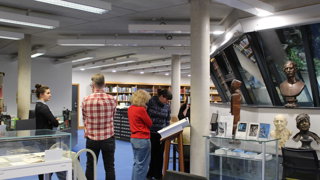
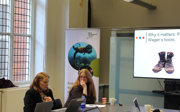
Bethan, the principal investigator of the project, commented: "It was inspiring to get together and to discuss the hidden stories behind the heroic exploration accounts we all know so well. The role of Indigenous people and women in these early expeditions was something that I found particularly fascinating."
Following the workshops, a fascinating new collection of six StoryMaps and resources were created, covering topics including Indigenous participation in Greenland expeditions, the untold histories of women involved, and the geopolitics of the governance of Greenland today.
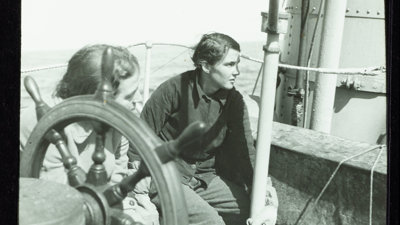
The pictures below, from the Society's Collections, were used as part of the research process to develop one of the StoryMaps.
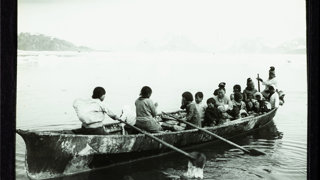
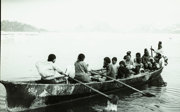
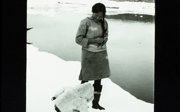
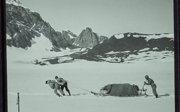
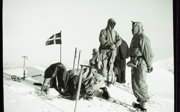
Dr Peter Martin, historical geographer at the University of Nottingham, and former CDA student at the Society, added: "It has been wonderful to be involved in this project. The histories we explore in the StoryMaps really have been ‘hidden’ in the sense that the archives associated with Greenlandic exploration rarely highlight or prioritise these types of people.
"As soon as we look more closely at these records, however, more complicated, and arguably more interesting, histories emerge. The StoryMaps therefore allow these marginalised figures to be given the attention they deserve and offer a more accurate retelling of these expeditionary histories."
Resources produced from the project are available to a range of audiences (aged 16+) and have been translated into three languages – Greenlandic, Danish and English – reflecting the project's core aim to magnify different voices.
This is just one example of how we are using our Collections digitally to tell new stories and add to existing ones. Keep an eye out for news about another project, in partnership with Newcastle University, to digitise hundreds of negatives from Gertrude Bell's expeditions.
- Research and higher education
Working between Anglophone and Latin American Geographies
New guides for researchers working between Anglophone and Latin American geographies launched alongside a new collection in Transactions.
Friday 16 Oct 2026 - Research and higher education
Stories from the Collections: The West India Regiments
Hear from one of our Collaborative Doctoral Awards students, Cat Sharples, on her work researching the role of military personnel in colonial science in the 19th century.
Wednesday 7 Oct 2026 - Geography news
Dr Katie Parker on the UN’s vote to adopt a new world map
The Society’s Cartographic Collections Manager, Dr Katie Parker, explains the Mercator projection and looks at the UN resolution to formally phase it out.
Thursday 24 Sep 2026