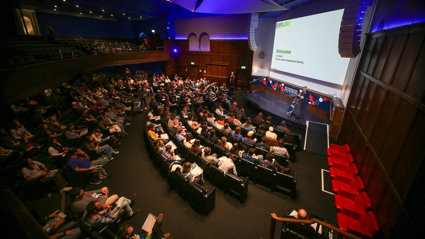
Explore Weekend Programme
Your guide to three days of inspiration, practical skills and connections that'll help you turn curiosity into action.
The RGS Explore Weekend is a journey in itself. Use this detailed programme to get a sense of what's to come and help you decide on the sessions you'd like to attend.
Details, including speakers and session locations, remain subject to change at short notice.
Friday afternoon
Your weekend begins on Friday afternoon with exclusive behind-the-scenes access to the building, opportunities to engage with our world-renowned Collections, and a dedicated welcome session for first-time attendees. Whether you're a newcomer to the RGS or returning to reconnect, today is designed to provide an accessible way into the community.
Access to all Friday afternoon sessions is included in the price of a full weekend ticket.
| Time | Session |
|---|---|
| 1.30pm | Doors open for early registration |
| 2.00pm-3.00pm | Hidden Histories: Collections in Focus Step inside the Society's Foyle Reading Room for a rare opportunity to encounter the Society's Collections up close. Created especially for Explore 50, this guided display brings together maps, journals, photographs, artefacts and expedition records spanning five decades of Society-supported exploration. From landmark expeditions to lesser-known field projects, each object offers a window into the people, places and discoveries that have shaped geographical knowledge and deepened our understanding of the world. |
| 2.00pm-3.00pm | Behind the Scenes: A Guided Tour of Lowther Lodge Explore the historic rooms where expeditions have been planned, discoveries shared and research supported for over a century. Along the way, hear the stories behind some of the Society's most fascinating objects, including the Everest model used to prepare for the successful 1953 ascent and displays that celebrate the enduring legacy of polar exploration. This is a chance to experience Lowther Lodge not simply as the RGS headquarters but as a living archive of exploration. |
| 3.00pm-4.00pm | Using the Collections for Expedition Research Discover how the Society's Collections can support expedition planning, fieldwork and research. This introductory session explores the breadth of resources available, from historic maps and photographs to expedition reports and journals. Whether you're developing a research question, seeking historical background or planning a future project, learn how our Collections can provide inspiration, context and new perspectives for exploration. |
| 4.00pm-5.00pm | Hidden Histories: Collections in Focus (Repeat Session) A repeat of the 2.00pm Collections viewing session. |
| 4.00pm-5.00pm | Behind the Scenes: A Guided Tour of Lowther Lodge (Repeat Session) A repeat of the 2.00pm guided tour. |
| 5.00pm-6.00pm |
Getting the Most from Your First Explore Weekend Hosted by: Scotty Johnson |
Friday evening
Stay with us for an evening celebrating 50 years of Society-supported exploration, followed by an optional ticketed dinner.
| 6.30pm-8.00pm |
Explore 50: Five Decades of Discovery Hosted by: Paul Rose Speakers: Nigel Winser, Robert Swan, Alastair Humphreys, Rachel Carr, Mark Day |
| 8.00pm-10.00pm | Explorers Bar For those not attending the Explore 50 Dinner, the Explorers Bar provides a relaxed setting to continue conversations sparked by the evening talks and connect with members of the community. |
| 8.00pm-10.30pm | Explore 50 dinner (ticketed separately) Join us for a celebratory dinner marking fifty years of exploration, fieldwork and discovery. Bringing together past participants, current practitioners and future expedition leaders, the evening offers a chance to share stories, exchange ideas and reflect on how exploration continues to evolve. |
Saturday morning
The RGS Explore Weekend opens with a series of inspiring talks from explorers, scientists and expedition leaders, followed by practical sessions focused on planning safe, effective and impactful expeditions.
| Time | Speaker | Session |
|---|---|---|
| 10.00am | Joe Smith | Director's welcome A warm welcome to the RGS Explore Weekend 2026. |
| 10.05am | Paul Rose | Chair's opening address An introduction to the weekend's themes and programme. |
| 10.15am | Gina Moseley | Around The Next Corner Cave explorer and polar scientist Professor Gina Moseley’s journey to the world’s northernmost caves – and solving a 65-year-old mystery – was guided by a simple piece of advice: "do what you enjoy, because it shows in the results." In this keynote, she passes that wisdom forward, sharing how following her passion into the remote High Arctic unlocked unexpected discoveries, and demonstrating how doing what you love can lead to extraordinary achievements around the next corner. |
| 10.30am | Eve Bluffield | The Art of Fishing amid Ecological Loss on the Nechí River RGS Explore Grant recipient Eve Bluffield shares the experience of returning to Colombia’s Nechí River, as a first-time expedition leader, to explore how fishing communities understand a landscape profoundly transformed by gold mining, dredging and the lasting effects of a hydroelectric dam crisis. Her story follows how participants shared knowledge through group conversations and mapping workshops about wetlands and species that have disappeared or declined, and how their ancestral fishing practices have adapted in response. |
| 10.45am | Robbie Mallett | Polar Field Science in the Golden Age of Satellites More than 400 satellites are currently monitoring Earth from space. Passing over the Royal Geographical Society around ten times each day, these missions allow scientists to observe environmental change in unprecedented detail. With such remarkable and rapidly expanding capabilities, why do environmental scientists still venture into the field? In this talk, Robbie Mallett, recipient of this year's Walters Kundert Fellowship, will explore what satellites can and cannot reveal about the polar regions, drawing on his recent expedition to Arctic Canada, and explaining how this expedition and others are helping to future-proof the next generation of European satellites as they track the world's changing ice. |
| 11.00am | Lisa Drewe | Attention All Shipping: What Are Britain's Islands Telling Us? What can a shotgun cartridge, a bath plug, a tortoise in a fridge and a warty doris tell us about living with environmental change? Using the Shipping Forecast as her map, RGS Neville Shulman Challenge Award winner Lisa Drewe is travelling by paddleboard and on foot around fourteen of Britain’s islands. Along the way, she encounters shifting shores, changing wildlife and very different ways of responding. Through conversations with people who live, work, study and care for these places, Lisa explores what these islands can reveal about the changes reshaping Britain’s coasts – and discovers how much there is still to explore in places we think we already know. |
11.15am: Break for refreshments
| Time | Speaker | Session |
|---|---|---|
| 11.45am | Felicity Aston | The Anatomy of an Expedition Plan Whether it’s making hard decisions when building your expedition team, or prioritising different aspects of funding, Felicity’s long CV of exploration has armed her with a deep knowledge of what it takes to put together a successful expedition. From why it’s good to start small despite lofty ambitions, to playing the ‘what if’ game when putting together a risk assessment, Felicity shares her insights on turning that idea that just won’t go away into reality. |
| 12.00pm | Megan Hine | Managing Risk & Safety Drawing on more than two decades leading expeditions and supporting high-profile adventure projects in some of the world’s most challenging environments, Megan Hine will explore how risk can be understood, assessed and managed without losing the spirit of exploration. |
| 12.15pm | Lucy Obolensky | Expedition Medical Preparation Preparing yourself and your team for the medical realities of expedition travel. |
12.30pm–2.00pm: Break for lunch
Saturday afternoon
The afternoon focuses on expedition leadership, fundraising and specialist planning. Delegates can then choose from a wide range of breakout sessions covering different expedition environments and practical expedition skills.
| Time | Speaker | Session |
|---|---|---|
| 2.00pm | Felicity Aston | Session chair's opening remarks |
| 2.10pm | Cat Burford | Funding & Fundraising Guidance on financing expeditions and fieldwork projects. Further details to be announced. |
| 2.25pm | Jamie Facer-Childs | Leadership & Teambuilding This talk explores a question at the heart of every successful expedition: who do you want beside you when things get difficult, and whose lead would you want to follow when the pressure is on? From a record-breaking row across the Indian Ocean to Antarctic crossings, Jamie reflects on the teams, leaders and decisions that shaped those journeys, sharing practical lessons on trust, resilience, teamwork and leadership when the stakes are high. |
| 2.40pm | Emily Penn | Expedition case study Further details to be announced. |
| 2.55pm | Felicity Aston | Introduction to breakout sessions |
3.30pm–4.30pm: Choose a breakout session
Most breakout sessions will be recorded for catch-up viewing after the event. Sessions marked with an asterisk (*) will be in-person only.
| Session | Location | Description |
|---|---|---|
| Planning Inclusive Expeditions | Ondaatje Theatre | Hosted by: Amelia Rudd Contributors: Amelia Steele, Dr Karolina Pakenaite, Rob Mervyn, Xena Felton |
| Planning Mountain & Trekking Expeditions | Lowther Room | Hosted by: Rebecca Stephens Contributors: Lily Innes-Jones, William Bonynge, Jan Bakker, Ben Campbell, Georgina Shepherd |
| Planning Polar and Arctic Expeditions | Council Room | Hosted by: Lorraine Craig Contributors: Ann Daniels, Denise Martin, Børge Ousland, Robbie Mallett, Phillip Power |
| Planning Tropical Forest Expeditions | Drayson Room | Hosted by: Jimmy McSparron Contributors: Holly O'Donnell, Lia Kajiki, Pete Casey, Anna Shekhdar |
| Planning River Expeditions | Sunley Room | Hosted by: Robert Litherland Contributors: Leon McCarron, Marianne Taylor, Spike Reid, Lucy Longbottom |
| Planning Maritime Expeditions | Tea Room | Hosted by: Oliver Beardon Contributors: Lisa Drewe, Emily Penn, Susannah Cass |
| Planning Overland & Vehicle-Supported Expeditions | Foyle Reading Room | Hosted by: Duncan Milligan Contributors: Kevin Murphy, Tom Weiser, Graham Jackson, Jason Wragg |
| Planning Bicycle Expeditions | Old Explore Office | Hosted by: Kate Rawles Contributors: Libby Bowles, Jude Kriwald, Veronica White, Marcus Mumford |
| Planning Caving Expeditions | Old Education Office | Hosted by: Gina Moseley Contributors: Iva Njunjic, Martin Edström |
| Planning Desert & Savannah Expeditions | Old Professionals Office | Hosted by: Mark Evans Contributors: Gavin Booth, Megan Hine, Lucy Obolensky |
| Dynamic Decision Making in the Field | Basecamp | How do expedition leaders make effective decisions when circumstances change? Topics include leadership under pressure, adapting plans safely, managing uncertainty and leading collaborative decision-making within teams. Hosted by: Mike Blakey |
| Designing Transformative Expedition Experiences* | Garden | This session explores how intentional expedition design can create powerful opportunities for growth, resilience and self-discovery. Drawing on the British Exploring Society's approach to challenge and reflection, participants will look beyond logistics and route planning to examine how leaders can create experiences that build confidence, deepen connections and help people realise their potential. Discover how thoughtful design can transform an expedition into a life-changing adventure. Hosted by: British Exploring Society team |
| Field Ready: Medical Pre-screenings for Expedition Teams* | Field Hospital (Marquee) | An interactive workshop exploring medical preparedness and pre-screening considerations for expedition teams. Hosted by: Lucy Longbottom & Emily Bush |
| Space for Serendipity: How to Plan for the Unplanned* | Nightingale Room | How much of an expedition should you actually plan? Drawing on more than 15 years as an adventurer, expedition planner and storyteller, with a particular focus on the year-long Galápagos Postman Challenge, Jon Beardmore explores how to plan enough to stay purposeful and responsible while leaving room for people, local knowledge and unexpected opportunities to shape the journey. Whether you are developing your first expedition plan or refining an existing one, this practical workshop will help you focus on what really needs to be fixed, what can remain open, and when it is worth changing course. Hosted by: Jon Beardmore |
| Fieldnotes from the RGS Garden: A Micro-Expedition* | Meet at Exhibition Road Entrance | Step outside into the RGS garden for a grounding, interactive micro-expedition. Led by Emma Baars of The House Outside, this session offers a chance to pause, reflect and reconnect with your personal purpose through sensory exploration, natural finds and facilitated peer networking. This session is designed to leave you refreshed, connected and ready to make the most of the evening's networking opportunities. Hosted by: Emma Baars & co-facilitators |
4.30pm–5.00pm: Break for refreshments
| Time | Speaker | Session |
|---|---|---|
| 5.00pm–6.00pm | Ondaatje Theatre |
Fieldwork Frontiers A main stage panel discussion exploring emerging ideas, innovations and challenges shaping the future of fieldwork. Hosted by: Paul Rose |
| 5.00pm–6.00pm | Map Room |
Route Planning with Real Maps* Get together around the map table with route planning experts from across disciplines to explore the world on paper and plan your next great journey, with a large and varied display of maps from different regions and environments around the world. Hosted by: Richard Matthews, Duncan Milligan |
Saturday evening
6.30–8.00pm (Basecamp): Campfire Connections*
Some of the best adventures, ideas and opportunities begin with a simple conversation. Inspired by the spirit of gathering around a campfire, this interactive session brings people together to share ambitions, ask for help and offer what help they can. Everyone has something to ask and something to give, whether it's knowledge, experience, a useful introduction or a fresh perspective. Through honest conversations and the power of reciprocity, we'll create meaningful connections, spark collaborations and help one another make things happen. Come with an open mind, a request for help and a willingness to contribute.
Facilitated by: Scotty Johnson
* These sessions will be not be recorded.
Sunday morning
Sunday's programme explores leadership, scientific discovery, environmental conservation and the evolving purpose of exploration, before delegates choose from a range of specialist breakout sessions.
| Time | Speaker | Session |
|---|---|---|
| 9.30am | Niall McCann | Session chair's opening remarks |
| 9.40am | Børge Ousland | Life as a Polar Explorer For more than three decades, legendary polar explorer Børge Ousland has pushed the limits of human endurance in the planet’s coldest environments, becoming the first person to ski alone and unsupported to both the North Pole and across Antarctica. In this extraordinary opening session, Børge shares lessons from a lifetime of exploration, reflecting on adventure, resilience and Earth’s rapidly changing frozen frontiers. |
| 9.55am | TBC | Field Science Case Study Further details to be announced. |
| 10.10am | Leon McCarron | Finding Purpose Through Walking Over the last fifteen years, Leon McCarron's career has been defined by the simple but powerful act of walking. This began with long expeditions on foot, which led to designing and implementing hiking trails, and most recently has catalysed the establishment of a new program which uses walking to facilitate conversations between peace actors and thought leaders. Leon will talk about why he believes in walking journeys as a means of human connection, but also about his own process of defining and refining the purpose of his work. |
| 10.25am | Iva Njunjic | Saving the Invisible: The Story of Komarnica Canyon Montenegro’s spectacular Komarnica Canyon cuts through a dramatic landscape of towering limestone cliffs, ancient forests, roaring rapids, and hidden caves. Its remoteness and limited accessibility have left much of its biodiversity unexplored, and scientists are only now beginning to understand and document the extraordinary life hidden within it. In this talk, Iva Njunjić takes us deep into the canyon and its unexplored caves, sharing discoveries from recent biodiversity expeditions – including species new to science – and revealing how citizen science and local collaboration are helping build a case to protect this remarkable ecosystem from a proposed hydropower dam. |
| 10.40am | Lucy Hawkes | What Can a Fish Teach a Divided World? For decades, conservationists have sought to protect parts of the planet by minimising disturbance and limiting human interference. While this approach has achieved significant successes, it often overlooks a crucial part of the story: the people who make conservation sustainable. In this session, Lucy Hawkes explores how the remarkable return of the Atlantic bluefin tuna to UK waters helped bridge the traditional divide between conservationists and fishers, demonstrating how shared purpose can bring people together to better understand and protect the natural world. |
| 10.55am | Niall McCann | Introduction to breakout sessions |
11.30am–12.30pm: Choose a breakout session
Most breakout sessions will be recorded for catch-up viewing after the event. Sessions marked with an asterisk (*) will be in-person only.
| Session | Location | Description |
|---|---|---|
| Fundable First-Time Fieldwork: Research Design for Students | Ondaatje Theatre | Learn what makes a fieldwork proposal that review panels can say "yes" to. Drawing on the experiences of previous grantees and academics from across the earth, environmental and social sciences, this session explores how first-time student explorers can develop strong research questions and design realistic projects. Hosted by: Catherine Souch Contributors: Sarah Henton de Angelis Rachel Carr |
| Ethical Expedition Practice | Sunley Room | Hosted by: James Kempton Contributors: Laura Braunholz, Nadine Greenhalgh. More to be announced |
| Wildlife Conservation Projects | Drayson Room |
Hosted by: James Borrell |
| Expedition Tech: Bioacoustics | Lowther Room | Learn how bioacoustic technologies are being used to study wildlife, monitor ecosystems and support conservation research in remote environments. Hosted by: Geoff Carss Contributors: Barbara Francik, Silvio de Angelis |
| Expedition Tech: Drones, Satellites & Remote Sensing | Foyle Reading Room | Discover how drone technologies are transforming exploration, fieldwork and environmental monitoring, and learn about the practical and ethical challenges of deploying them in the field. Hosted by: Kieran Wood Contributors: Huw James |
| Citizen Science: How To Collect Useful Data Anywhere | Council Room |
In this practical session, scientist and expedition leader Graham Jackson introduces accessible citizen science projects, tools and platforms that enable travellers to collect meaningful data while in the field. Through real-world examples from expeditions around the world, Graham demonstrates how anyone can support conservation and research, regardless of their background, helping build a better understanding of the places we explore. Hosted by: Graham Jackson |
| Breaking Barriers and Changing Narratives for Female Outdoor Leaders | Old Explore Office | Women make up 50% of the global population yet we are still so much in the minority, particularly in leadership roles in the outdoors. Why is this, what are the stats and how can we change the narrative? This breakout session with women who have forged their own path will explore these questions through a panel discussion and help signpost those looking for opportunities, looking at how far we have come and how much further we have to go to achieve equity in the outdoors. Hosted by: Jo Bradshaw Contributors: Ronnie Legg, Erin Linwood, Megan Hine |
| What Does Exclusion Look Like? | Old Professionals Office | An exploration of the barriers that can prevent people from participating in exploration, fieldwork and outdoor activities, and a discussion of how organisations and individuals can foster greater inclusion and belonging. Hosted by: Cameron MacKay Contributors: Suresh Paul, Susannah Cass |
| Footprints & Handprints: How Do Explorers Find The Balance? | Old Education Office | This sessions aims to explore the many ways expeditions and adventurers can create positive impacts, from research and conservation to storytelling, fundraising, advocacy and public engagement, and identify practical lessons for maximising this positive impact while thoughtfully managing the footprints expeditions inevitably leave behind. Hosted by: Rosalind Chaston Contributors: Tom Allen |
| Embracing Flight-Free Fieldwork & Adventures* | Nightingale Room | Explore lower-carbon approaches to exploration, fieldwork and adventure travel. Discuss practical alternatives to flying and learn from those undertaking ambitious journeys using more sustainable modes of transport. Hosted by: Veronica White Contributors: Rye Hickman, Anna Hughes, Jason Wragg |
| Leadership in the Wild: Lessons from 90+ Years of Exploration* | Garden | At the heart of the British Exploring Society's work is a Theory of Change shaped by more than 90 years of experience delivering transformative expeditions. This session explores how those decades of learning have informed an approach to leadership development that challenges, inspires and builds confidence. Through stories and lessons from expeditions close to home and further afield, participants will examine how trust, resilience and decision-making under pressure are developed, and why these leadership principles remain as relevant in everyday life as they are in the wild. Hosted by: British Exploring Society team |
| Wellbeing in the Wild* | Field Hospital | Explore the relationship between wellbeing, nature and expedition experiences, and consider practical approaches to supporting mental and physical wellbeing before, during and after time in the field. Hosted by: Sophie Redlin |
| Reading the Map for the Story* | Map Room | A practical approach to using maps, both historical and contemporary, as source documents for finding and developing stories before leaving home. The session explores both what maps leave unsaid and what successive names and representations of the same place can reveal about power, settlement, history and changing perspectives. Hosted by: Andrew Braun |
* Session will not be recorded.
12.30pm–2.00pm: Break for lunch
Sunday afternoon
The final afternoon explores how explorers communicate their work through social media, education, immersive media and storytelling before a final set of specialist communication-focused breakout sessions.
| Time | Speaker | Session |
|---|---|---|
| 2.00pm | Lizzie Daly | Session chair's opening remarks |
| 2.05pm | Gabriella Kountourides | You can cry, but you still have to jump: Why every explorer is a science communicator Standing at the top of a glacier, terrified of heights, zoologist Dr Gabriella Kountourides learned that sometimes you must jump before you feel ready. Years later, that lesson got her posting her first science videos, which have since grown into a community of over 100,000 people. In an age where funders increasingly expect public engagement, Gabriella makes the case for letting go of perfectionism, sharing your work and how to turn what you’re already doing into engaging content. |
| 2.20pm | Mark Evans | Integrating education and learning into expeditions; why do it, how to do it, and how it helps! Turning exploration and research into effective learning experiences. |
| 2.35pm | Martin Edström | Interactive Storytelling for Scientific Understanding What if audiences could walk through the places only explorers reach? Drawing on a decade of immersive work for National Geographic, from the first 360° story inside Vietnam's Son Doong – the largest cave in the world – to filming virtual reality on Mt. Everest, Martin Edström shows how immersive storytelling can turn an expedition into a place others can explore for themselves. |
| 2.50pm | Elisabetta Zavoli | The Forest Effect A dialogue between a human and a forest comes to life in Casentinesi Forests National Park, in Italy, where Elisabetta Zavoli learned about the long history of care for physical, psychological, and spiritual dimensions, dating back thousands of years. Through an immersive approach using photos, videos, environmental sounds, and motion graphics, this performance aims to take you into the forest, inviting you to slow down and experience how this relationship of mutual care and respect can heal human psychophysical imbalances. |
| 3.10pm | Lizzie Daly | Introduction to breakout sessions |
3.15pm: Break for refreshments
3.30pm–4.30pm: Choose a breakout session
Most breakout sessions will be recorded for catch-up viewing after the event. Sessions marked with an asterisk (*) will be in-person only.
| Session | Location | Description |
|---|---|---|
| Communicating Field Science Effectively | Ondaatje Theatre | Hosted by: Sofia Castelló Y Tickell Contributors: Suze Kundu |
| Creating Expedition Films | Council Room | Hosted by: Cameron MacKay Contributors: Tom McShane, Susanna Handslip, Sophia Scott |
| Creating Expedition Podcasts & Audio | Drayson Room | Hosted by: Neil McCarthy Contributors: Mark Heinersdorff, Suzannah Scott-Moncrieff, Nina Plapp, Julia Massey-Stewart |
| Writing About Expeditions | Foyle Reading Room | Hosted by: Jonathan Hanson Contributors: Liesl Hammer, Leon McCarron |
| Creating Educational Resources | Sunley Room | Hosted by: Mark Evans Contributors: Simon Pinfield, Tim Jacob, Tamsin Murchie |
| How to Use Art to Tell Your Stories | Old Explore Office | Hosted by: Roseann Hanson Contributors: Kirsten Carlson, Janet Rith-Najarian, Sarah Hannis, Claudia Myatt, Teddy Keen |
| Field to Feed: A hands-on guide to making short form videos | Basecamp | Whether you’re filming in the field, leading an expedition or recruiting someone to capture it, public engagement is now an essential part of expedition planning. Join Webby Award-winning science communicator Dr Gabriella Kountourides for a practical guide to creating short form video and how to turn your work and what’s happening in the field into engaging social content. Bring your phone and get ready to put it into practice. We’ll send a short list of apps to download beforehand so that we can all get creating in a supportive environment. Hosted by: Gabriella Kountourides |
| Public Speaking for Explorers | Old Professionals Office | Hosted by: Huw James |
| Expedition Photography | Lowther Room | Hosted by: Rob Fraser Contributors: Martin Hartley, Paul Harris, Cat Vinton |
| What Happens Next: Long-Term Impact and Why It Matters* | Garden | This session explores how the British Exploring Society captures, measures and communicates the lasting outcomes of transformative experiences in the outdoors. From personal growth and increased confidence to leadership and resilience, you will examine how impact data, participant stories and reporting can demonstrate the long-term value of exploration. Hosted by: British Exploring Society team |
| Major Incidents on Expeditions* | Field Hospital (Marquee) | An increasing number of expeditions means more people in remote places, in a world where climate and politics are becoming increasingly turbulent. Whilst still unlikely, being caught up in the aftermath of floods, landslides, earthquakes or civil unrest during a trip is a real possibility. This scenario-based workshop explores what you can plan for before you leave to reduce the impact of a major incident, what to expect on the ground when the infrastructure fails around you and the importance of ethical and rational decision making to keeping you and your team safe. Hosted by: Matt Griggs |
* Session will not be recorded
Closing Sessions
4.45pm: Your Priorities Tomorrow
A practical session helping you identify your next steps and turn inspiration into action.
4.55pm: Closing Address
Final reflections and closing remarks from Paul Rose.
5.00pm: Event ends
Secure your place
Tickets: non-member £135, member £95. (For student discounts, contact events@rgs.org using your institution-issued email address.)
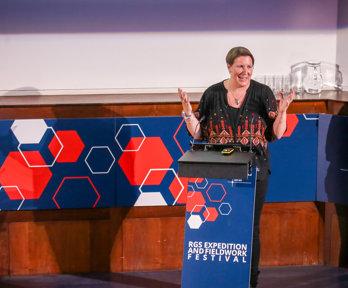
Speakers
Meet the expert speakers and facilitators who have generously shared tales, insights and advice from their involvement in expeditions and fieldwork at the RGS Explore Weekend.
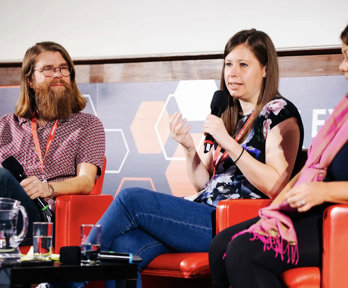
Frequently asked questions
Attending the RGS Explore Weekend in London can seem a major commitment. We respond in detail to commonly-voiced questions and concerns.
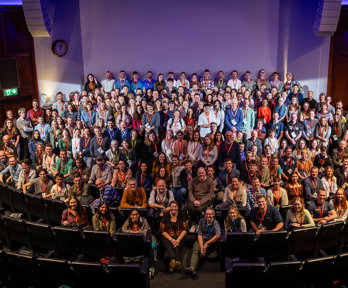
Is the RGS Explore Weekend for me?
The RGS Explore Weekend brings together a diverse community united by a belief in geographical exploration as a force for good. Find out what to expect from being part of this unique gathering.
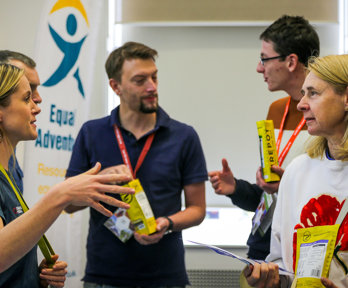
What do RGS Explore Weekend attendees say?
In this collection of video testimonials, speakers, participants, and exhibitors share what makes attending the RGS Explore Weekend a life-changing experience.