Physical impacts
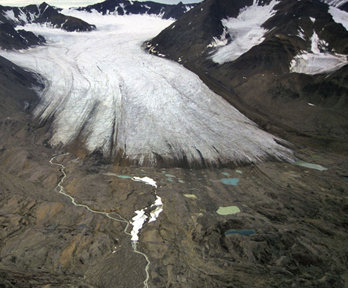
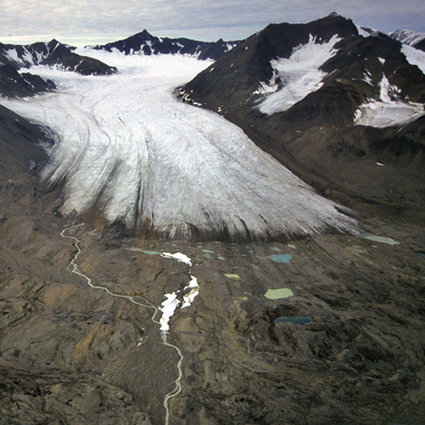
Glaciers all over the world are receding. The meltwater from this change will ultimately contribute to sea level rise. So glacial melt is a global issue. On the regional scale glaciers are very important due to their hydrological impact, specifically the increasing (or decreasing) volumes of runoff.
Glacial runoff is calculated as all the water that is released from the glacier system including snowmelt, rain on the glacier, and ice melt.
Over the next few decades, all climate model emissions scenarios predict longer and warmer summer melt seasons. These will continue to drive negative glacier mass balance, declining glacier volumes, and rising ELAs that will initially expand the bare ice glacier surface area a little.
Glacial recession will also decrease the local surface albedo as more solar energy is increasingly absorbed and will impact downstream ecosystems and the carbon and nutrient cycles.
As glaciers down-waste and recede, moraines are exposed at the ice margin, and the amount of mineral and organic dust on the surface can also increase. These changes lower the albedo, through exposing more rock and sediment or darkening the bare ice surface. This lowered albedo results in warmer air temperatures, and this then increases the melting of the glacier.
The increased melting results in higher runoff volumes, revealing the bare ice of glacier surfaces. It is a supraglacial ecosystem: containing mineral and organic dust, aerosols and microbes. The bare ice is in contact with the atmosphere and receives solar radiation. This habitat includes cryoconite (see Appendix B) and ice algae which will dramatically alter cold environments across Europe.
The micro-organisms are important for carbon cycling through photosynthesis and respiration but can also further the darkening of the bare ice surface and contribute to melting with more runoff in summer (melt season) months, an associated increase in the sediment delivered to glacier-fed rivers and an increase in the cold glacier-sourced water entering glacier-fed rivers, which can influence their biodiversity.
In the Alps, the current release rate is up to 100,000 tonnes of microbes will be released into the surrounding environment over the next 80 years.