GCSE Specification links
AQA
3.1.1.2. Earthquakes and volcanic eruptions are the result of physical processes. Management can reduce the effects of a tectonic hazard.
Edexcel B
1.7. Earth’s layered structure, and physical properties is key to plate tectonics.
1.8. There are different plate boundaries, each with characteristic volcanic and earthquake hazards.
1.9. Tectonic hazards affect people, and are managed, differently at contrasting locations.
Eduqas A / WJEC
3.1.1. How do tectonic processes work together to create landform features at different scales?
3.2.1. What are the impacts of tectonic processes?
3.2.2. How might the risks associated with tectonic hazards be reduced?
OCR B
1.2.a. What processes occur at plate boundaries?
1.2.c. How does technology have the potential to save lives in hazard zones?
Key terminology
Subduction – the process of a plate being pushed beneath another. This is primarily due to slab pull and ridge push.
Friction – the resistance between the plates in the lithosphere.
Pressure – a force exerted on a given area, e.g. the force of gasses within a volcano pushing against the solid rock.
Magma – hot molten rock under the Earth’s surface.
Plate boundary – the place where two tectonic plates meet.
Epicentre – the point on the Earth’s surface vertically above the precise location of where an earthquake starts.
Focus – the point underground where rocks start to fracture to cause an earthquake.
Pyroclastic flow – a fast moving, super-heated cloud ejected from some volcanic eruptions.
Ash – fragments of minerals, glass, and rock particles ejected during a volcanic eruption.
Population density – the amount of people per 1km2.
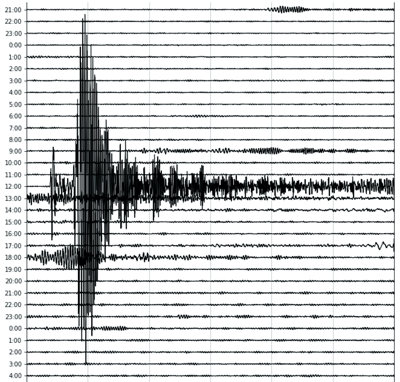
Seismic waves – shock waves that emanate from the focus of an earthquake. There are different types of waves. For example, P-waves and S-waves travel through the Earth whilst Surface waves remain on the surface, are slower and, with their have larger amplitudes, do the most damage to surface structures.
Ground deformation – the change in shape of the surface of the Earth resulting either from tectonic movements of the Earth’s solid surface or movements of magma beneath it.
Seismometers – tools which detect, record and measures seismic waves.
Tsunami – a series of ocean waves which can send surges of water onto the coastline. These surges can be over 30 meters high and can create a lot of damage in the process.
File nameFiles
File type
Size
Download
This resource was first published in 2024.